


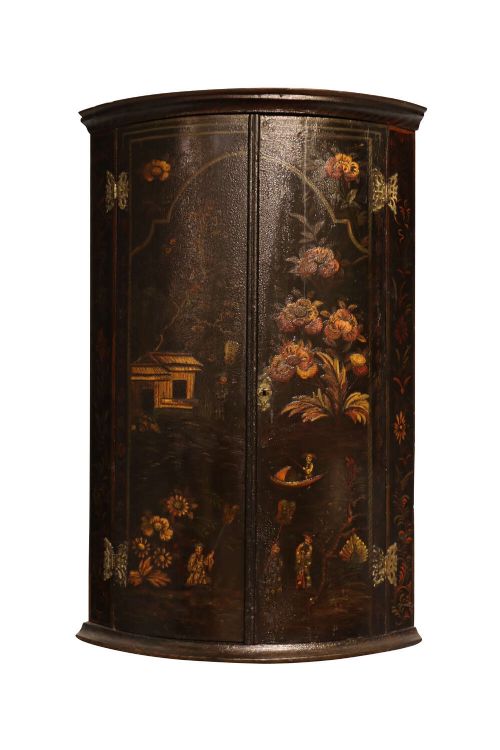
Bowfront Wall Cupboard
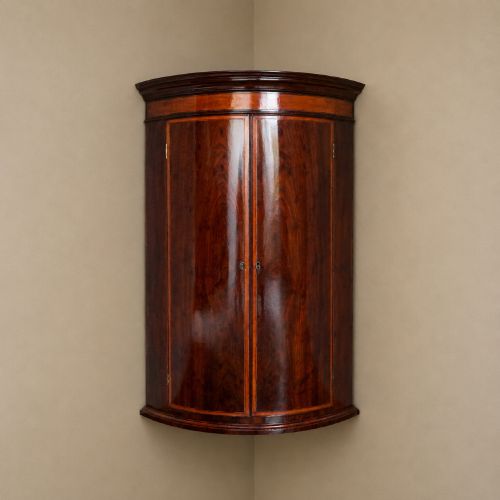
A bowfront wall cupboard uses the awkward corner of a room to store valuables while adding a curved wooden profile to the wall.
Bowfront Wall Cupboard
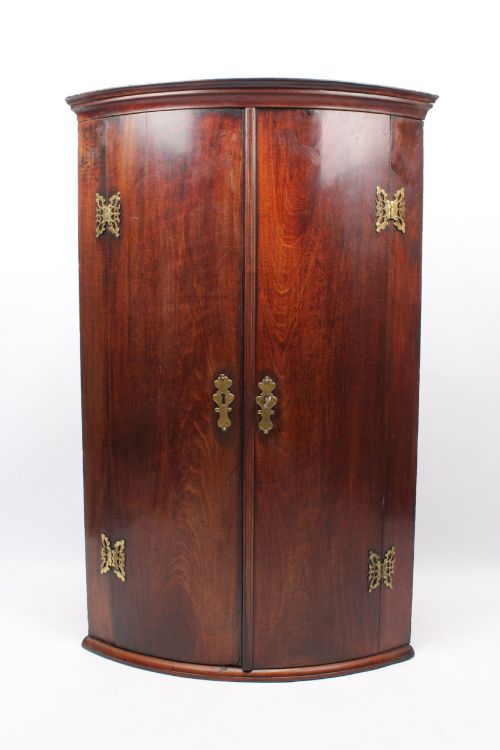
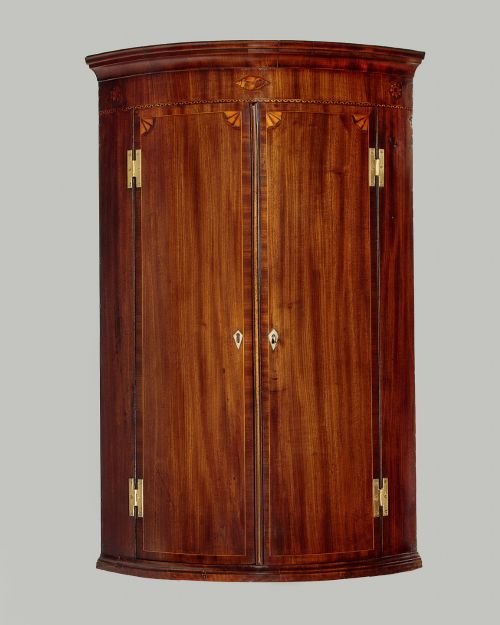
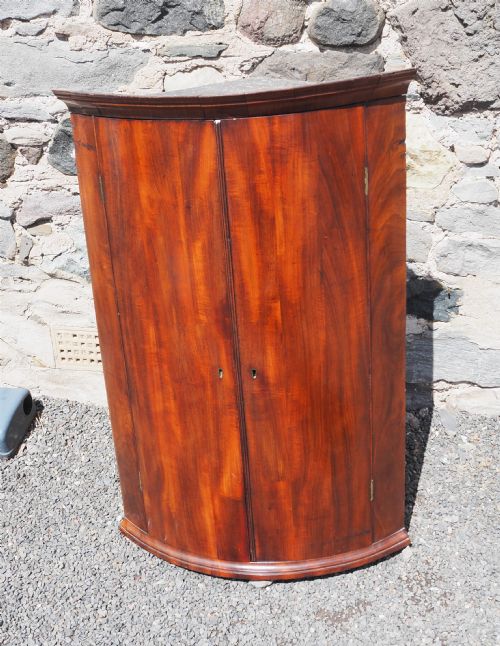
A bowfront wall cupboard is designed to hang securely in a room corner, turning dead space into useful storage. The pieces meeting this search phrase are predominantly Georgian and Victorian hanging cabinets, constructed to save floor space while displaying possessions.
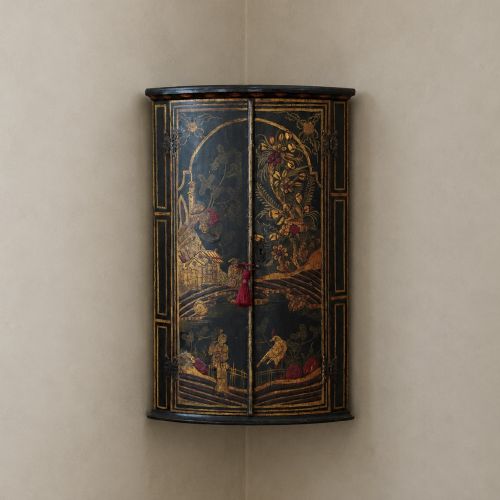
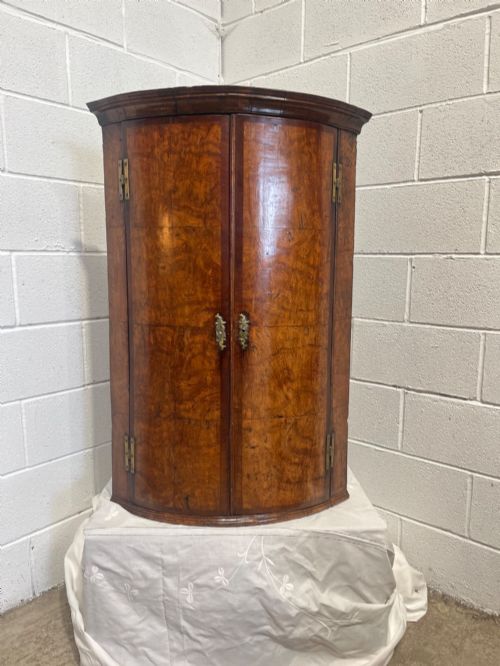
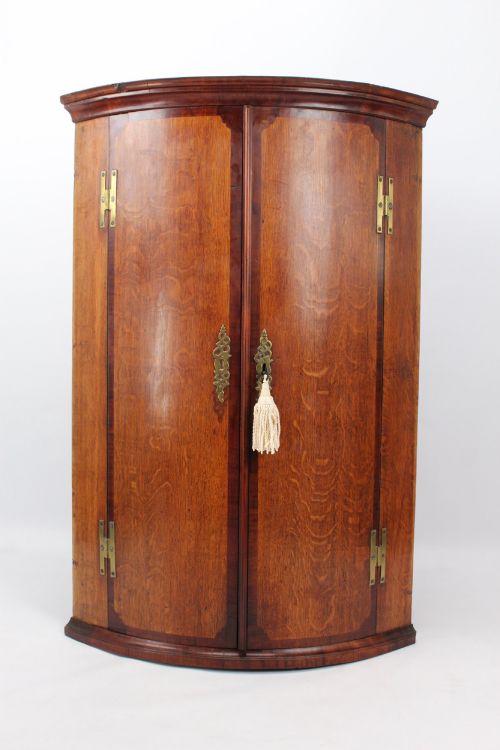
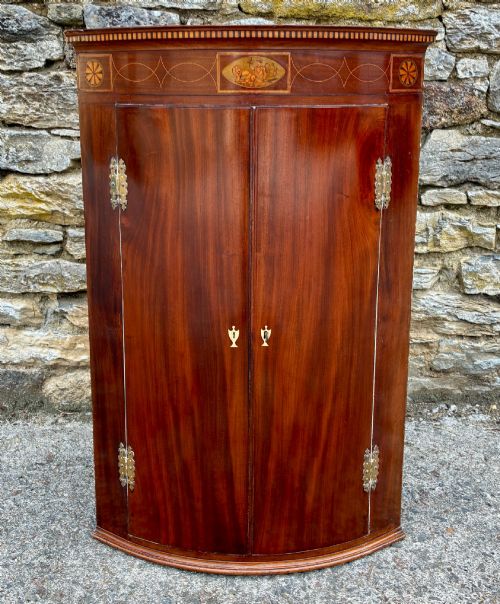
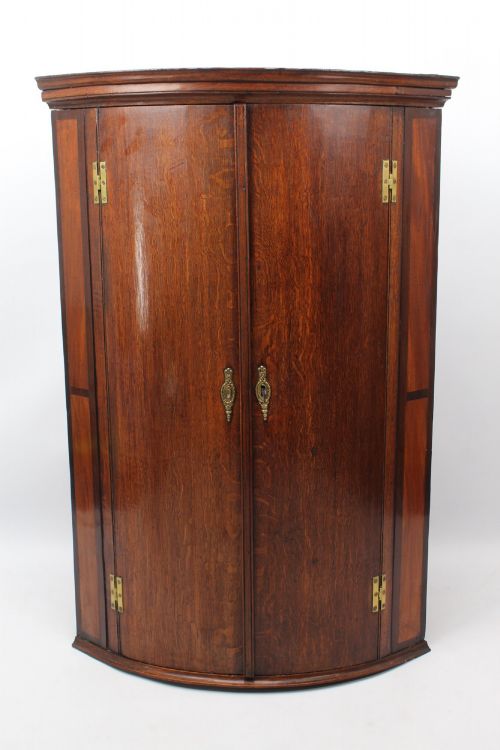
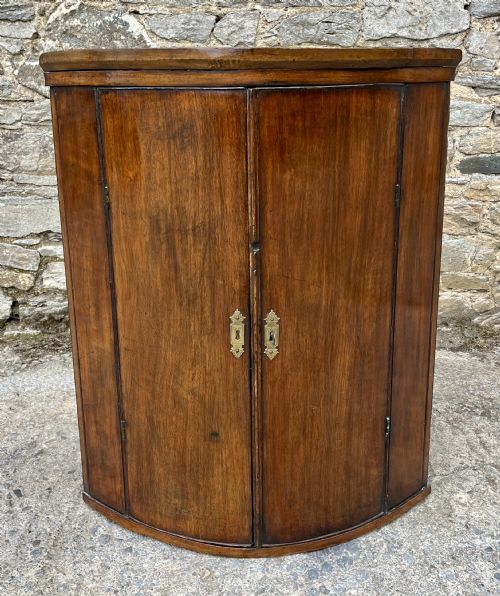
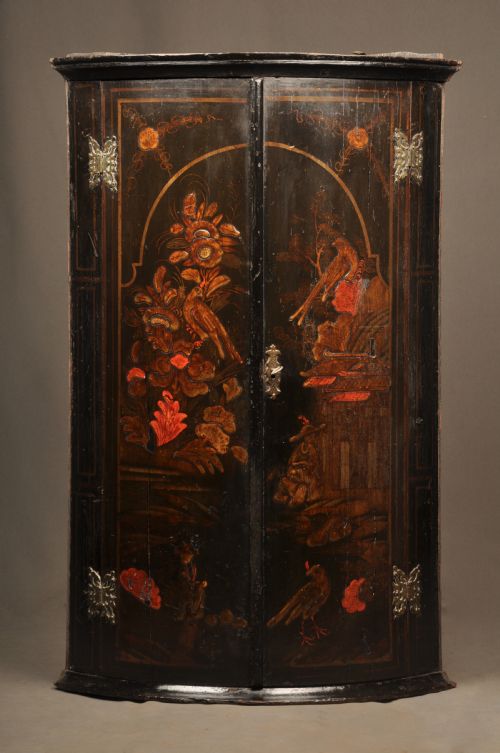
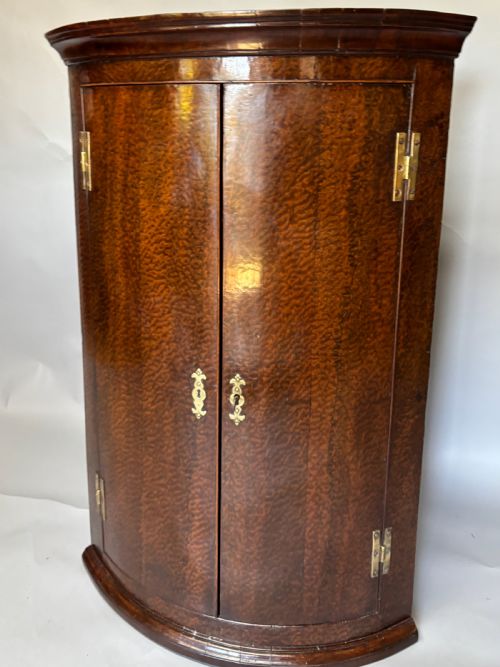
The most common form on this page is the Georgian mahogany hanging corner cupboard, alongside pieces rendered in oak, walnut, and japanned lacquer. They typically feature a single panelled door enclosing fixed interior shelves, designed to mount directly onto room walls.
Materials and construction methods
Cabinet makers built these pieces using solid and veneered timbers, selecting mahogany, oak, and walnut for their structural durability. Decorative examples incorporate boxwood stringing, brass H-hinges, and elaborate painted or lacquered chinoiserie surfaces.
The curved front is achieved through bent wood techniques or solid timber carved to shape, joined with traditional dovetailing. Interior shelving is often shaped to match the triangular footprint of the cabinet, fitting snugly into the corner frame.
The listings on this page span the Georgian, Victorian, and 1920s periods, utilising mahogany, oak, walnut, brass, and lacquer.
Assessing quality and craftsmanship
Quality rests upon timber selection and surface detail, with plum pudding mahogany, burr oak, and flame veneers marking the superior examples. Plain local oak pieces serve utility, whereas figured veneers and inlaid boxwood indicate ambitious workshop production.
Hardware integrity and door fit distinguish workshop standards. Heavy brass escutcheons, working original locks, and tight door joints separate finely constructed cabinets from simpler utilitarian storage.
The Bowfront Wall Cupboard Glossary
- Bowfront
- A convex curved cabinet front that projects outward from the corner. This curved profile softens the hard angles of a room.
- Japanned
- European imitation of East Asian lacquerwork, created using layered varnishes and raised metallic decoration. It appears on eighteenth and nineteenth-century decorative pieces.
- Chinoiserie
- European artistic style reflecting Chinese motifs and scenes. It frequently decorates lacquered and painted cabinet doors.
- Plum pudding mahogany
- Highly figured timber exhibiting dark circular markings resembling Christmas pudding ingredients. Cabinet makers reserved this timber for principal facade surfaces.
- Hanging corner cupboard
- A wall-mounted storage unit built with a triangular back to fit room angles. These units omit floor feet to mount securely at eye level.
Bowfront Wall Cupboard: Frequently Asked Questions
How do I hang a heavy corner cupboard?
These cabinets attach directly to wall studs using internal fixing points or heavy-duty rear brackets. Professional installation ensures the wall structure supports the combined weight of the timber frame and stored items.
Because original brass hanging loops were built for lighter loads, modern installations often add discreet internal supports to secure the cabinet safely.
Are these cupboards meant for corners?
Yes, the triangular back construction is engineered specifically for room corners. This geometry allows the curved front to project outward into the room.
Placing them in corners maximises usable interior storage without obstructing floor pathways.
How do I identify a Georgian piece?
Georgian pieces display construction traits like hand-cut dovetails, secondary softwood linings, and period brass hardware. The timber finish often shows a deep patina developed over centuries of polish.
Stylistic markers such as ogee cornices and boxwood stringing further point toward eighteenth-century manufacture.