





Empire Mahogany Cabinet
An empire mahogany cabinet brings monumental classical proportion and rich timber figure to an interior through substantial architectural presence.
Empire Mahogany Cabinet
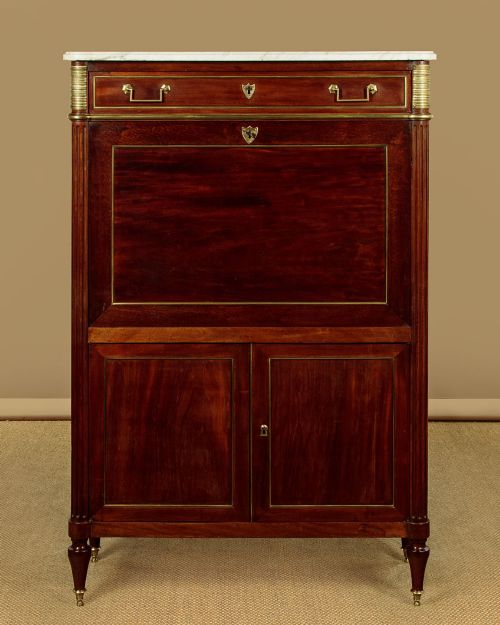
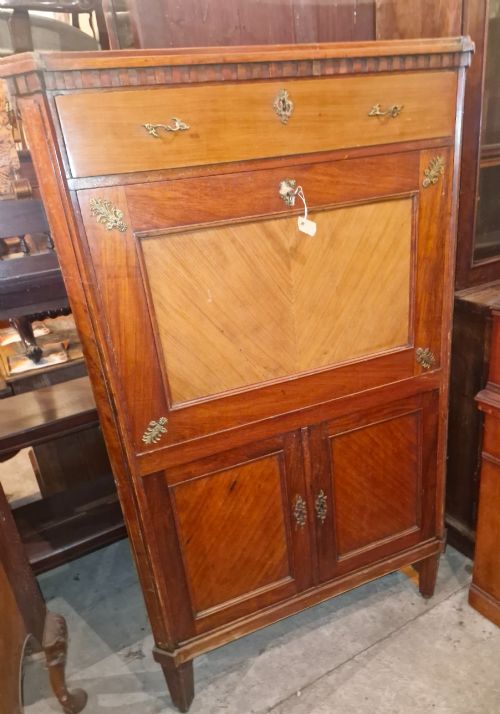
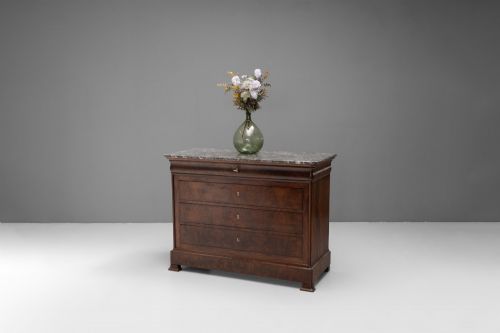
When searching for an empire mahogany cabinet, buyers encounter a diverse range of functional forms including secretaire abattants, bedside cabinets, bookcases, and commodes. These pieces originate predominantly from nineteenth-century French workshops, spanning the initial First Empire period through subsequent Louis Philippe and revival phases.
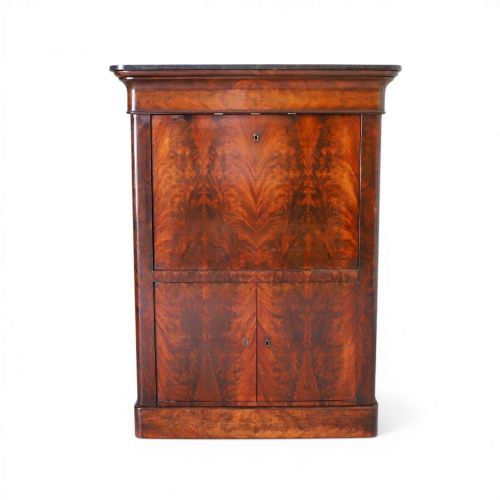
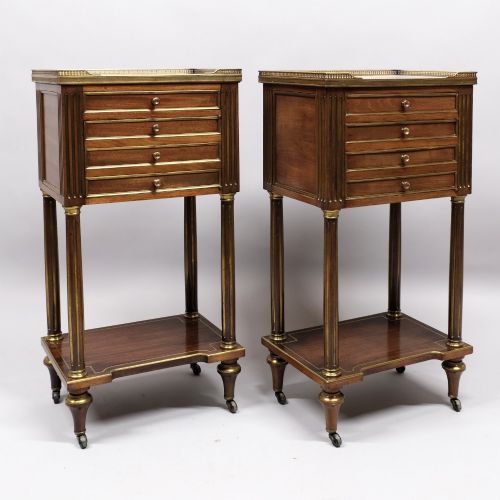
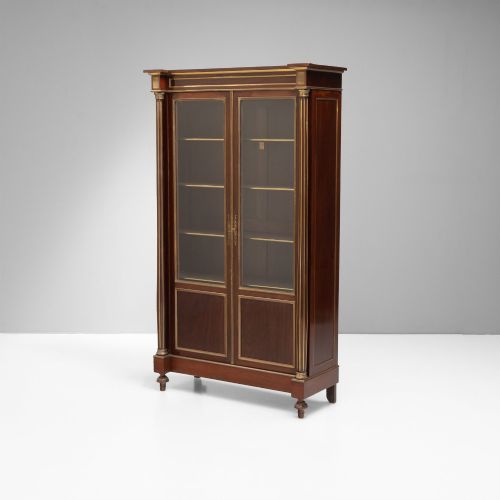
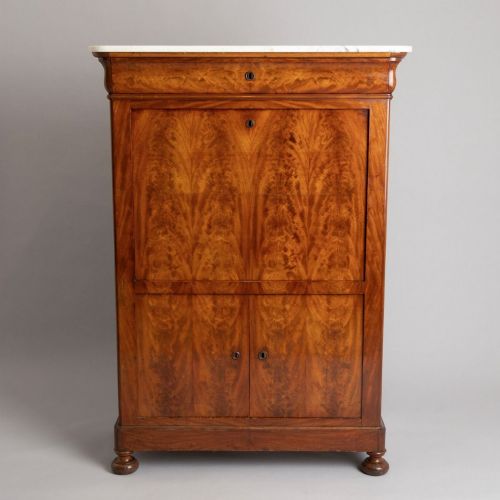
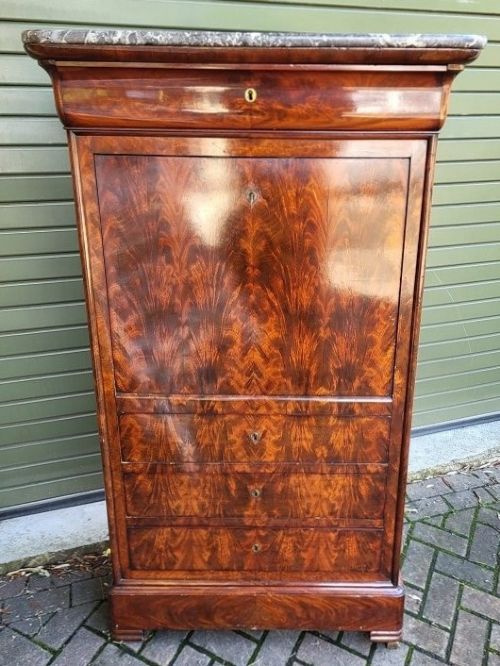
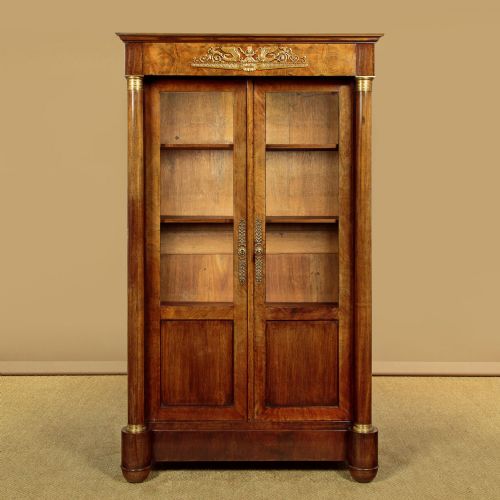
The most frequently encountered versions on this page are bedside cabinets and tall secretaire abattants featuring drop-front writing surfaces alongside concealed drawers. Bookcases and display vitrines also appear regularly, often retaining their original architectural cornices and glazed upper doors.
Regional variations extend beyond French examples to include Danish, Dutch, and Italian pieces influenced by continental classical design. Construction dates stretch from around eighteen hundred into the twentieth century, encompassing both original period items and later revival interpretations.
How they were made
Cabinet makers constructed carcass frames using solid oak or pine substrates before applying veneers of figured mahogany, flame mahogany, or plum pudding mahogany to the primary visible surfaces. This technique allowed craftsmen to display symmetrical wood grain patterns across large flat doors and drawer fronts.
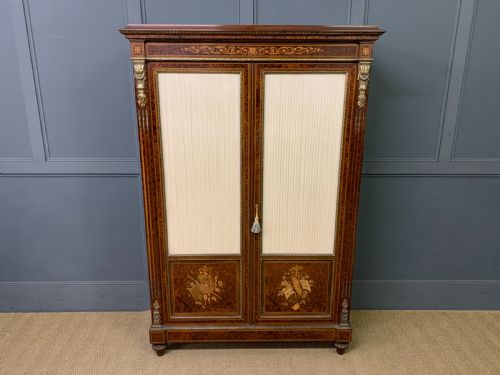
Mounts cast in bronze and subsequently fire-gilded with ormolu provide structural accent and classical ornamentation around keyholes, pilasters, and cornices. Structural tops frequently utilise heavy slabs of white, grey, or fossil marble fitted directly onto the timber framing.
Listings feature mahogany, marble, brass, ormolu, and glass across nineteenth-century periods including Louis Philippe and Empire revival styles.
What varies in quality
The standard of an empire mahogany cabinet depends largely on the selection and matching of timber veneers across the facade, where symmetrical flame figures elevate the visual depth. Finer examples display crisply chased ormolu mounts rather than simpler cast brass details.
Internal engineering of secret drawers, drop-front hinges, and fitted pigeonholes demonstrates the original workshop's tier of production. The presence of matching native marble tops without structural repair further separates standard production items from exceptional commissions.
The Empire Mahogany Cabinet Glossary
- Ormolu
- Gilt-bronze decorative mounts applied to furniture surfaces. This technique involves fusing a mercury and gold amalgam to a bronze base through intense heat.
- Secretaire abattant
- A tall upright cabinet featuring a hinged drop-front writing flap that conceals a fitted interior of small drawers and pigeonholes.
- Flame mahogany
- A veneer cut from timber where branches join the main trunk, producing a distinctive rippling flame-like pattern across the wood.
- Commode
- A low chest of drawers or cabinet designed with multiple storage tiers, often finished with a heavy marble top.
- Chiffonier
- A narrow sideboard or small multi-drawer cabinet popular during the nineteenth century for general domestic storage.
Empire Mahogany Cabinet: Frequently Asked Questions
What is a secretaire abattant?
A secretaire abattant is a tall upright cabinet designed with a hinged writing surface that folds down horizontally. When closed, it presents the appearance of a standard chest or cabinet.
Inside the drop-front flap, users find an arrangement of small compartments and secret drawers intended for correspondence and valuables.
How do I care for marble tops?
Marble tops require simple wiping with a damp cloth and mild neutral soap to prevent staining from acidic liquids. Avoid harsh chemical cleaners that can etch the polished stone surface.
Placing felt pads beneath heavy decorative objects helps protect the surface from scratching over time.
Are these cabinets purely French?
While the majority of empire cabinets originate from French workshops adhering to neoclassical aesthetics, continental variations do exist. Danish, Dutch, and Italian makers also produced classical furniture influenced by the empire style.
Regional differences appear primarily in the secondary timbers used for internal construction and subtle shifts in moulding profiles.
How do I identify a revival piece?
Revival pieces often date from the late nineteenth or early twentieth century, echoing the monumental proportions of earlier Napoleonic designs. Internal construction methods, machine-cut dovetails, and secondary woods usually indicate a later manufacturing date.
Examining the uniformity of the timber and the crispness of the brass or ormolu mounts helps clarify the period of production.