



Curved Front Wall Cabinet
A curved front wall cabinet offers disciplined storage for tight corners, turning neglected angles into architectural assets with polished timber surfaces.
Curved Front Wall Cabinet
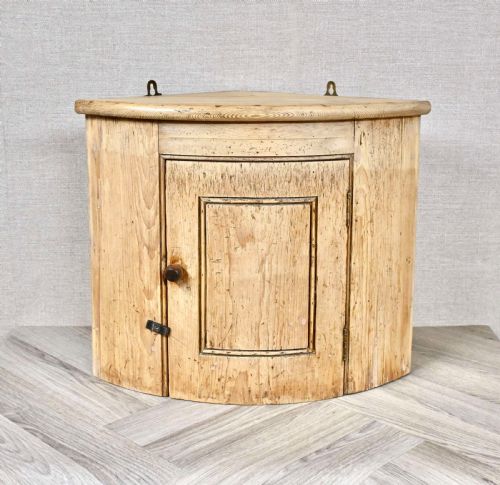
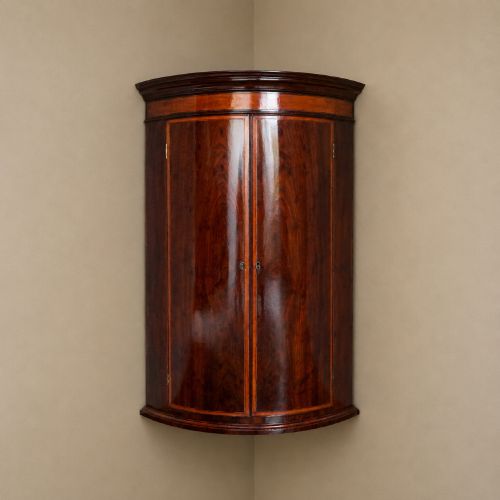
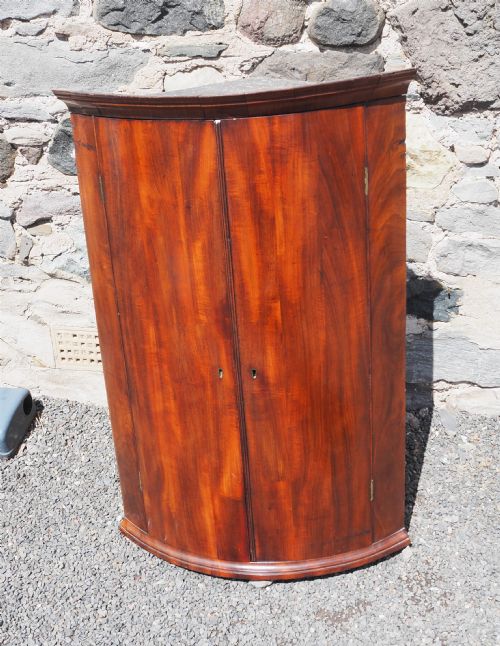
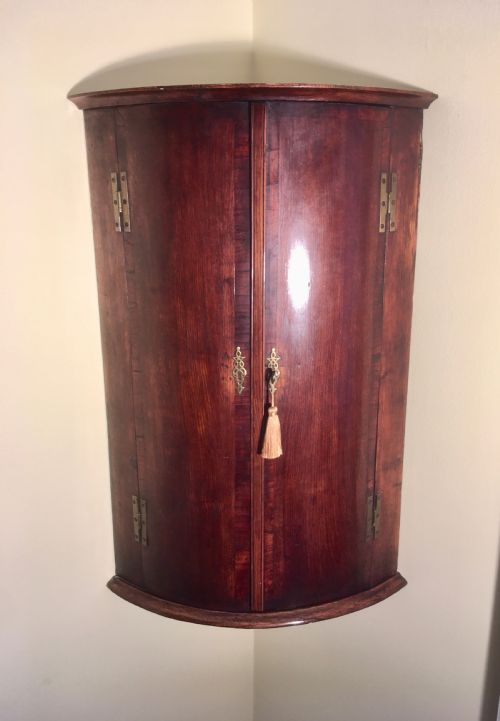
A curved front wall cabinet provides enclosed display and storage designed specifically to mount in room corners. These pieces utilise bow fronts, serpentine shapes, and rounded profiles to soften the sharp angles of domestic interiors.
The versions most commonly met on this page date from the Georgian and 18th century periods through to the Victorian and Edwardian eras. Buyers encounter variations fashioned as hanging corner cabinets and bow front corner cupboards.
Woods such as oak, mahogany, and pine dominate the selection, often complemented by glass doors and brass hardware. Regional vernacular pieces sit alongside refined examples featuring chinoiserie lacquer or plum pudding mahogany veneers.
Materials and construction
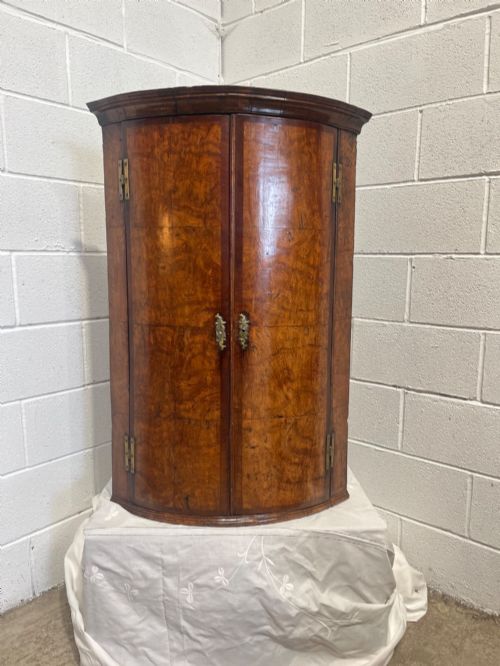
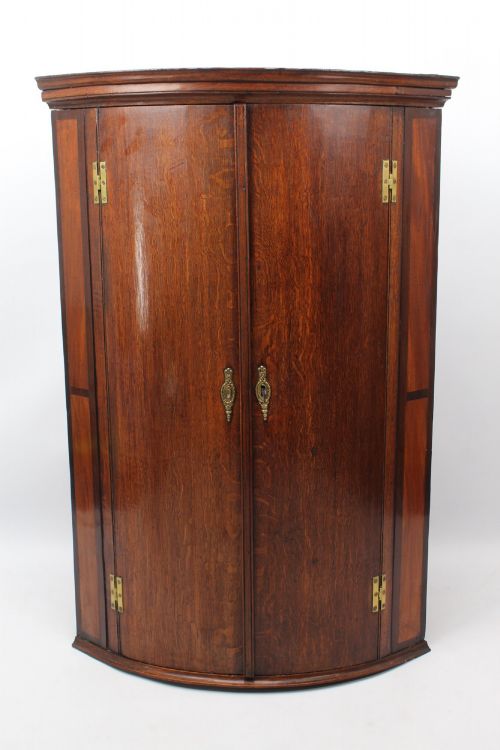
Cabinet makers built these forms using solid timbers like oak and pine for structural carcass work, overlaid with decorative veneers such as mahogany and burr oak on the prominent curved doors. Brass hinges and escutcheons secure the doors and provide functional contrast against the dark timber surfaces.
Shaping the curved or bow front required specialised woodworking techniques to bend and laminate solid wood or veneer over a sturdy frame. Glazed panels were frequently incorporated into the upper doors to showcase contents while protecting them from dust.
Some corner cupboards were cunningly built to hide triangular secrets, proving that even a right angle has room for a little theatre.
Markers of distinction
Quality rests in the selection of timber figures, such as plum pudding mahogany and burr oak, which display rich grain patterns across the curved door surfaces. Finer examples show careful joinery where the bowed doors meet the frame with exact tolerances.
The presence of period brass hardware, original glass, and sophisticated surface treatments like Chinoiserie lacquer elevate a piece above standard utilitarian storage. Construction depth, from sturdy Welsh oak carcasses to delicate late Georgian proportions, dictates the overall character.
The Curved Front Wall Cabinet Glossary
- Bow front
- A convex, outwardly curved front facade common on cabinets and chests designed to soften room corners. This profile maximises internal storage capacity while presenting a smooth visual curve.
- Serpentine front
- A cabinet front featuring a central convex curve flanked by two concave curves, creating an undulating outline. This complex shape requires advanced carpentry skills.
- Chinoiserie
- European decorative style inspired by Chinese art and design, often rendered in lacquer or paint on furniture surfaces. It frequently depicts figures, landscapes, and floral motifs.
- Plum pudding mahogany
- A highly decorative timber variant showing distinctive mottled grain patterns resembling the texture of a traditional pudding. Cabinet makers reserved this expensive veneer for primary display surfaces.
- Hanging corner cabinet
- A wall-mounted storage unit constructed with flat rear panels designed to fit flush into a room corner. These pieces save floor space while offering elevated display.
Curved Front Wall Cabinet: Frequently Asked Questions
Where should I hang a curved front wall cabinet?
These cabinets suit empty corners in dining rooms, hallways, or living spaces where floor area is limited. They draw the eye upward and utilise vertical wall space efficiently.
Ensure the wall construction can support the weight of solid timber and glass before mounting the cabinet securely at eye level.
How do I identify a Georgian corner cabinet?
Georgian examples typically feature rich timbers like mahogany or oak, classic proportions, and traditional brass H-hinges or key escutcheons. Details such as crossbanding and panelled doors point toward 18th-century craftsmanship.
Later Victorian and Edwardian pieces often replicate these earlier styles while exhibiting minor differences in construction methods and interior fittings.
What is the difference between a bow front and a serpentine front?
A bow front curves outward in a single smooth, convex arc from edge to edge. This shape provides a classic rounded profile for corner storage.
A serpentine front incorporates multiple directional curves, featuring an outward centre flanked by inward sweeps, offering a more elaborate silhouette.
Can these cabinets hold heavy items?
Interior fixed shelves are built into the wooden carcasses to support everyday tableware, books, or decorative objects safely. The internal depth accommodates standard display items and crockery.
Overloading upper shelves should be avoided to protect both the historic timber structure and the wall fixings.