

Bowfront Mahogany Furniture
Bowfront mahogany furniture brings rounded fronts and rich timber tones into a room, offering practical storage with strong period character.
Bowfront Mahogany Furniture
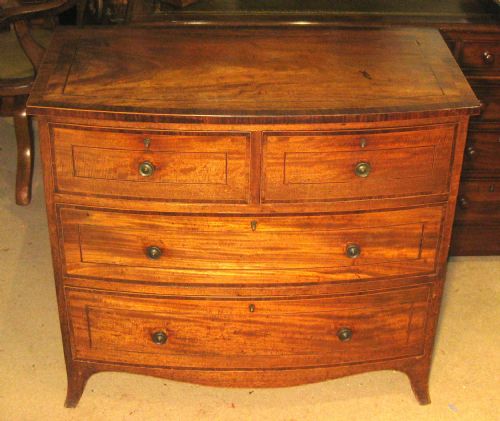
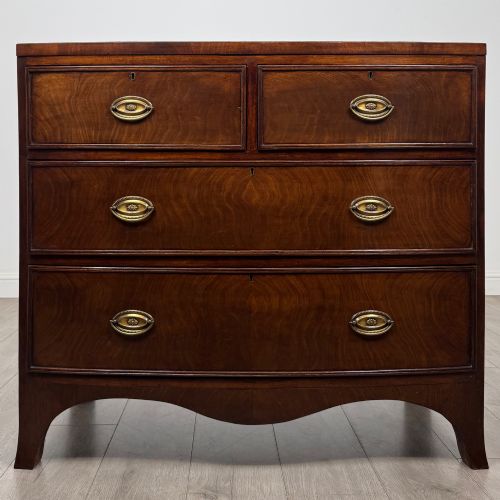
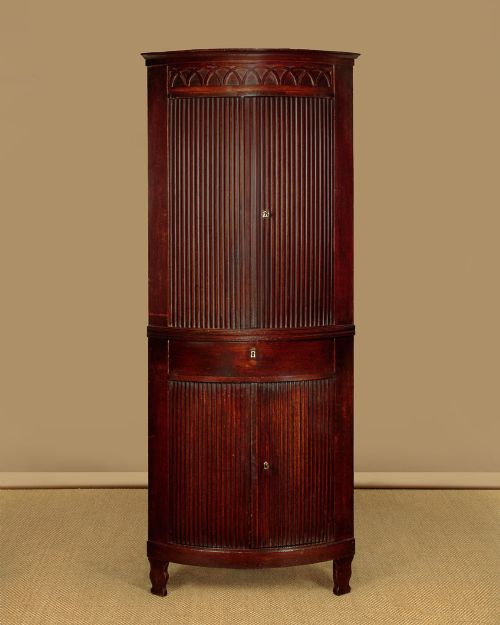
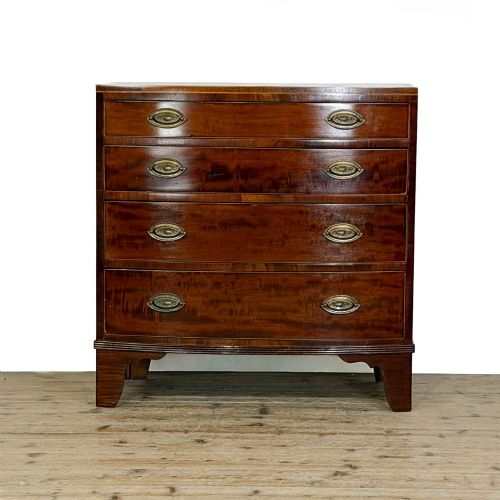
Bowfront mahogany furniture primarily consists of chests of drawers, alongside sideboards, corner cabinets, side tables, linen presses and desks. These pieces span the 18th century, Georgian, Regency, Victorian and Edwardian periods, stretching into later 20th century reproductions.
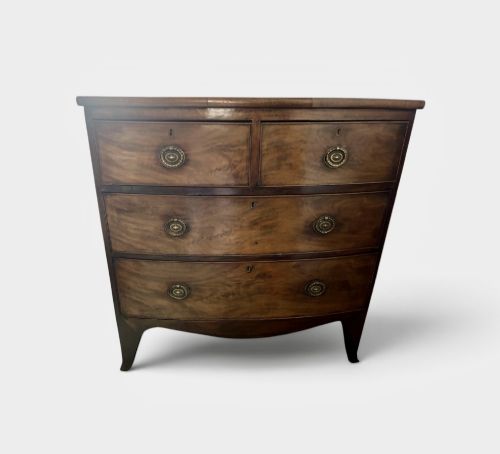
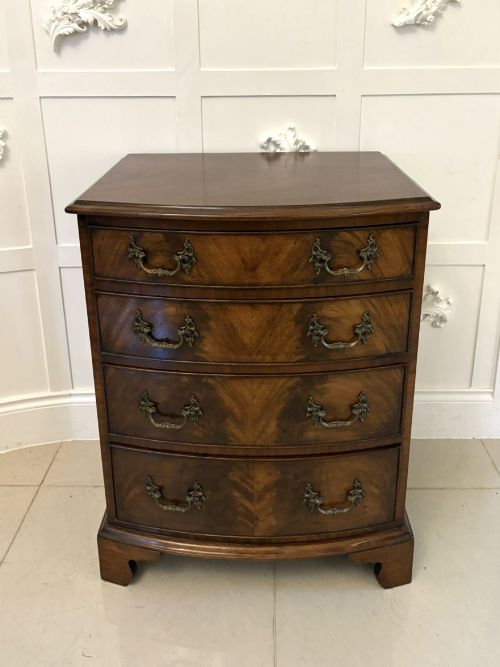
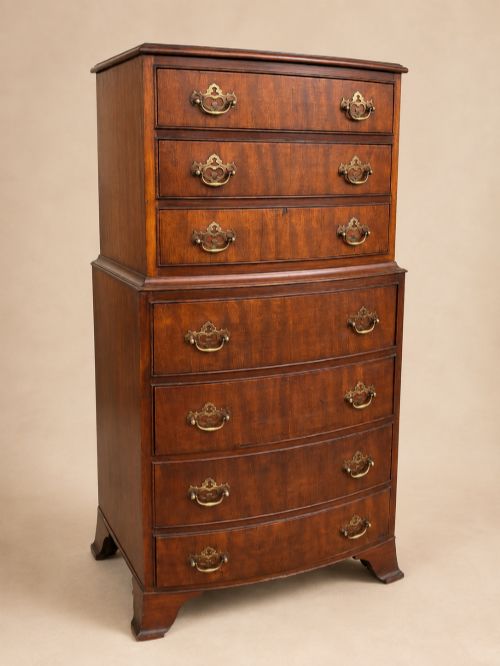
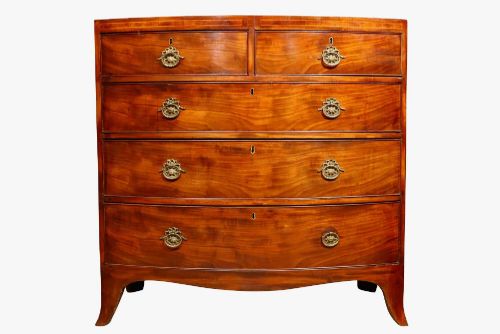
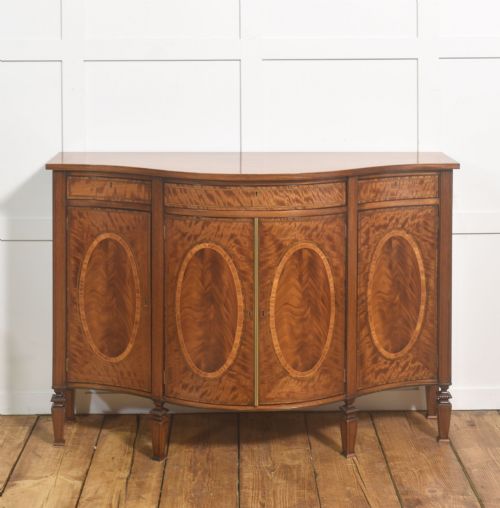
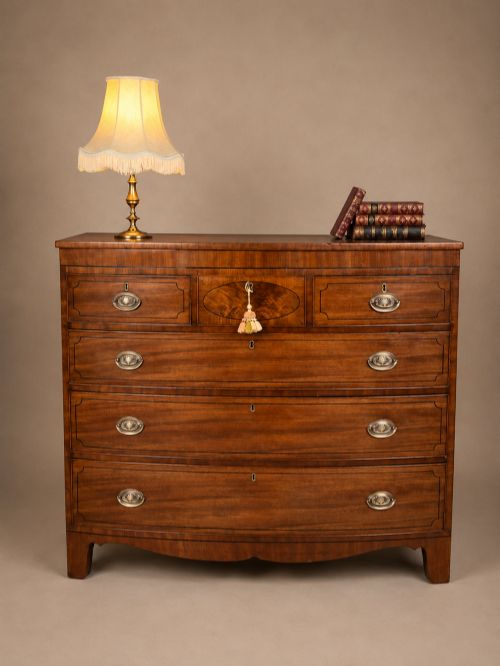
The chest of drawers stands as the most common form on this page, appearing in various sizes from narrow proportions to larger Scottish and Welsh formats. Cabinets and sideboards also appear frequently, utilising the curved front to soften room angles.
Originating largely from British cabinetmaking traditions, these items reflect design shifts from George III and Sheraton styles through to later revivals. Buyers encounter everything from compact bedside or dressing chests to tall chest on chest constructions.
Materials and construction methods
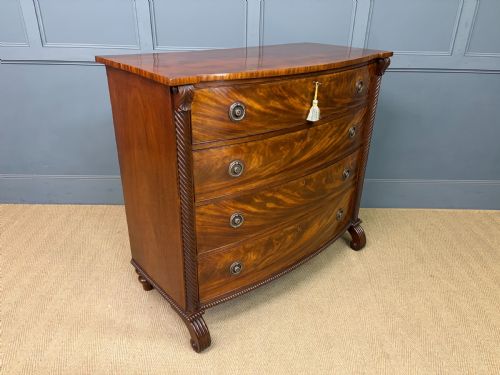
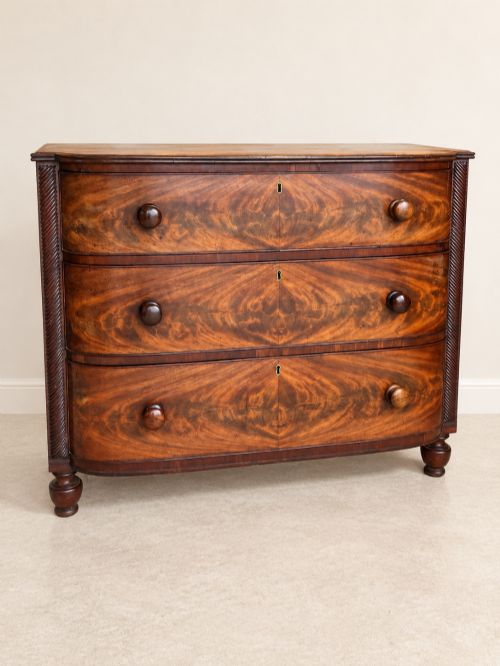
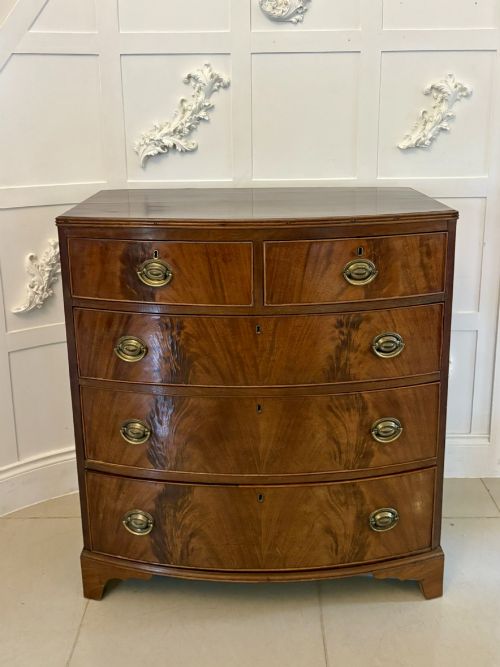
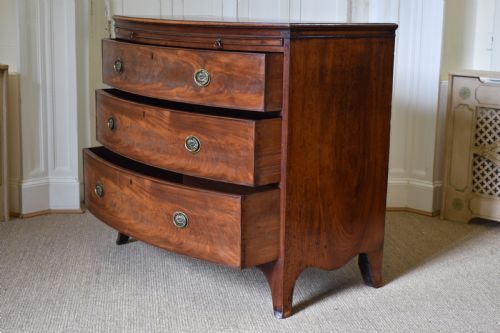
Makers built these pieces using solid mahogany and figured veneers, frequently selecting flame mahogany to create striking grain patterns across drawer fronts. Secondary timbers such as oak often form drawer linings and internal framing.
Inlaid decoration relied on contrasting woods like boxwood and satinwood, combined with brass hardware for handles and escutcheons. Cabinetmakers curved the wooden carcase and drawer fronts by steaming, bending or carefully cutting solid timber and applied veneers.
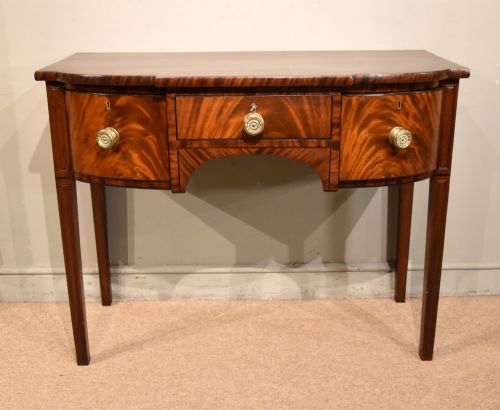
Object types recorded include chests of drawers, corner cupboards, sideboards, linen presses, side tables, desks, and secretaire dressing chests.
Distinctions in craftsmanship and condition
Quality rests heavily on the selection of timber veneers, where highly figured flame mahogany or carefully matched grain creates a cohesive visual rhythm. The crispness of inlaid stringing, structural integrity of drawer joints, and retention of original brass handles elevate certain examples.
Proportion and scale dictate desirability, with neat, narrow or small proportions commanding particular attention from collectors. The depth of the timber's patina and smoothness of the curved drawer operation also separate standard workshop output from finer cabinetmaking.
The Bowfront Mahogany Furniture Glossary
- Flame mahogany
- A veneer cut from timber where the branch meets the trunk, producing a distinctive flickering, flame-like grain pattern. This figure was prized for principal drawer fronts.
- Bow front
- A convex curved furniture front that projects outward in an arc. It softens the linear appearance of a room and requires advanced cabinetmaking skill.
- Chest on chest
- A tall storage unit comprising one chest stacked directly on top of another, often called a tallboy. This form maximises vertical storage space.
- Linen press
- A tall cupboard featuring upper sliding trays or shelves for textiles above a base of lower drawers. They provide substantial enclosed storage.
- Graduated drawers
- A series of drawers decreasing in depth from bottom to top within a single chest. This arrangement creates a balanced visual weight.
Bowfront Mahogany Furniture: Frequently Asked Questions
Where should I place a bowfront chest?
These pieces suit bedrooms, hallways, or living rooms where their curved outline softens straight architectural lines. Their rounded projection avoids sharp corners in high-traffic walkways.
Ensure adequate clearance for drawers to open fully without obstruction from nearby doors or furniture.
How do I identify a Georgian piece?
Examine the construction methods, secondary timbers like oak drawer linings, and the type of handles fitted to the carcase. Georgian cabinetmakers utilised hand-cut dovetails and native woods that display natural ageing.
Compare the overall proportions and styling details against documented pieces from the 18th and early 19th centuries.
What is flame mahogany?
Flame mahogany is a decorative wood veneer showing a distinctive flickering pattern resembling tongues of flame. Craftsmen reserved this striking timber for prominent surfaces such as top drawers.
Book-matching techniques often mirrored these flame figures across the centre of a drawer front for symmetry.
How do I clean mahogany furniture?
Dust surfaces regularly with a soft, dry cloth to prevent grit accumulation on the polished finish. Avoid silicone-based sprays that can penetrate older wax or shellac finishes.
Apply a traditional beeswax periodically to nourish the wood and maintain the natural patina built up over decades.