
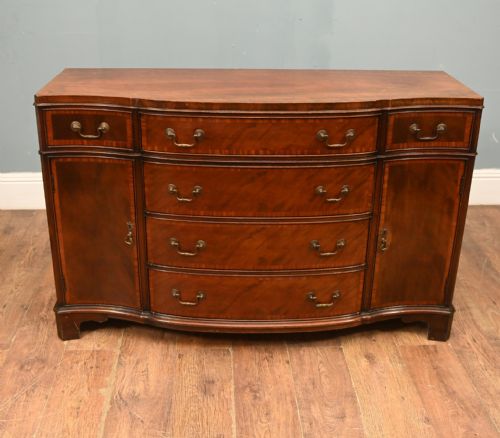


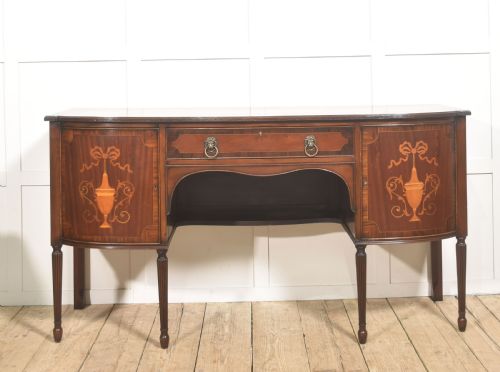


Bowfront Dining Room Buffet
A bowfront dining room buffet brings the curved elegance of Georgian and Regency craftsmanship directly into the modern interior.
Bowfront Dining Room Buffet
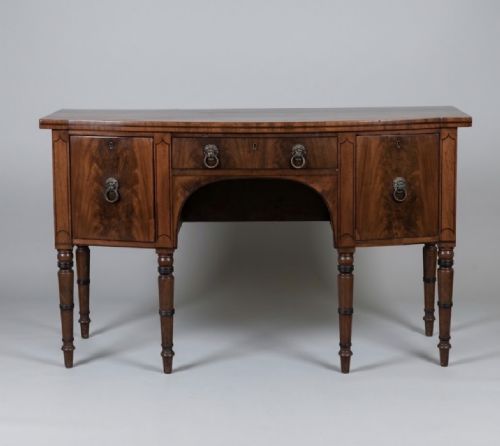
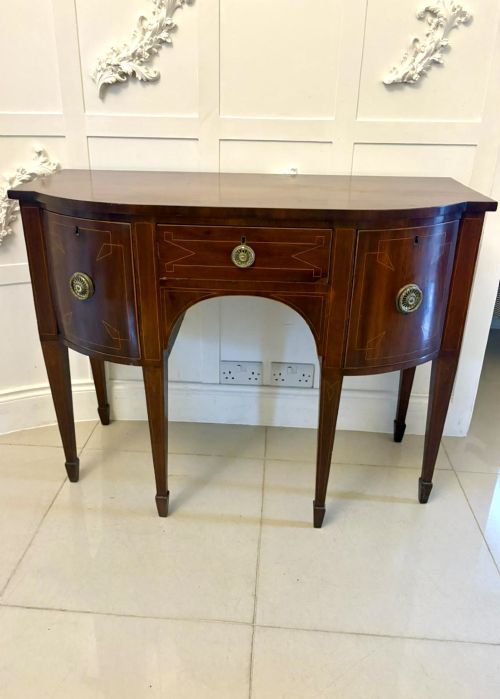
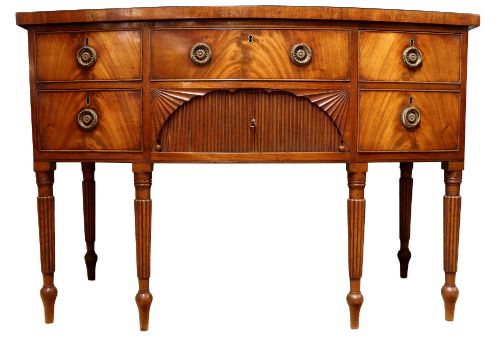
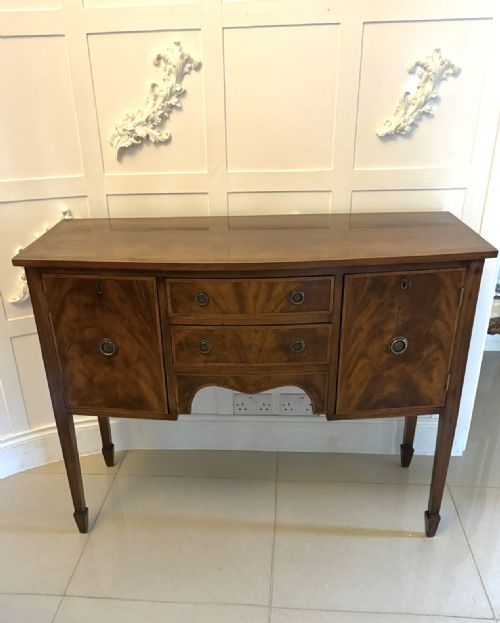
A bowfront dining room buffet manifests primarily as mahogany sideboards and serving tables shaped with a distinctive convex curve across the front. These foundational dining room pieces date from the eighteenth century through the Edwardian era, encompassing both original period examples and later revivals.
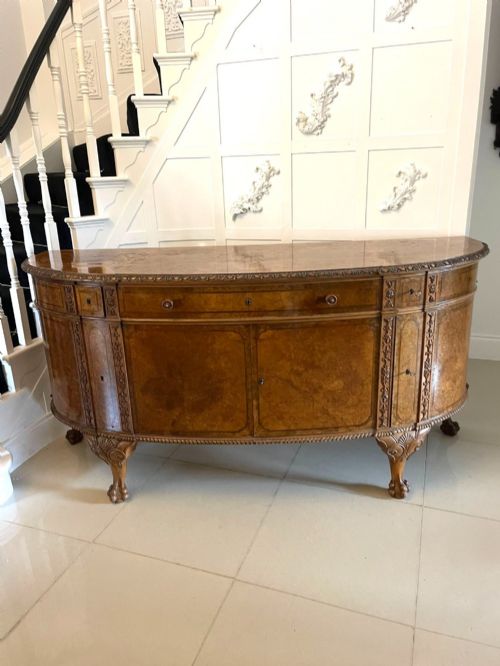
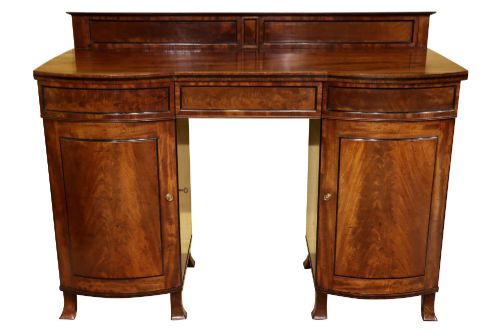
Buyers encounter variations ranging from compact small sideboards to large pedestal forms with multiple drawers and cupboards. The selection spans distinct design movements such as George III, Regency, and Sheraton styles alongside Queen Anne and Georgian revivals.
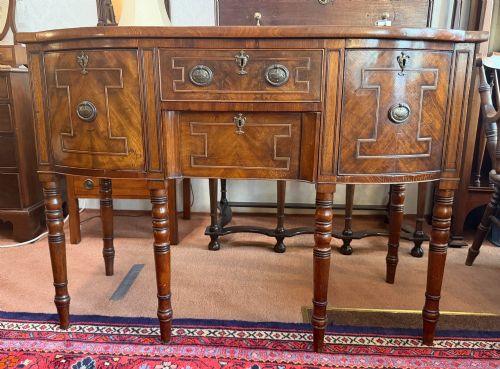
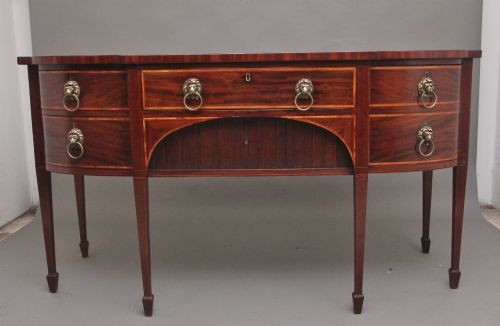
Makers construct these serving pieces to anchor a dining room, providing surface space for food presentation and interior storage for tableware. The integration of boxwood inlay, flame mahogany veneer, and brass hardware defines the visual character of the pieces available.
How they were made
Cabinet makers construct the primary carcase and drawers using solid mahogany, often applying flame mahogany veneer to the prominent curved drawer fronts to create figured grain patterns. Workshops enhance these surfaces with contrasting stringing and banding in lighter timbers like boxwood and satinwood.
Structural embellishment relies on cabinet-making techniques such as boxwood inlay, brass stringing, and delicate hand-carving applied to drawer surrounds and leg terminals. Selection of dense timbers ensures the curved bowfront geometry remains stable across centuries of use.
Some six-legged sideboards offer unexpected stability for carving joints of beef during long-forgotten nineteenth-century feasts.
What varies in quality
The sophistication of the timber selection dictates the visual standing of a piece, separating plain mahogany surfaces from highly figured flame mahogany and burr walnut veneers. Master cabinet makers deploy precise boxwood and satinwood inlay to frame drawer fronts with crisp, clean geometric lines.
Proportion and structural harmony separate standard production from superior pieces, particularly in the management of the complex bow front curve and supporting leg assemblies. Original brass hardware, secondary softwood framing integrity, and crispness of carved details distinguish fine eighteenth-century work from later revivals.
George Hepplewhite
The Bowfront Dining Room Buffet Glossary
- Bowfront
- A convex curved cabinet front that swells outward toward the viewer, characteristic of many Georgian and Regency sideboards. This curved silhouette requires advanced cabinet-making skill to shape solid timbers and apply veneers smoothly.
- Flame mahogany
- A highly figured timber veneer prized for its distinctive torch-like grain patterns resembling flickering flames. Cabinet makers reserve this material for prominent drawer fronts and central panels.
- Stringing
- Thin inlaid lines of contrasting light-coloured wood, such as boxwood, embedded into darker mahogany surfaces to outline drawers and panels. This technique adds linear definition and visual refinement.
- Pedestal sideboard
- A large dining room serving piece featuring central cabinet sections flanked by structural pedestals or cupboards. These substantial forms often date from the Regency period.
- Crossbanding
- A border veneer applied around the perimeter of a drawer front or tabletop where the grain runs perpendicular to the central panel. It creates a neat framing effect favoured by period cabinet makers.
Bowfront Dining Room Buffet: Frequently Asked Questions
What is a bowfront dining room buffet used for?
These serving pieces provide surface space for food presentation and storage for dining room linens, cutlery, and glassware during meals.
Historically placed against dining room walls, they functioned as auxiliary servers for large households before modern fitted kitchens existed.
How do I date a mahogany sideboard?
Dating relies on stylistic markers such as Hepplewhite influence, leg shape, timber choice, and inlay techniques spanning from the Georgian era through Edwardian revivals.
Examination of secondary woods, drawer construction methods, and brass hardware styles further clarifies the period of manufacture.
What is the difference between a sideboard and a buffet?
The terms often overlap in marketplace listings, though traditional sideboards frequently incorporate specific drawer configurations and pedestal ends for serving.
Both forms serve the dining room environment by offering surface display areas combined with concealed interior storage.
How do I care for a veneer surface?
Protect antique mahogany and burr walnut veneers from direct sunlight and extreme humidity fluctuations to prevent timber movement or lifting.
Apply traditional beeswax periodically and avoid harsh modern cleaning chemicals to preserve the natural patina of the wood.