



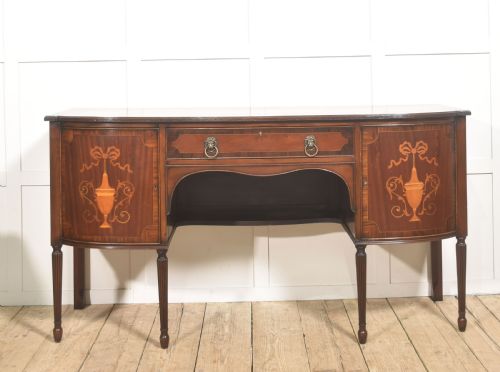
Bowfront Buffet Table
A bowfront buffet table brings curved mahogany elegance to a dining room, combining practical storage with classic proportions.
Bowfront Buffet Table
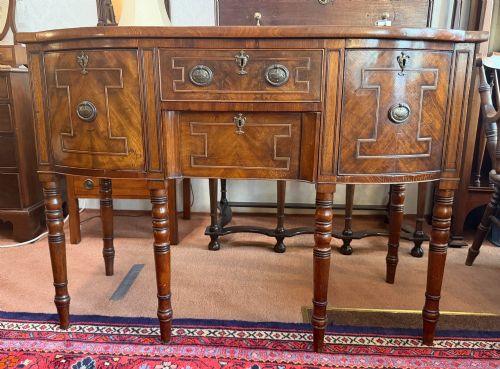
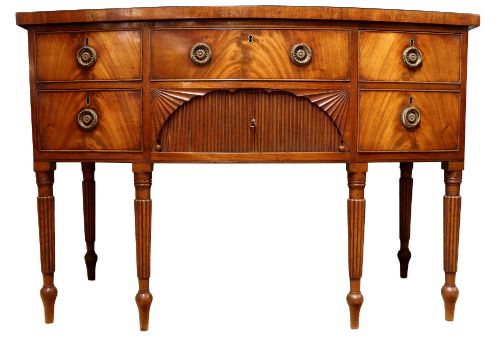
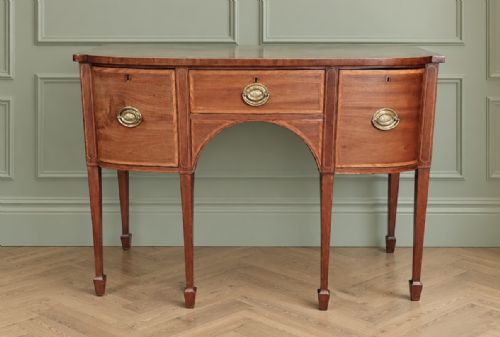
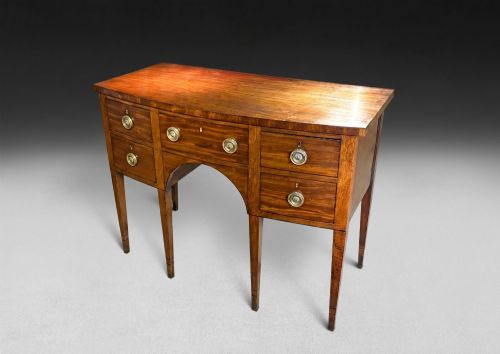
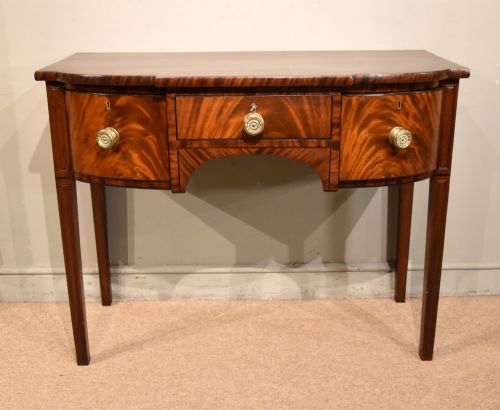
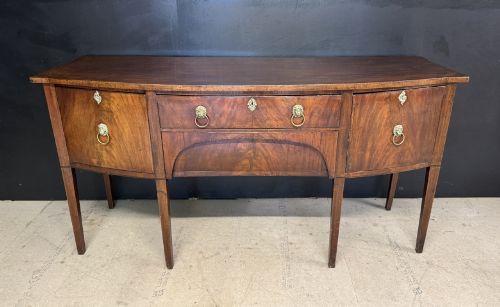
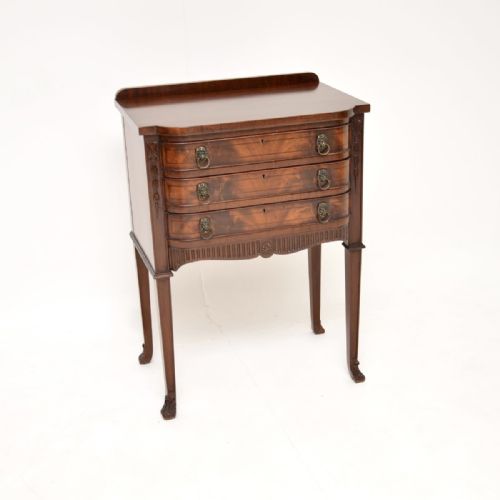
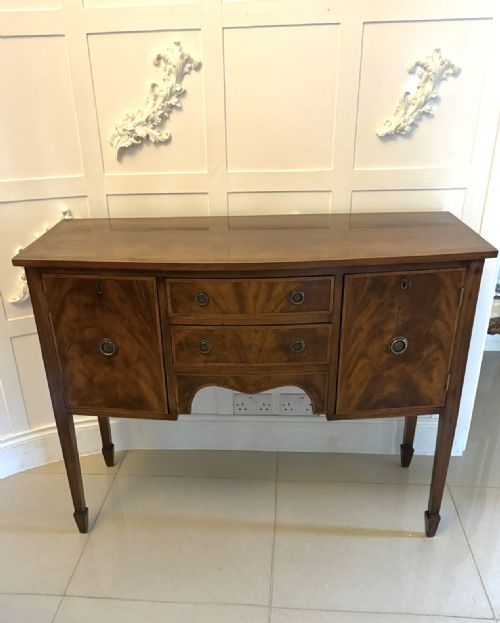
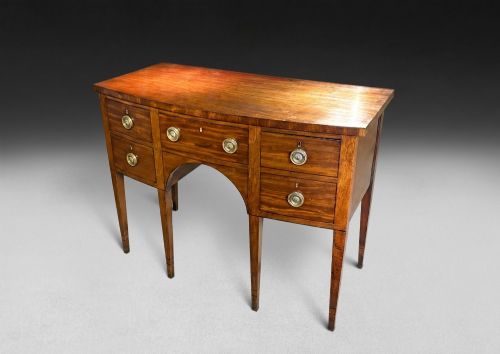
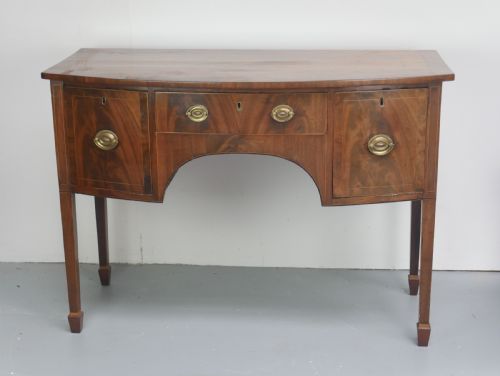
A bowfront buffet table, appearing across this page under designations such as sideboard, server, and dresser, is a dining room storage piece defined by its convex front curve. These pieces emerge predominantly from the eighteenth and nineteenth centuries, spanning Georgian, Regency, and Edwardian periods.
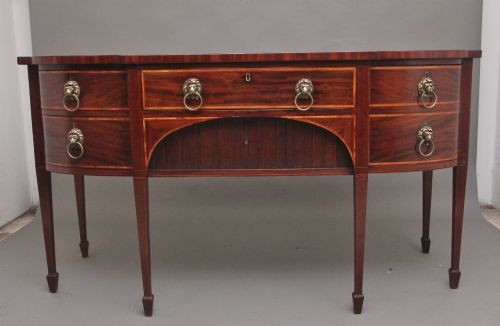
The forms vary from compact small sideboards to large six-legged examples, all designed to hold dining ware while presenting a smooth, sweeping silhouette to the room. Most listings show mahogany construction, frequently finished with stringing or crossbanding.
Makers of these pieces utilised styles ranging from strict George III designs to later Sheraton Revival interpretations. Buyers searching this phrase encounter substantial variety in proportions, from slender side servers to broad cabinet tables.
Materials and construction methods
Craftsmen built these pieces primarily using solid mahogany and flame mahogany veneer over secondary timbers, shaping the central front timbers into a gentle curve. This curved framework required careful timber selection to ensure the grain followed the sweep of the bow.
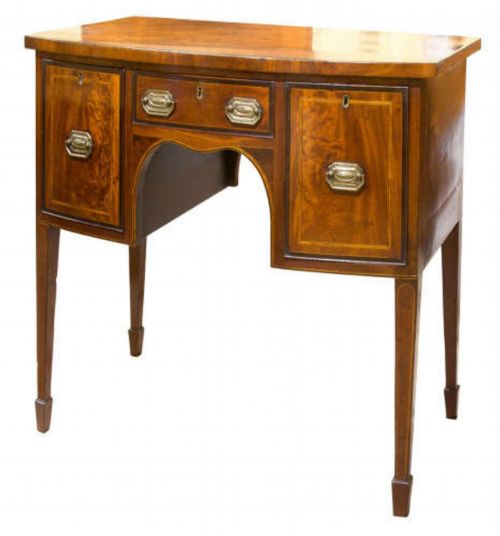
Decoration relied on contrasting timbers such as boxwood and satinwood, applied as stringing or inlay to frame drawers and top edges. Brass handles and mounts completed the construction, fastened securely to drawer fronts.
Current listings feature mahogany bowfront tables spanning the Georgian, Regency, and Edwardian eras, incorporating satinwood and boxwood inlay.
Distinctions in quality
Quality in these pieces rests upon the selection of timber veneers and the precision of the inlay work. Superior examples display figured flame mahogany with tightly matched grain patterns across the curved drawers, whereas simpler pieces utilise plain mahogany boards.
The refinement of the legs and the crispness of the boxwood or satinwood stringing separate standard production from exceptional cabinet work. Proportion and scale also dictate quality, with smaller, harmonious examples commanding greater attention from collectors.
George Hepplewhite
The Bowfront Buffet Table Glossary
- Bow-front
- A convex curved cabinet front that sweeps outward from the corners. This shape softens the rectangular appearance of traditional dining furniture.
- Crossbanding
- A border band of veneer laid around the perimeter of a surface with the grain running perpendicular to the centre. It creates a contrasting frame on drawer fronts and tabletops.
- Stringing
- Thin inlaid lines of contrasting timber used to outline panels, drawers, and legs. Boxwood and satinwood are common materials for this linear decoration.
- Flame mahogany
- A veneer cut from timber where the branch meets the trunk, producing a rippled, flame-like pattern. Cabinet makers placed these veneers centrally on drawer fronts for visual impact.
- Sideboard
- A dining room furniture piece used for serving food and storing tableware. The term frequently interchanges with buffet, server, and dresser in period listings.
Bowfront Buffet Table: Frequently Asked Questions
What is a bowfront buffet table?
A bowfront buffet table is a dining room serving piece featuring a curved, convex front that projects outward. These items provide surface space and drawer storage while introducing softer lines to a room.
They appear primarily in mahogany across Georgian, Regency, and Edwardian periods, serving both utilitarian and decorative roles in traditional dining spaces.
How do I date a bowfront sideboard?
Dating relies on examining the timber, hardware, leg style, and secondary woods used in the construction. Georgian pieces often feature hand-cut dovetails and delicate stringing, while Edwardian revivals display heavier internal framing.
Matching the design characteristics against known stylistic periods such as George III or Sheraton helps narrow the decade of manufacture.
Where should I place a sideboard?
These pieces suit dining rooms, large hallways, or living spaces where surface display and concealed storage are required. Their curved fronts allow them to sit comfortably against flat walls while softening traffic flow in narrower rooms.
Positioning them away from direct heat sources protects the mahogany veneer and any delicate boxwood inlay.
What is the difference between a sideboard and a server?
A server is generally smaller and lighter, designed specifically for holding dishes during a meal rather than heavy storage. Sideboards are typically larger, incorporating multiple drawers and cupboards for extensive tableware.
Both forms utilise the bowfront shape across the listings on this page.