
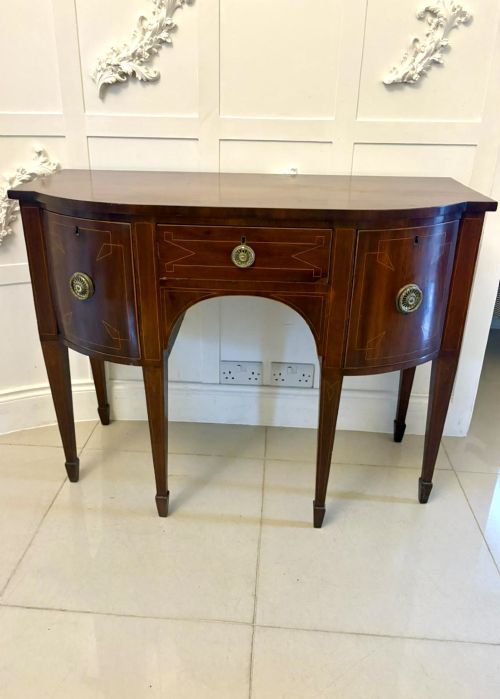
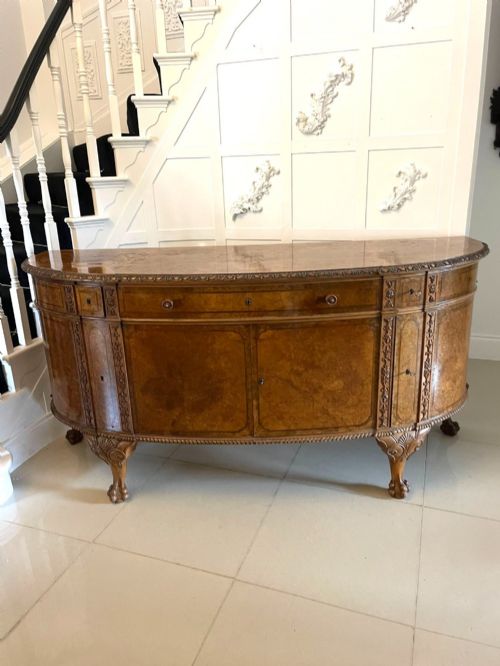
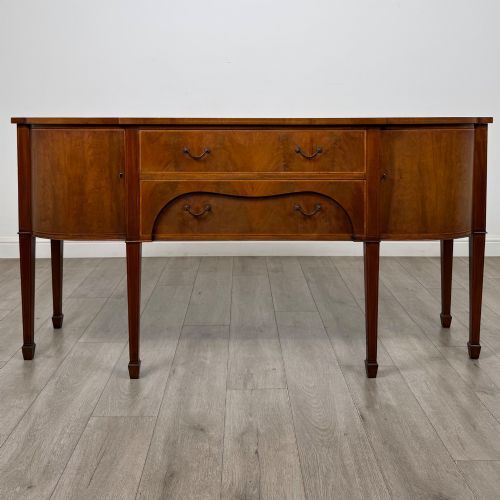
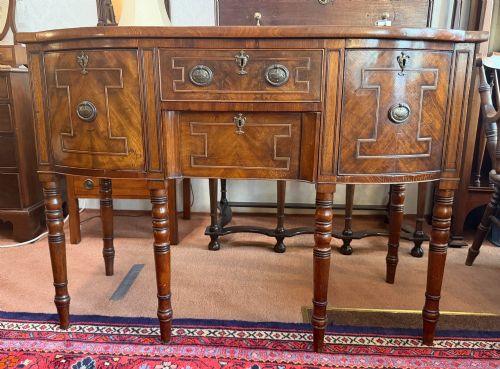
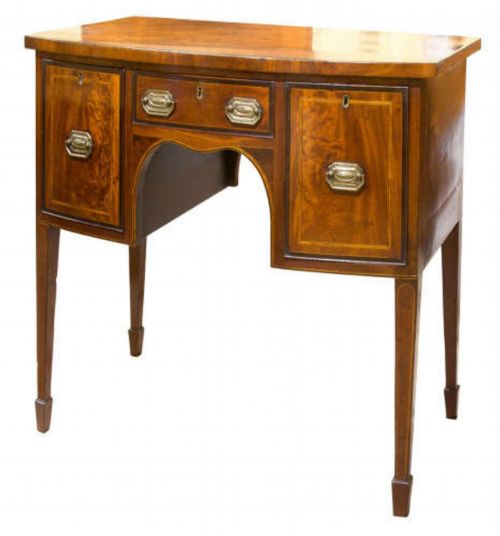
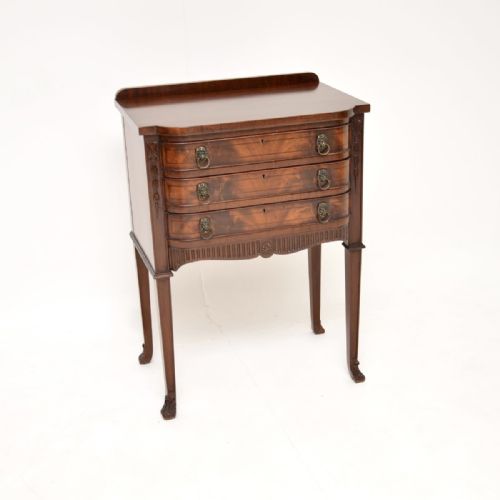
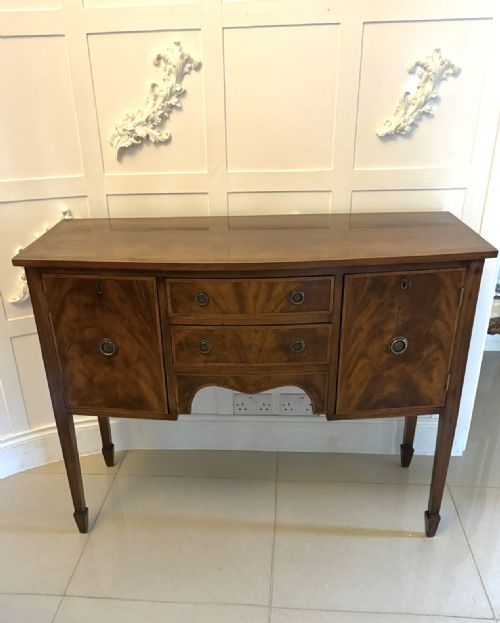
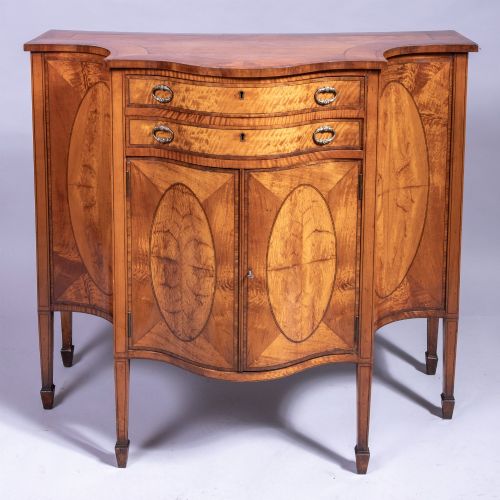
Bowfront Buffet Server
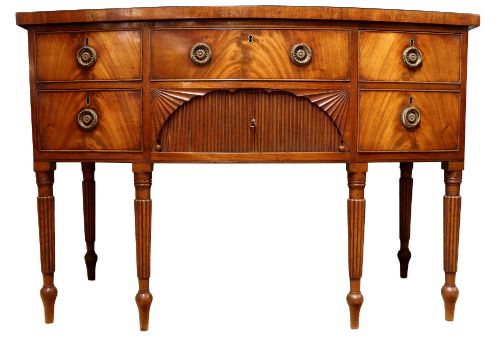
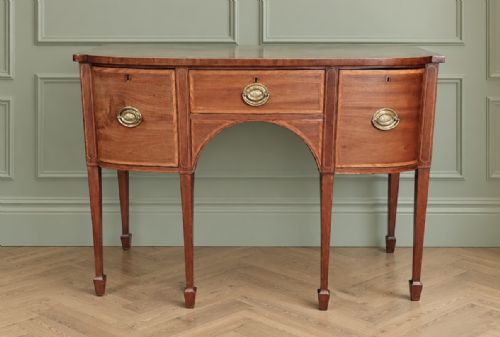
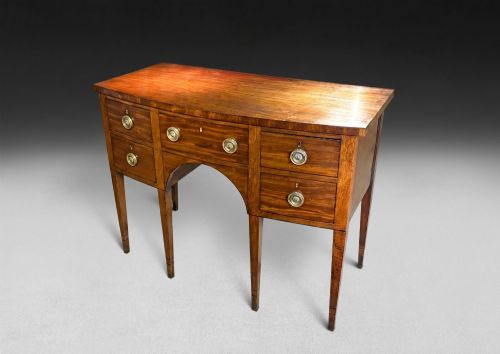
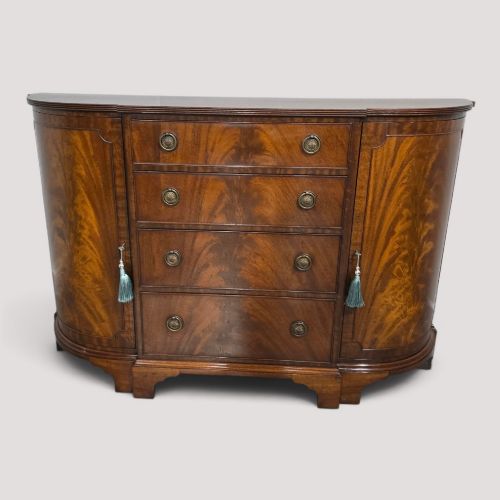
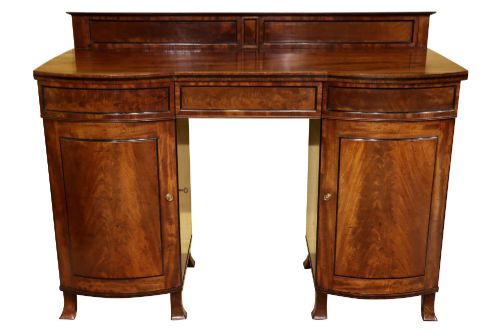
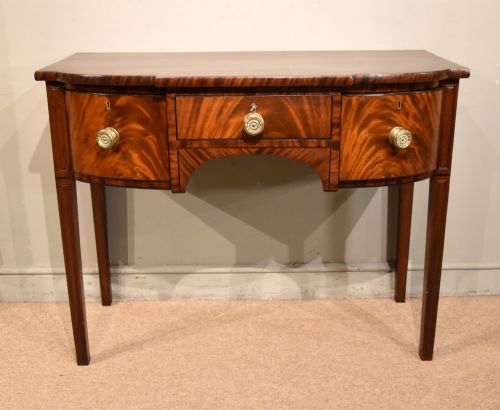
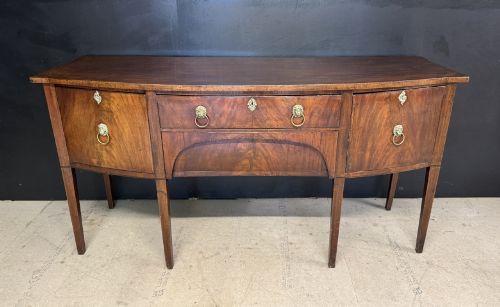
These bowfront buffet server pieces bring curved elegance and ample storage to a dining room.
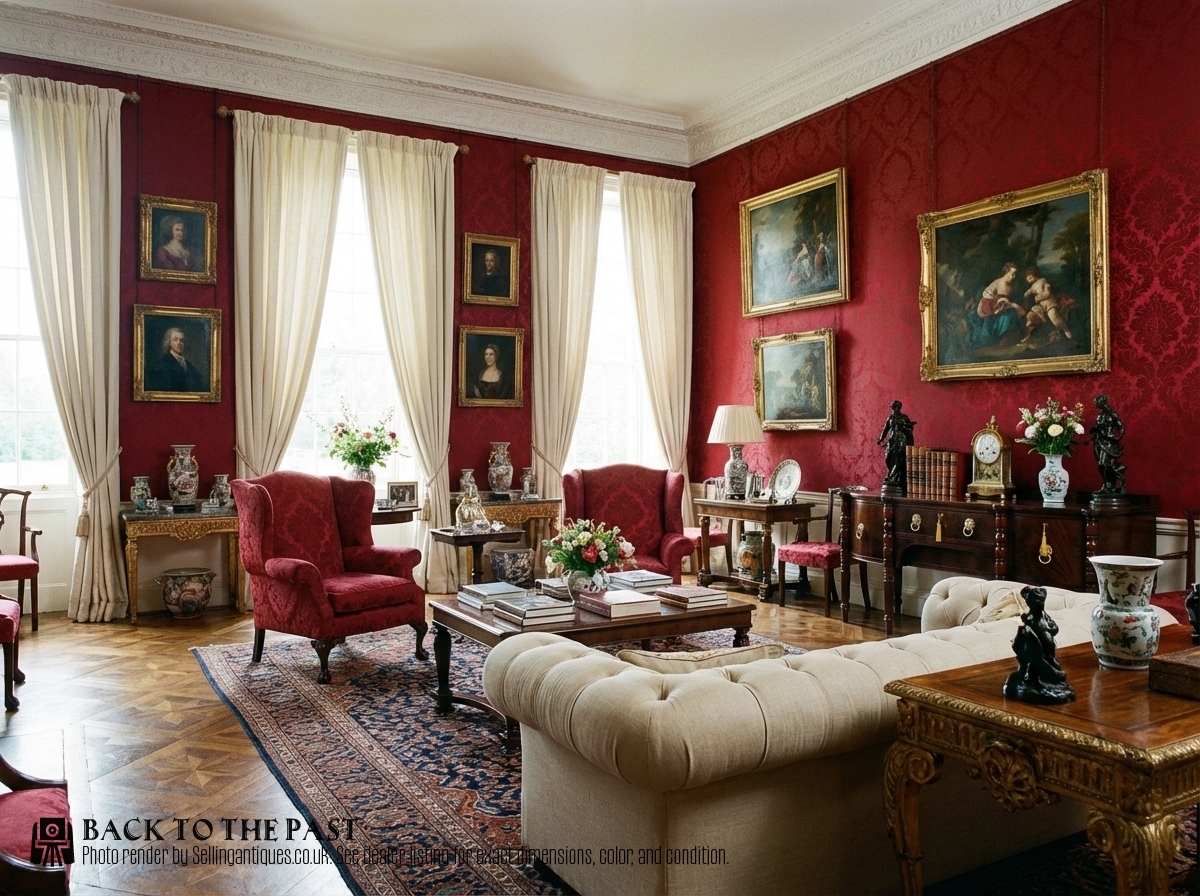
Bowfront Buffet Server
A bowfront buffet server is a dining room storage piece defined by its outward-curving front facade. When exploring a bowfront buffet server on this page, the buyer encounters examples spanning the eighteenth century through the twentieth century. Sideboards, side cabinets, and servers form the core of these listings.
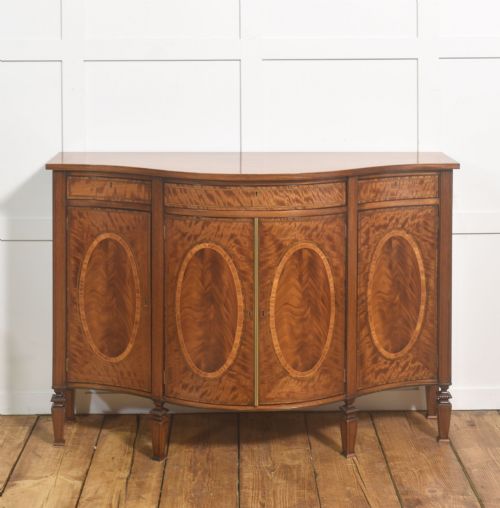
Georgian, Regency, and Edwardian periods dominate the selection alongside later revivals. Buyers frequently meet mahogany construction combined with boxwood or satinwood inlay.
The objects serve primarily as dining room storage furniture, functioning both as servers during meals and as decorative side tables. Forms range from compact sideboards to grand pedestals and breakfront cabinets.
How they were made
Cabinet makers constructed these pieces primarily using solid mahogany and flame mahogany veneers over secondary timbers. Skilled artisans applied thin layers of veneer to achieve dramatic grain patterns across the curved drawer fronts.
Inlay and crossbanding required precise hand-cutting of contrasting timbers such as boxwood, satinwood, and purpleheart. These delicate stringing details framed the mahogany panels and emphasised the gentle sweep of the bow front.
Listings feature mahogany, satinwood, and brass materials across Georgian, Regency, and Edwardian periods.
What varies in quality
The refinement of the timber selection dictates the visual impact, particularly where matched flame mahogany veneers create a balanced grain pattern across the curved drawers. Superior pieces display meticulous attention to the continuity of the wood figure around the rounded corners.
The crispness of the hand-cut inlay and the subtlety of the crossbanding separate standard workshop output from exceptional cabinet work. Original brass hardware and well-fitted drawer construction further distinguish the finer examples in this category.
The Bowfront Buffet Server Glossary
- Bowfront
- A curved cabinet front that swells outward in the centre. This convex shape softens the linear geometry of a dining room.
- Crossbanding
- A narrow strip of veneer laid across the grain of the primary surface. It creates a contrasting border around drawer fronts and tabletops.
- Inlay
- Contrasting woods or materials fitted into recessed spaces to form decorative patterns. Boxwood and satinwood frequently provide pale contrast against dark mahogany.
- Flame mahogany
- Timber cut from the fork of the mahogany tree where branches meet the trunk. This produces a dramatic, flame-like figure prized by period cabinet makers.
Bowfront Buffet Server: Frequently Asked Questions
Where do I put a bowfront buffet server?
These servers fit naturally against a dining room wall where they provide surface space for serving food and interior storage for tableware. Their curved fronts allow them to occupy less visual space than flat-fronted cabinets of similar depth.
They also work well in spacious hallways or living rooms as display surfaces for lamps and decorative objects.
What is the difference between George III and Regency styles?
George III pieces often feature balanced classical proportions with subtle boxwood stringing and elegant tapered legs. They reflect the refined neoclassical taste of the late eighteenth century.
Regency designs tend toward bolder architectural elements, sometimes incorporating brass inlay or pedestal supports influenced by classical antiquity.
Can I use a server as a drinks cabinet?
The deep drawers and cupboards of these servers accommodate bottles, glassware, and bar accessories with ease. Many period pieces offer ample interior volume for storing entertaining essentials out of sight.
Ensure spills are wiped away promptly to protect the vintage polished timber surfaces.