

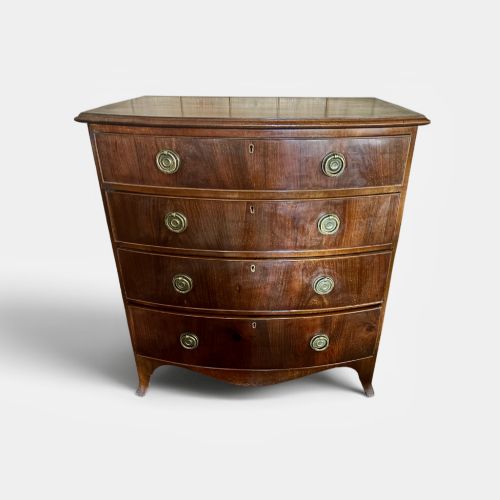
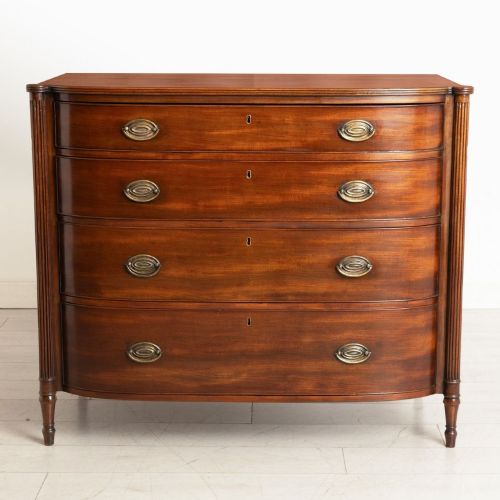
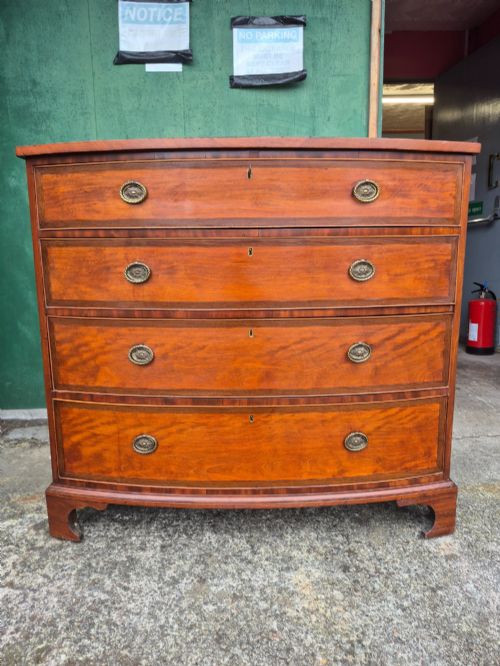
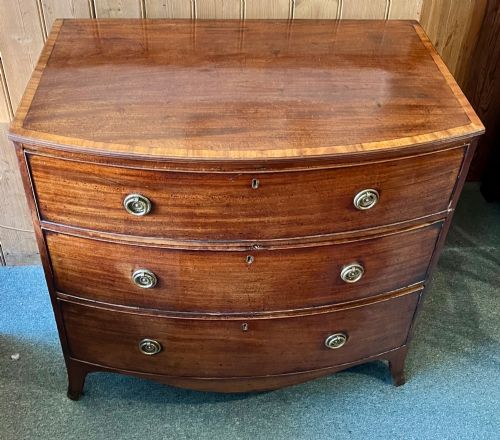
Bow Fronted Wooden Dresser
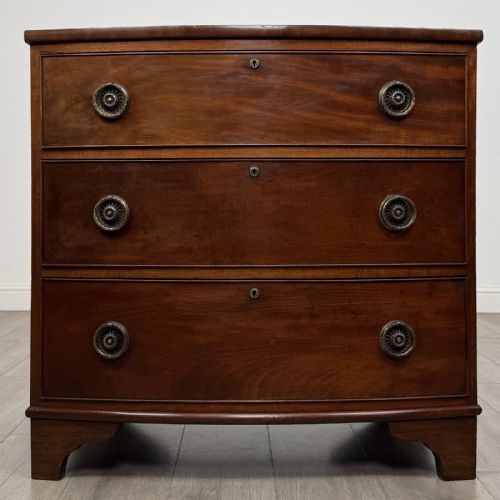
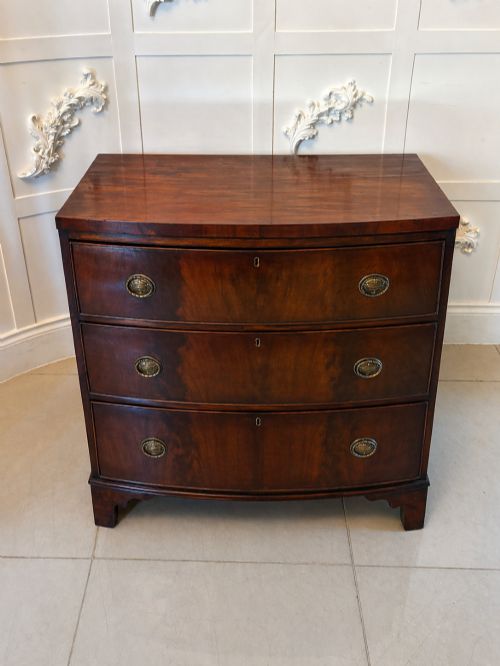
A bow fronted wooden dresser brings unmistakable presence to a room, offering generous storage through a sweeping curved facade that catches the light.
Bow Fronted Wooden Dresser
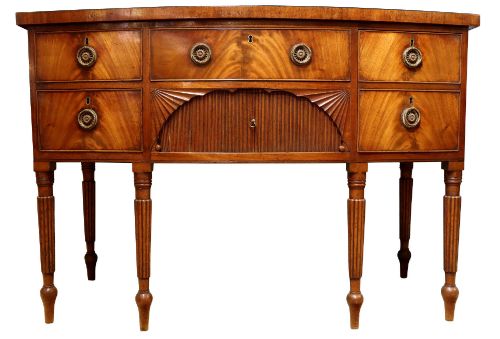
When you search for a bow fronted wooden dresser, you encounter formal case furniture primarily designed as chests of drawers and sideboards. These pieces span several distinct historical periods, including Georgian, Regency, Victorian, and Edwardian eras.
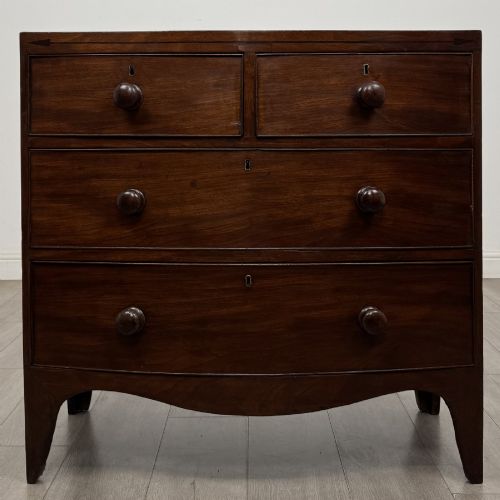
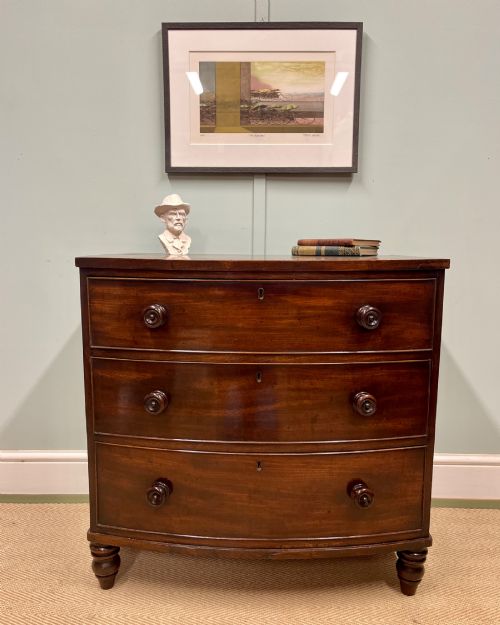
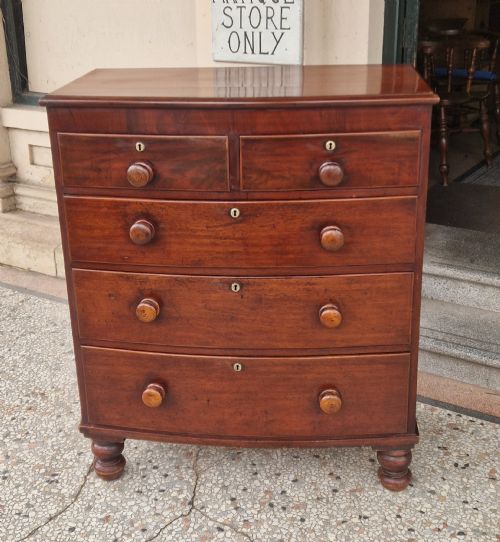
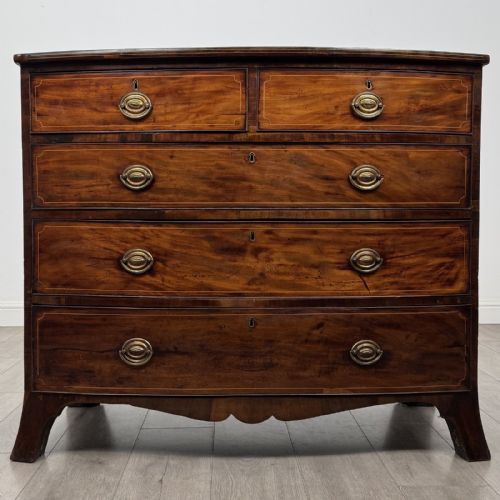
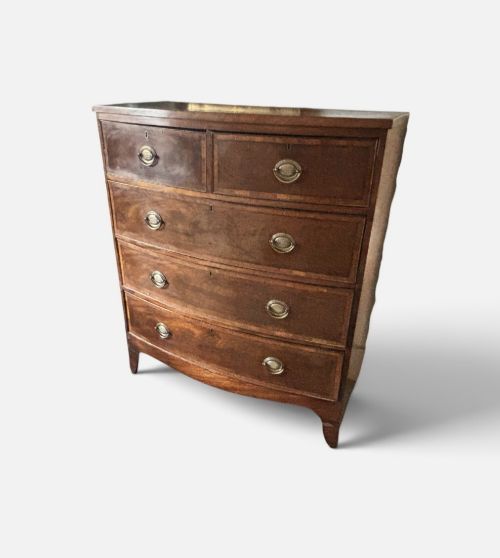
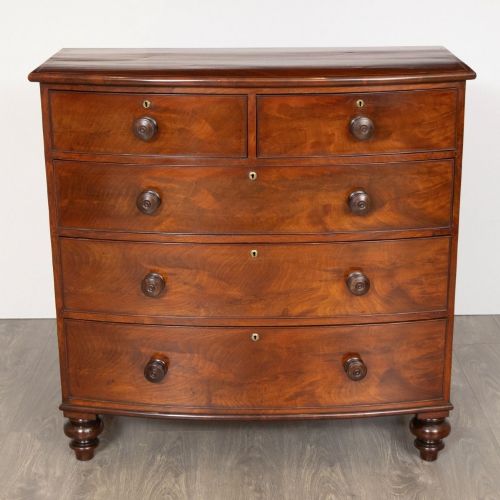
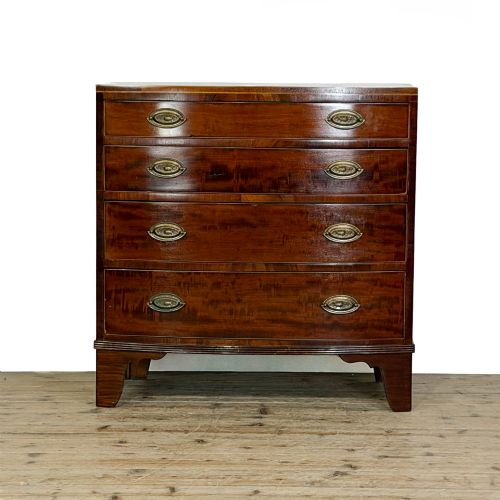
The version you meet most frequently on this page is the mahogany chest of drawers, often constructed with graduated drawers and curved fronts. Makers shaped these silhouettes to soften room corners and introduce graceful curves into domestic interiors.
Originating across the 18th, 19th, and early 20th centuries, these items range from compact bedroom chests to grand dining room sideboards. Each piece reflects the prevailing taste of its period, from austere George III proportions to ornate Victorian styling.
Materials and Construction Techniques
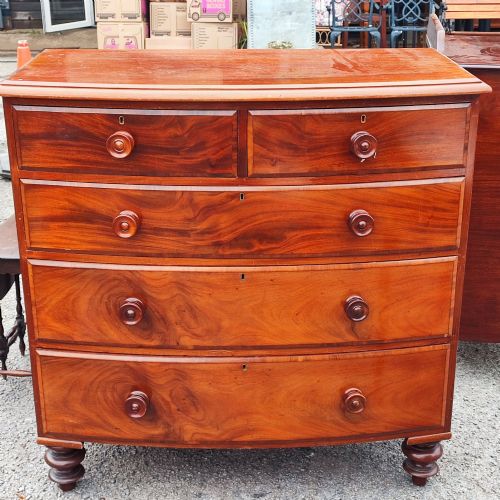
Cabinetmakers built these carcases predominantly using solid mahogany, frequently selecting flame mahogany veneers for enhanced visual depth on drawer fronts. Workshops incorporated secondary timbers such as oak for internal drawer linings and structural framing.
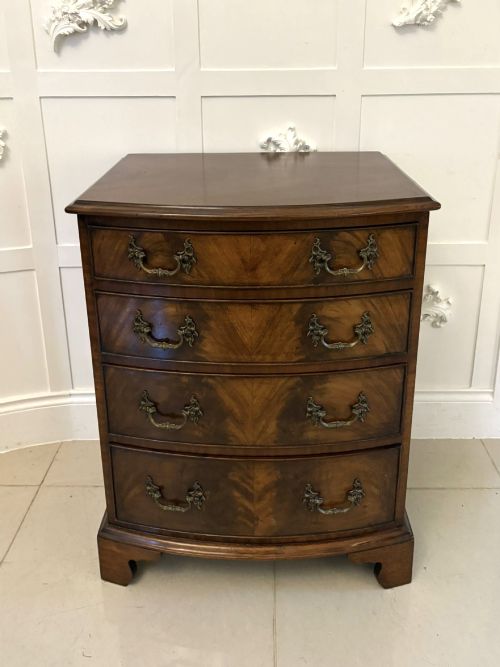
Detailed decoration relied on contrasting timber inlays and stringing, utilising boxwood and satinwood to create crisp borders around drawer edges. Brass hardware, including oval backplates and drop handles, completed the construction alongside hand-cut dovetail joints.
Bow Fronted Wooden Dresser Retail Price Guide 2026
Typical asking prices for bow fronted wooden dresser among the pieces listed under this phrase on Sellingantiques today, from the lower quarter to the upper quarter. They describe what is for sale here now, not the wider market.
Listings feature mahogany, oak, satinwood, and boxwood materials across Georgian, Regency, Victorian, and Edwardian periods.
Distinctions in Quality and Craftsmanship
The standard of a bow fronted wooden dresser depends heavily on the selection of timber veneers and the precision of the curved drawer construction. Superior examples feature book-matched flame mahogany that creates symmetrical patterns across the entire facade.
Finer pieces display meticulous attention to detail in their cross-banding and inlay work, with tight joints that remain flush through seasonal humidity shifts. The integrity of the original brass handles and smooth operation of graduated drawers further separate workshop masterpieces from utilitarian furniture.
The Bow Fronted Wooden Dresser Glossary
- Bow front
- A convex curved cabinet front that projects outward in a smooth arc. This shape gained immense popularity during the late 18th and early 19th centuries.
- Cross-banding
- A border technique where thin strips of veneer are laid perpendicular to the grain of the central panel. This frames the drawer fronts with contrasting wood figures.
- Flame mahogany
- A highly figured wood veneer displaying flickering, flame-like patterns caused by growth patterns near the branch junctions. Cabinetmakers reserved this timber for principal display surfaces.
- Graduated drawers
- A sequence of drawers that decrease in depth from bottom to top. This arrangement creates a balanced visual perspective on tall case pieces.
- Dovetail joint
- An interlocking wood joint formed by interlocking wedge-shaped fingers. Hand-cut dovetails indicate traditional joinery methods used before industrial manufacturing.
Bow Fronted Wooden Dresser: Frequently Asked Questions
What is a bow fronted wooden dresser?
A bow fronted wooden dresser is typically a chest of drawers or sideboard featuring a convex, curved front facade. These pieces combine practical storage capacity with decorative architectural presence.
Cabinetmakers utilised this curved design to soften rigid room geometries and showcase highly figured wood veneers. They remain functional storage items in modern homes.
How do I date a bow fronted chest?
Dating relies on observing construction methods, hardware styles, and overall proportions across different historical eras. Georgian and Regency pieces often feature delicate cross-banding and fine bracket feet.
Victorian examples tend to be heavier with bolder mouldings and turned feet. Internal examination of drawer linings and dovetails reveals further clues about manufacturing periods.
Where should I place a sideboard?
Sideboards suit dining rooms, hallways, or living spaces where surface display and concealed storage are required. Their shallow curved profiles allow them to sit comfortably against walls without dominating floor space.
Ensure placement avoids direct sunlight to protect polished wood surfaces and delicate veneers. Adequate clearance ensures drawers and cupboards open fully.
Are these pieces made of solid wood?
Most pieces combine solid structural frames with high-quality timber veneers applied to secondary woods. Flame mahogany and satinwood were commonly sliced into thin veneers to create decorative patterns.
Internal carcase components and drawer linings frequently utilise sturdy timbers like oak. This layered construction prevented warping across the curved front panels.