


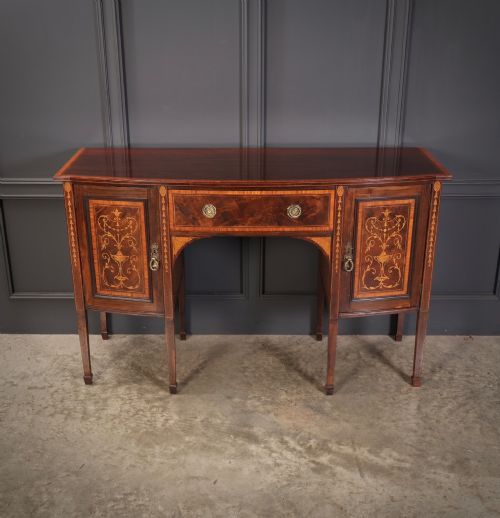


Bow Front Dining Cabinet
A bow front dining cabinet brings curved elegance and ample storage to a room, offering the classic proportions collectors seek.
Bow Front Dining Cabinet
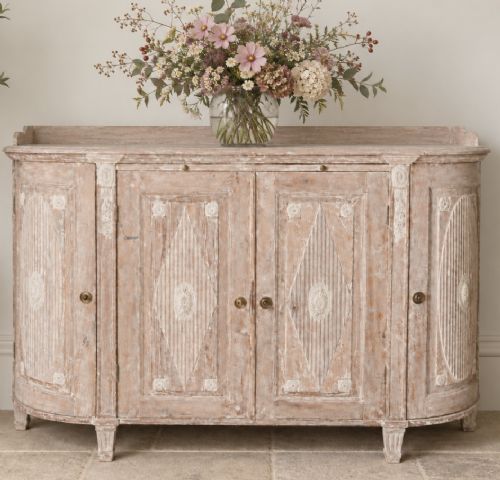
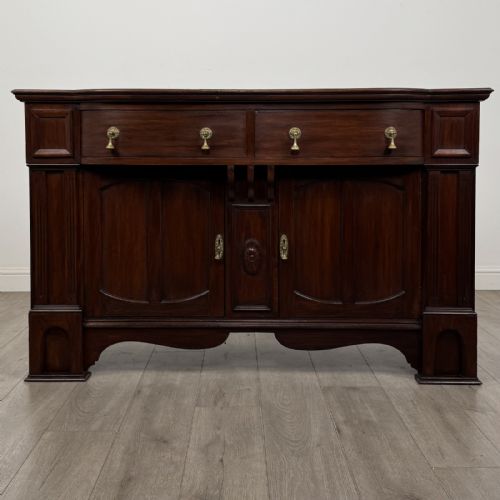
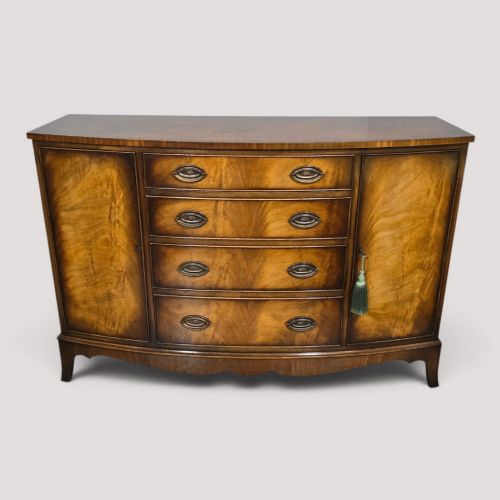
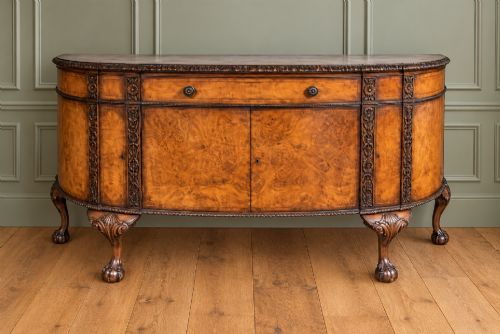
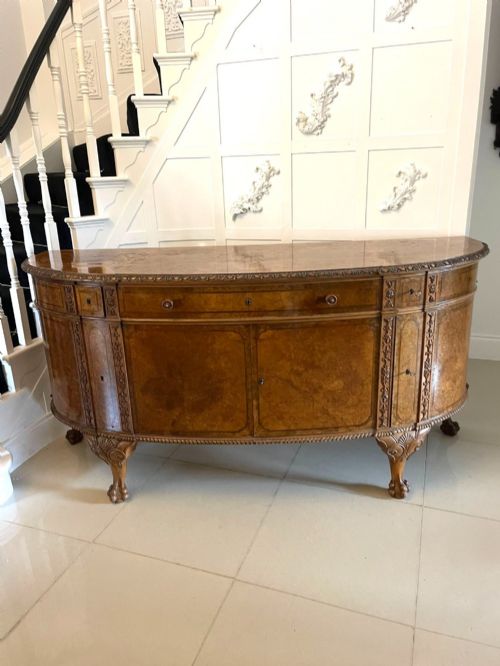
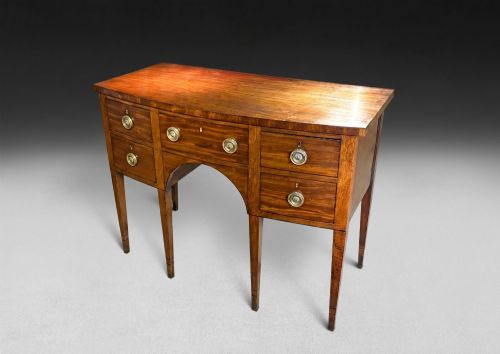
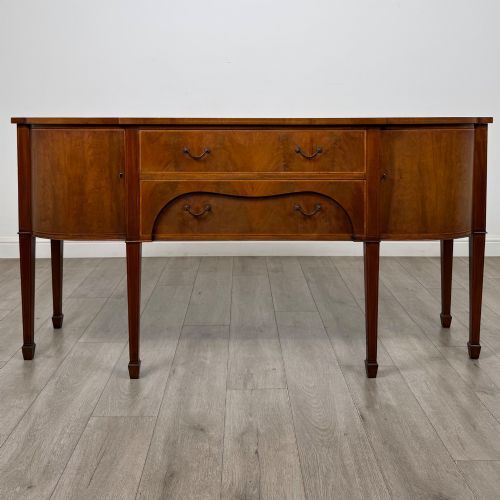
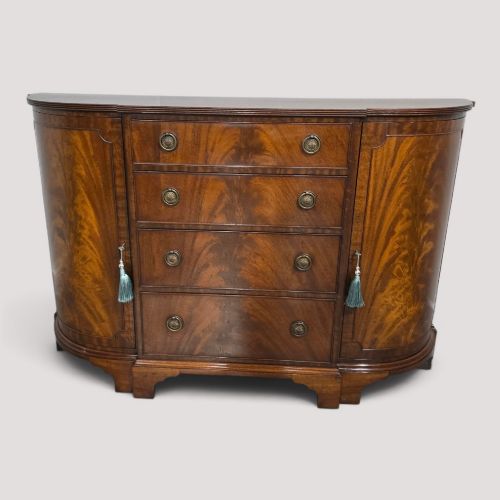
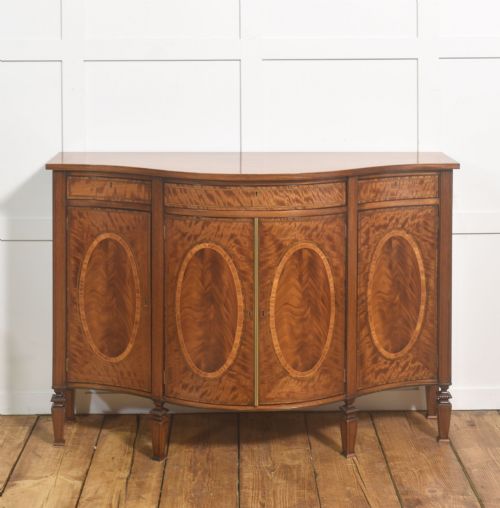
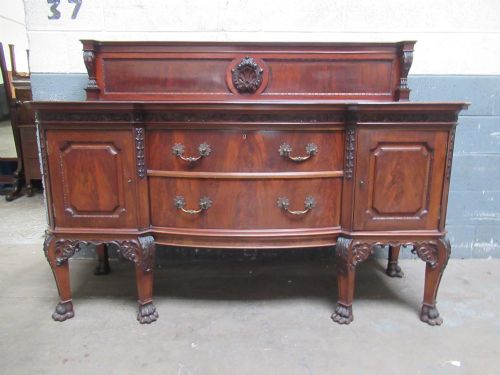
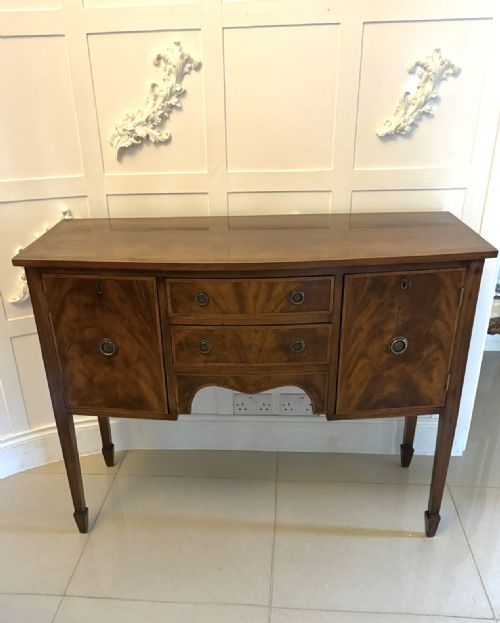
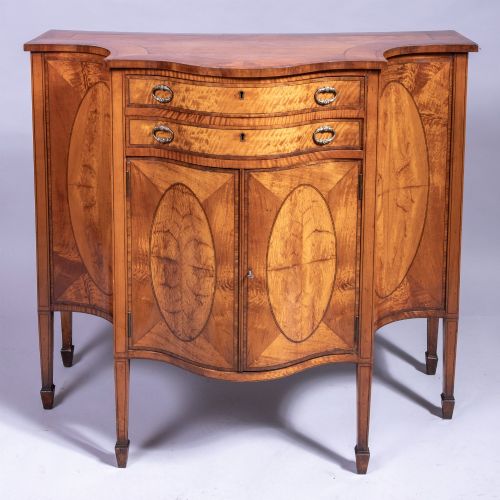
A bow front dining cabinet presents a distinctive curved facade that softens the corners of a room while providing practical storage for dining spaces. These pieces appear primarily as sideboards, side cabinets, and cocktail units originating from periods spanning the eighteenth, nineteenth, and early twentieth centuries.
Forms range from compact side cabinets to large stage-back sideboards and double bow front cocktail units designed for entertaining. Each variation serves the traditional function of housing tableware, cutlery, and beverages while displaying distinct period characteristics.
Materials and construction
Makers utilised solid timbers and carefully selected veneers, relying predominantly on mahogany, walnut, and satinwood for the primary surfaces. Burr walnut and flame mahogany appear frequently to create striking figured grain patterns across the curved doors and drawers.
Decoration relied heavily on contrasting stringing and banding, incorporating boxwood and satinwood inlay alongside marquetry details. Brass hardware, including handles and key escutcheons, complemented the rich tones of the timber.
Structural integrity depended on disciplined cabinetmaking to shape the curved front frame and drawer fronts without warping. Carved elements, where present, were executed directly into the hardwood structure to accent the period style.
Bow Front Dining Cabinet Retail Price Guide 2026
Typical asking prices for bow front dining cabinet among the pieces listed under this phrase on Sellingantiques today, from the lower quarter to the upper quarter. They describe what is for sale here now, not the wider market.
Some cabinets hide twelve-piece cutlery sets inside, proving that past owners took dinner party organisation extremely seriously.
Factors that separate quality
Quality rests upon the selection of the timber veneers and how seamlessly the curved drawer fronts align with the surrounding frame. Pieces displaying matched flame mahogany or burr walnut across the entire facade command greater attention.
The precision of the inlay work and the crispness of any carved detailing indicate the skill invested by the original maker. Finer examples maintain original brass hardware and well-fitted internal drawers, such as dedicated cutlery compartments.
Proportion and scale also dictate distinction, as smaller or particularly grand pieces from the Georgian and Regency periods demonstrate superior architectural balance. The integration of specialised forms, like stage-backs or cocktail fittings, adds to the design complexity.
Edwards and Roberts
The Bow Front Dining Cabinet Glossary
- Bow front
- A convex, curved front on a cabinet or sideboard that projects outward in an arc. This shape was particularly popular during the Georgian and Regency periods to soften interior lines.
- Flame mahogany
- A veneer cut from the fork of the mahogany tree where the branch meets the trunk, producing a rippling, flame-like pattern. It was prized for high-end dining furniture.
- Stringing
- Thin lines of contrasting wood inlay used to outline drawers, doors, and tabletops. Boxwood and satinwood were common choices for this decorative banding.
- Stage-back
- A raised tier or superstructure at the rear of a sideboard surface used for displaying serving dishes or silver. These additions are typical of larger Georgian dining pieces.
- Marquetry
- The art of applying pieces of veneer to a structure to form decorative patterns and pictures. Makers used various coloured woods to create floral or geometric motifs.
Bow Front Dining Cabinet: Frequently Asked Questions
What rooms suit a bow front dining cabinet?
These cabinets fit naturally into dining rooms and living spaces where their curved lines break up the boxy geometry of modern interiors. They provide functional surface space and enclosed storage for hosting essentials.
Their varied footprints, from compact sideboards to larger cocktail units, allow them to serve as focal points without overwhelming smaller domestic layouts.
How do I distinguish Georgian from Edwardian pieces?
Georgian examples generally rely on architectural proportions, solid mahogany construction, and understated stringing. They reflect eighteenth-century restraint and utility.
Edwardian pieces often revive earlier styles, introducing lighter satinwood, extensive marquetry, and occasional Art Nouveau influences that point to twentieth-century manufacturing methods.
Were these cabinets strictly used for dining?
While traditionally designed for dining rooms to store tableware, linens, and cutlery, many forms evolved. Cocktail cabinets emerged later to accommodate the changing social habits of the early twentieth century.
Side cabinets and smaller sideboards also transitioned easily into hallways and drawing rooms as general storage furniture.
How should I care for the timber surfaces?
Maintenance requires keeping the wood away from direct heat sources and strong sunlight to prevent the veneers from drying and cracking. Regular dusting with a soft, dry cloth preserves the polished finish.
Occasional application of appropriate wax polish helps nourish aged mahogany and walnut without building up unwanted residue.