
Antique Inlaid Server
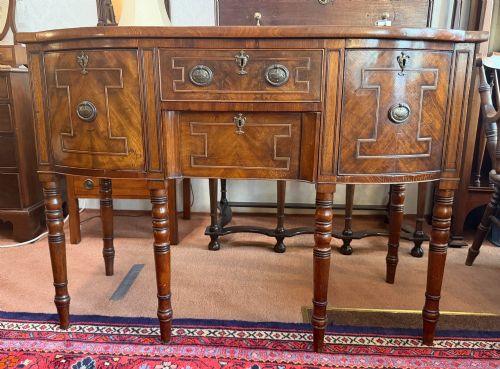
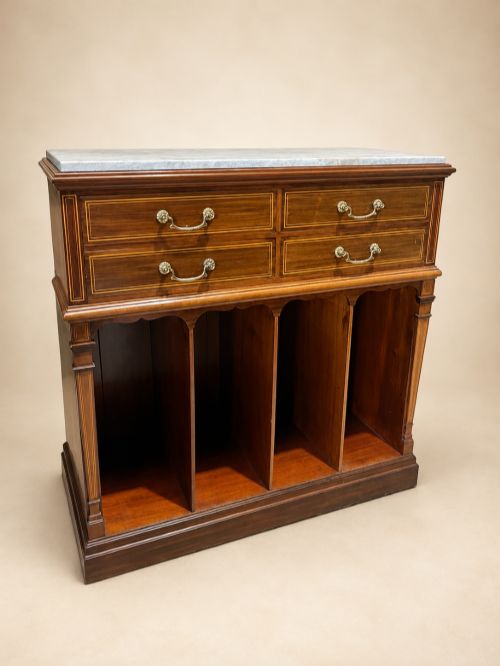
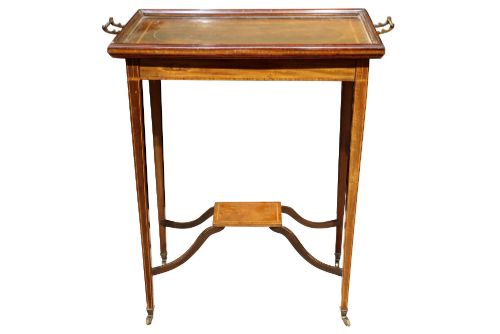
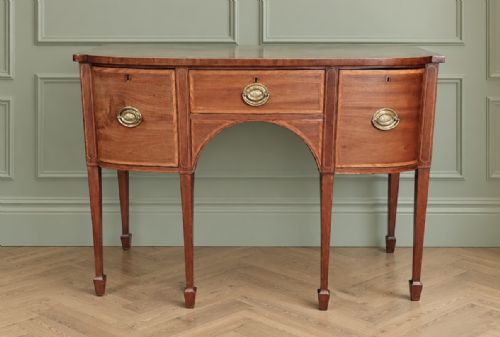
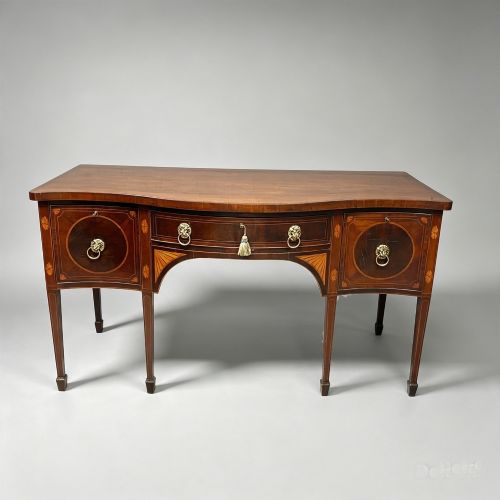
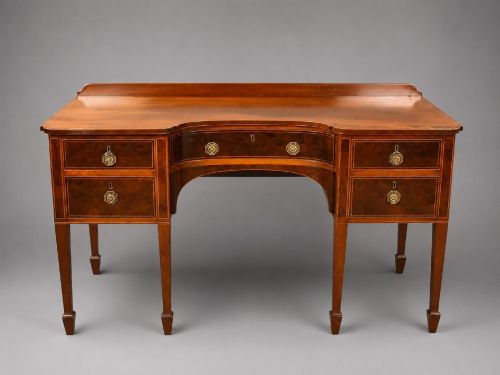
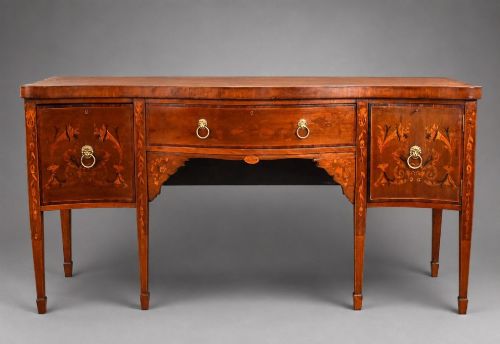
An antique inlaid server provides practical dining room storage while bringing rich wood figures and crisp contrasting bandings into the room.
Antique Inlaid Server
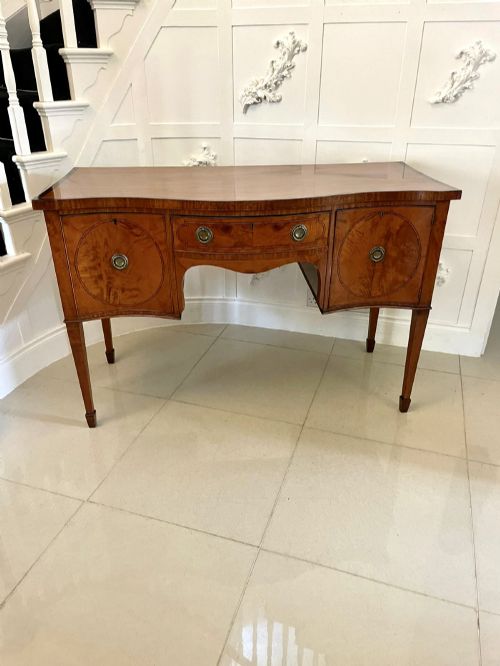
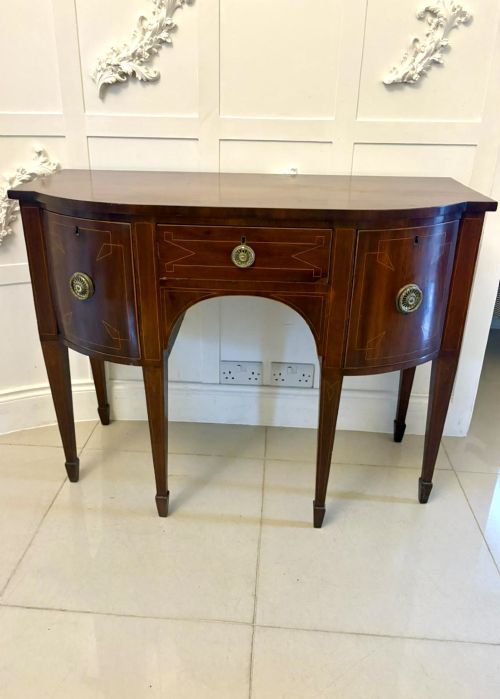
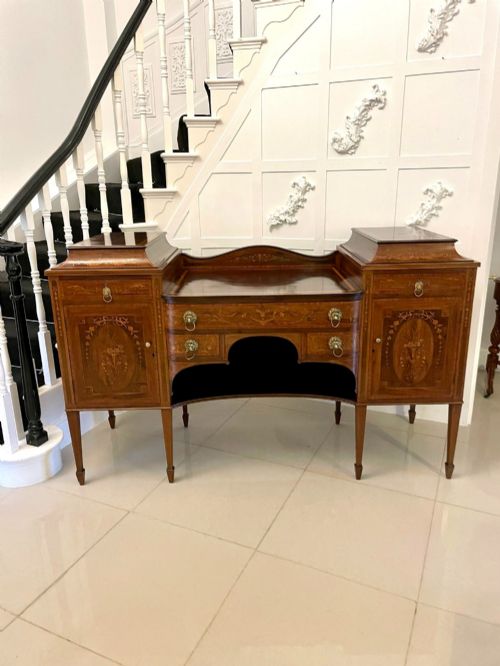
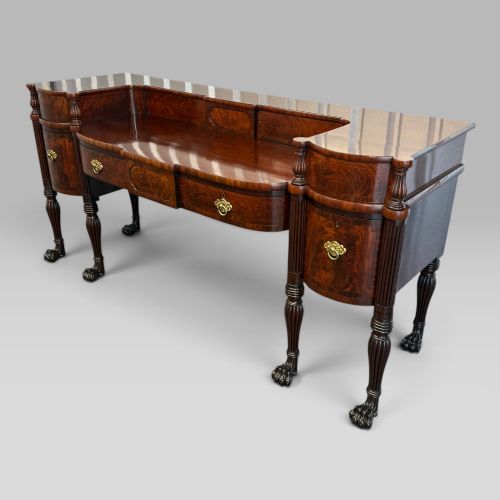
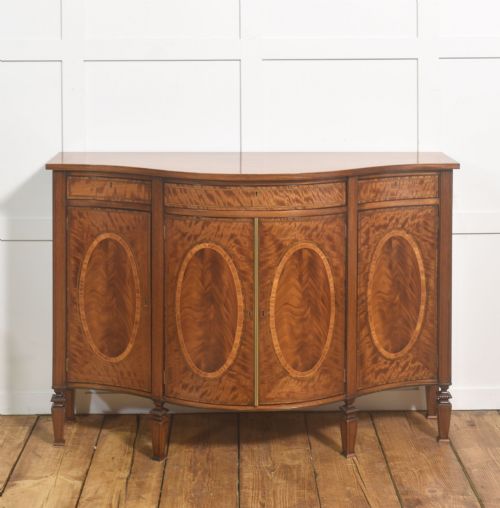
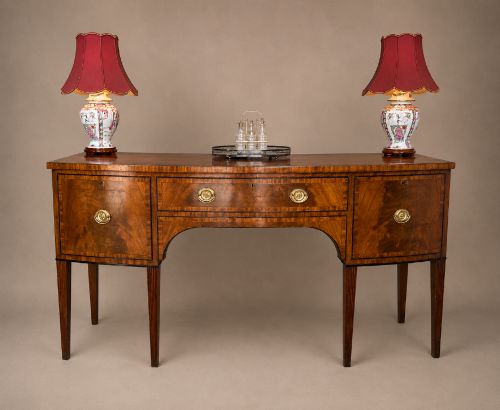
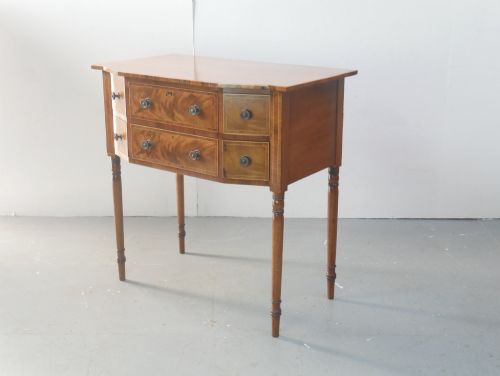
An antique inlaid server encompasses formal dining room furniture designed for serving food and displaying silver, most frequently appearing as mahogany sideboards and side tables from the Georgian, Regency, and Edwardian periods. These pieces range from small bow-front and serpentine forms to larger stage-back and buffet designs.
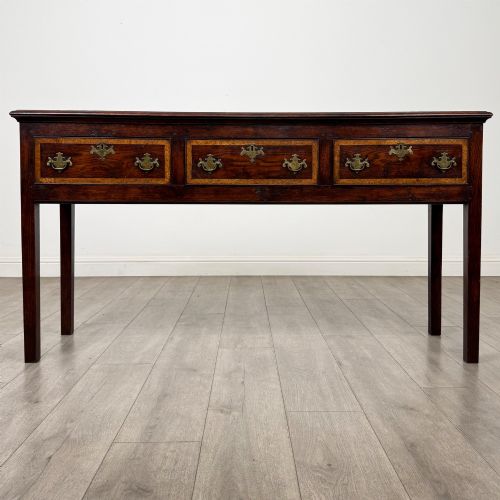
The selection includes specific server and server-table designations alongside related sideboard and cabinet forms that share the same surface utility and decorative inlay work. Makers across the eighteenth, nineteenth, and early twentieth centuries produced these items in various proportions to suit dining spaces of different scales.
How they were made
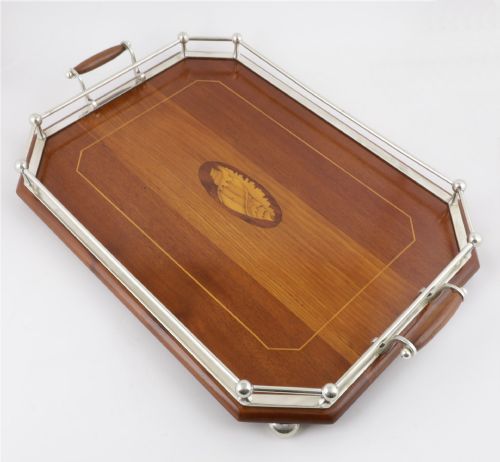
Cabinetmakers built these pieces using solid and veneered timbers, predominantly mahogany and oak, often selecting highly figured flame mahogany for primary surfaces. Satinwood, boxwood, and contrasting wood inlays formed detailed bandings, marquetry motifs, and stringing along drawer fronts and borders.
Structural elements incorporated secondary woods alongside brass hardware such as lion paw feet, handles, and galleries. Joinery techniques ensured stability for large bow-front and serpentine bodies while allowing delicate string inlay and crossbanding to sit flush with the surrounding timber.
Some servers arrive with secret cellar drawers deep enough to chill wine bottles in long-gone blocks of ice.
What varies in quality
The refinement of the timber selection dictates the visual impact of an antique inlaid server, particularly where figured mahogany and contrasted satinwood bandings meet. Superior examples display precise, tight grain patterns and crisp, hand-cut inlay work that follows complex curves without lifting or misalignment.
Proportion and execution of form separate standard pieces from exceptional ones, especially in serpentine and bow-front shapes that demand rigorous carpentry. The integration of original brass mounts, well-turned legs, and balanced secondary timbers completes the standard of the best workshop output.
Hewetsons London
The Antique Inlaid Server Glossary
- Bow-front
- A convex, curved cabinet front that projects outward in the centre, commonly found on nineteenth-century sideboards.
- Serpentine
- A front profile characterised by a convex centre flanked by concave curves, requiring advanced cabinetmaking skill.
- Crossbanding
- A strip of veneer applied to the border of a panel or drawer front with the grain running perpendicular to the core timber.
- Marquetry
- Decorative patterns formed by fitting together contrasting pieces of wood veneer to create pictorial or geometric designs.
- Stringing
- Thin, linear inlay of a contrasting light or dark wood used to outline drawers, legs, and tabletops.
Antique Inlaid Server: Frequently Asked Questions
What is an antique inlaid server used for?
These pieces served historically in dining rooms for holding serving dishes, silverware, and glassware during large meals. Today they function as side tables or storage cabinets in hallways, living rooms, and dining spaces.
Their broad top surfaces and drawer compartments offer practical storage while displaying decorative objects or serving drinks during gatherings.
How do I tell a Georgian server from a later revival piece?
Georgian pieces display eighteenth-century construction methods, hand-cut dovetails, and native timber usage appropriate to the period before mass production. Revival pieces from the Edwardian or Sheraton Revival eras often feature lighter satinwood framing and standardised machine-assisted elements.
Examining the secondary woods inside the drawers and the style of the inlay provides clear clues to the exact decade of manufacture.
What woods were commonly used for these servers?
Mahogany served as the primary structural and surface timber, frequently chosen in its figured or flame variety to add movement and depth to the front. Satinwood, boxwood, and oak appeared alongside mahogany to supply contrasting tones for inlaid borders and internal framing.
Brass fittings and silver plate elements also featured heavily as supplementary materials on handles, feet, and serving galleries.
How do I care for a mahogany and inlaid surface?
Keep these items away from direct sunlight and strong heat sources to prevent the fine wood veneers and delicate string inlay from drying out or lifting. Dust regularly with a dry cloth and apply a quality beeswax sparingly when the timber appears dry.
Avoid placing damp items or unsealed plant pots directly onto the polished wood surface to protect the historic finish.