



Boulle Bracket Clock
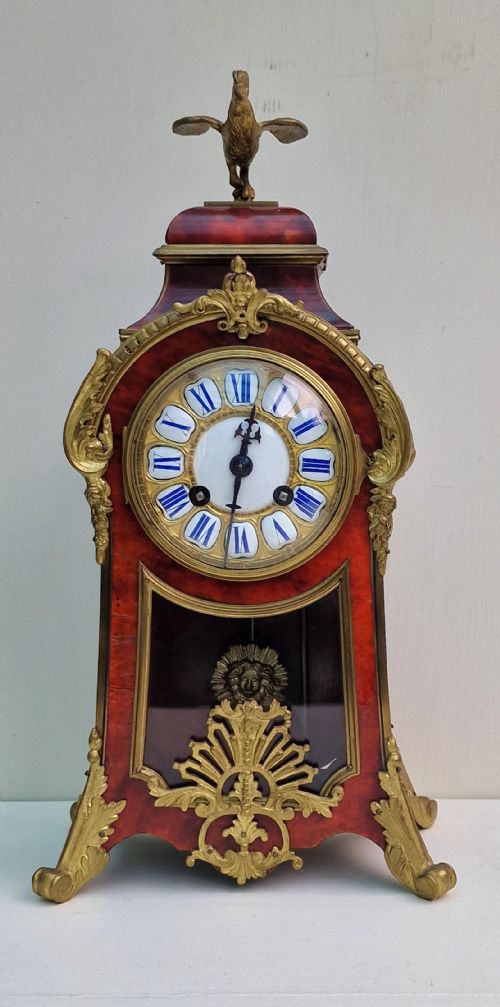
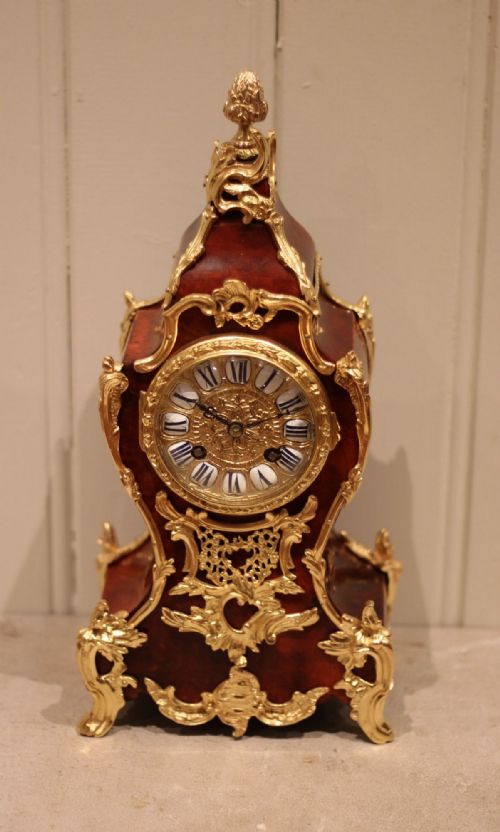
A boulle bracket clock combines tortoiseshell marquetry and cut brass with architectural form.
Boulle Bracket Clock
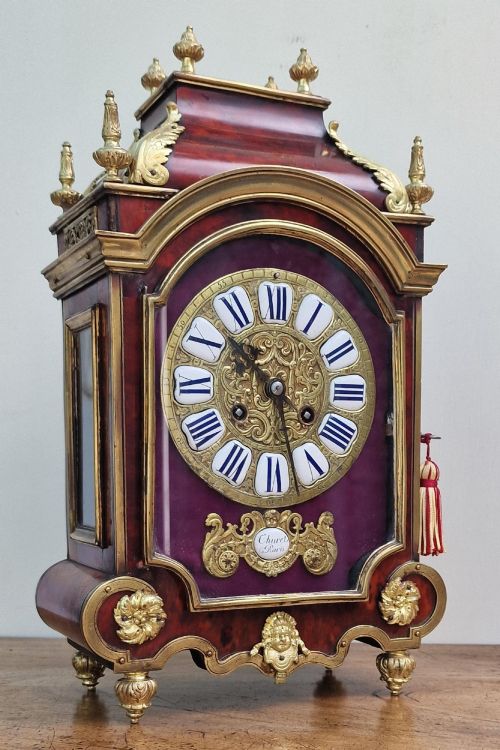
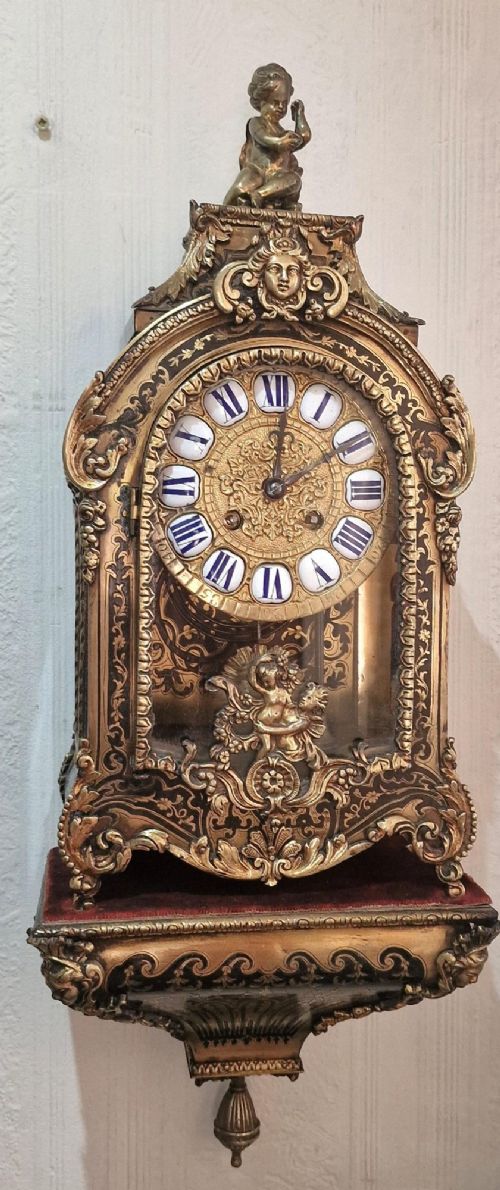
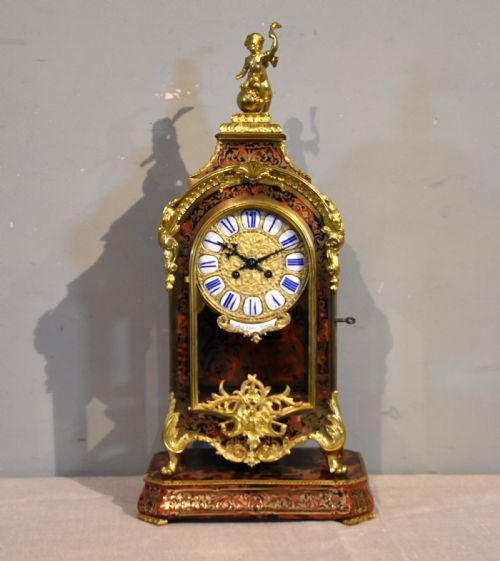
A boulle bracket clock is an imposing timepiece designed either to stand on a dedicated wall bracket or sit directly upon a mantel or table. When you search for a boulle bracket clock, you encounter elaborate French timepieces decorated with tortoiseshell and brass inlay, often accompanied by matching wall consoles.
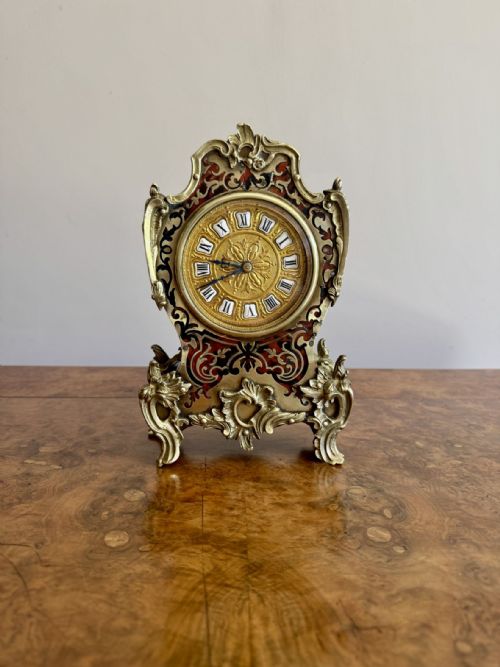
The versions most frequently met on this page date from the nineteenth century and display the rich influence of Louis XIV, Louis XV, and French Rococo styles. These pieces vary from compact mantel models to towering bracket clocks complete with matching pedestals.
Materials and technique
Maker workshops built these bodies using timber frames veneered with tortoiseshell, sometimes tinted in green or red hues, alongside intricately sawn brass inlay known as marquetry. This technique, popularised by André-Charles Boulle, involves cutting sheets of brass and tortoiseshell simultaneously to create opposing patterns of first-study and counter-study designs.
Gilt bronze and ormolu mounts punctuate the corners, feet, and crests of the timber carcasses, highlighting the scrollwork and asymmetrical curves typical of the revival styles. Enamel numeral cartouches form the dial faces, driven by brass movements that range from simple eight-day platforms to quarter-striking mechanisms.
Listings feature brass, tortoiseshell, ormolu, and ebonised wood across nineteenth-century Victorian and Regency periods.
Distinctions in quality
The tier of a boulle bracket clock depends heavily on the precision of the brass and tortoiseshell marquetry and the crispness of the cast ormolu mounts. Finer examples retain deep chasing in the gilt bronze, whereas simpler versions rely on softer, less detailed cast metal.
Survival of the matching wall bracket elevates a piece considerably, as many clocks became separated from their original console supports over time. The presence of signed movements by known Parisian makers and the retention of original glass panels also separate standard workshop output from exceptional examples.
Thuret·Henri Marc·Samuel Marti·Payne London·A D Mougin·Arsandaux·Martinot·Lenoir Paris·Japy Freres
The Boulle Bracket Clock Glossary
- Boulle marquetry
- A method of inlaying brass and tortoiseshell developed in seventeenth-century France. This technique uses contrasting sheets cut together to form elaborate floral and scroll motifs.
- Ormolu
- Gilt bronze mounts applied to furniture and clock cases for decoration. The process involves coating metal with a mercury and gold amalgam.
- Bracket clock
- A portable clock originally designed to sit on a wall bracket to allow better sound projection and visibility. Many now sit directly on furniture surfaces.
- Fusee
- A conical pulley used in clock movements to maintain even driving force as the mainspring unwinds. This mechanism improves timekeeping accuracy across the power reserve.
- Cartouche
- Individual enamelled plates forming the numbers on a clock dial. These separate segments are pinned individually to the brass chapter ring.
Boulle Bracket Clock: Frequently Asked Questions
Where should I place a bracket clock?
These clocks demand prominent placement on a sturdy mantelpiece, sideboard, or secure wall console where their reflective surfaces catch natural light.
Ensure the chosen surface is level to keep the pendulum swinging evenly and the movement running reliably.
Why do some clocks have wall brackets?
Original wall brackets allowed the clock to hang securely away from damp walls and helped project the ticking sound through the room.
Finding a clock with its matching bracket remains unusual because many mounts parted ways with their clock bodies over the centuries.
How can I tell the period of a boulle clock?
Examine the timber carcass, the style of the cast ormolu mounts, and the mechanical escapement inside the rear door.
Nineteenth-century revival pieces often replicate Louis XIV or Louis XV aesthetics using later manufacturing techniques and machine-sawn brass.