
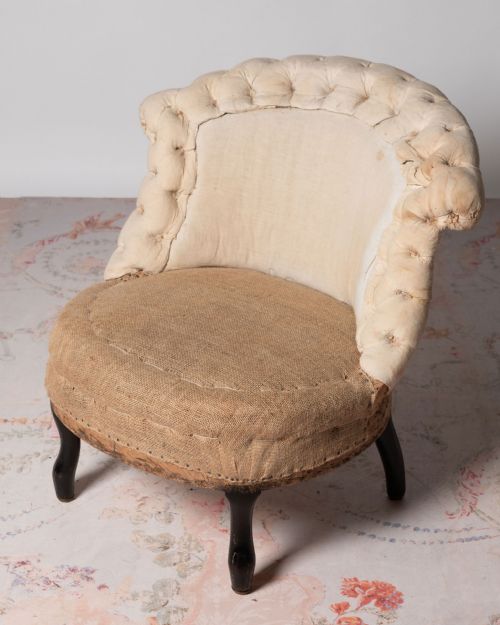


Boudoir Accent Armchair
A boudoir accent armchair brings intimate seating into a bedroom, combining upholstered comfort with decorative presence from French and British traditions.
Boudoir Accent Armchair
When you search for a boudoir accent armchair, you encounter compact seating designed historically for private rooms rather than large formal reception spaces. These pieces span bedroom chairs, slipper chairs, and accent chairs that sit low to the ground for ease of use.
Materials and construction
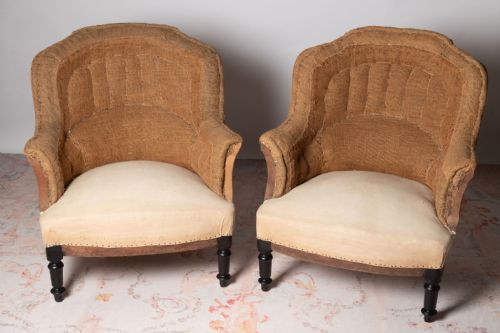
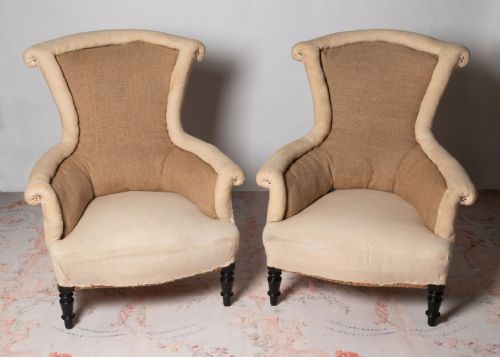
Frames rely on traditional timbers such as mahogany and general wood structures, paired with supportive foundational materials like brass, hessian, and calico. These sturdy inner builds support traditional stuffing and webbing methods common to the periods.
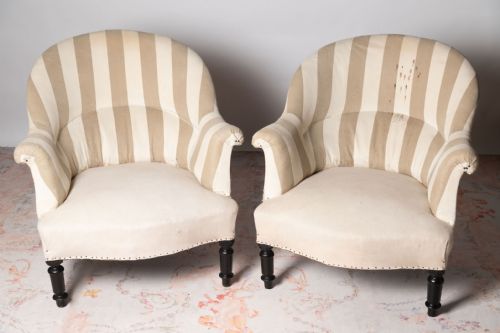
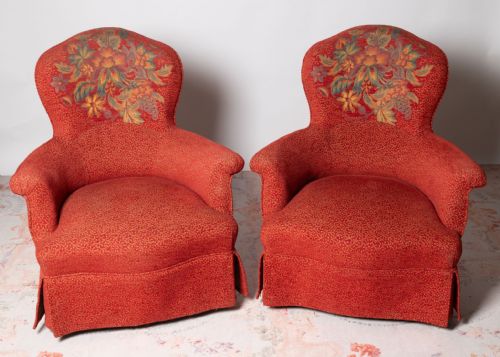
Outer coverings utilise textiles ranging from linen to plush velvet, occasionally finished with detailed piping. Many pieces survive in original fabrics, while others wait for new calico or custom upholstery.
Materials span mahogany frames and brass fittings, upholstered in velvet, linen, calico, and hessian.
Assessing quality and craftsmanship
Quality rests in the integrity of the wooden frame and the precision of the original carving or turning. Finer examples display harmonious proportions and robust joinery that withstands decades of re-upholstering.
The distinction between standard and superior pieces also lies in the historical upholstery foundation and the choice of finishing details, such as brass castors or fine piping work.
Howard and Sons
The Boudoir Accent Armchair Glossary
- Slipper chair
- A low-framed bedroom chair traditionally used for dressing while seated. These pieces lack arms to accommodate voluminous nineteenth century skirts.
- Upholstery
- The padded and fabric-covered components of a seat. Older pieces often require new calico and webbing during restoration.
- Napoleon III
- A nineteenth century French design style characterised by eclectic revivals and deep comfort. This aesthetic heavily influences many pieces in this category.
- Calico
- A plain-woven cotton fabric used as a tight foundational layer over the springs and stuffing before top upholstery is applied.
Boudoir Accent Armchair: Frequently Asked Questions
What is a boudoir accent armchair used for?
These compact seats were historically placed in private dressing rooms or bedrooms for daily routines like putting on shoes. Today, they serve as decorative yet functional seating in modern bedrooms or quiet reading corners.
Their smaller scale allows them to fit into tighter spaces where a standard armchair would overwhelm the room.
How do I identify a Victorian bedroom chair?
Victorian bedroom chairs typically feature low profiles, turned wooden legs, and sprung seats designed for comfort in private quarters. They often showcase rich timber frames paired with button-tufted upholstery.
Examining the under-frame construction and materials like hessian helps confirm the nineteenth century origin.
What does sold for upholstery mean?
Pieces described as needing upholstery retain their original sturdy wooden frames and internal webbing but require new fabric coverings. This allows buyers to select textiles that match their specific interior colour scheme.
Working with an empty frame also gives conservators a chance to inspect and tighten the internal joints.
Are pairs common for these chairs?
Pairs of nineteenth century French chairs appear frequently in this category, having originally flanked a fireplace or dressing table. Matching pairs offer symmetry when placed at the foot of a bed or opposite a sofa.
Single chairs are equally traditional as standalone accent pieces in a corner.