



Vintage Crapaud Seating
These vintage crapaud seating options bring low-slung French comfort and upholstered elegance straight into your sitting room.
Vintage Crapaud Seating
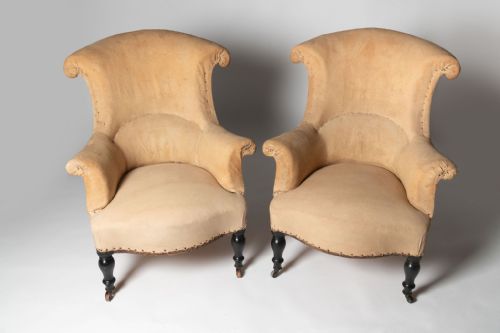
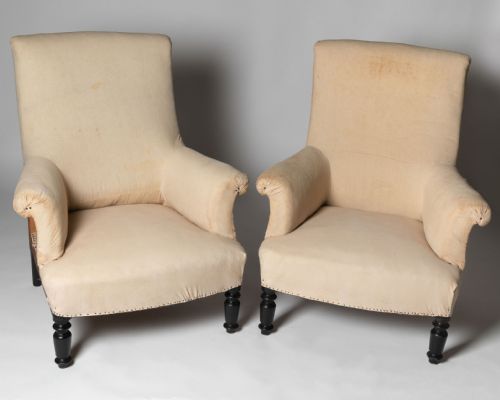
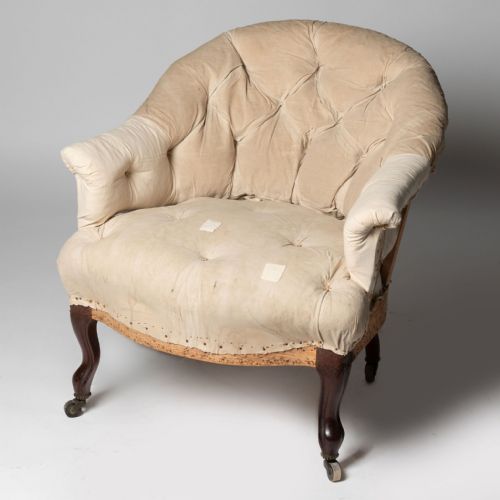
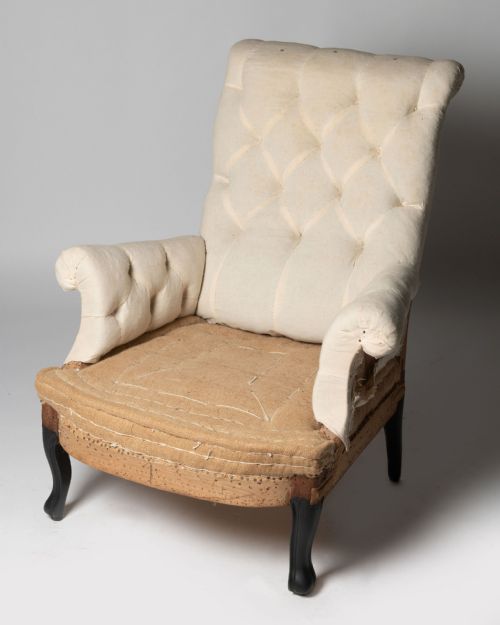
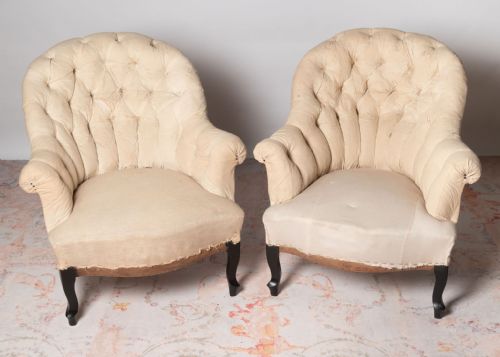
Vintage crapaud seating comprises low, fully upholstered armchairs designed for deep, enveloping comfort. Originating in France, these pieces are most commonly encountered from the nineteenth century and the year nineteen thirty, carrying distinct nineteenth century French, French chateau, and Napoleon III styling.
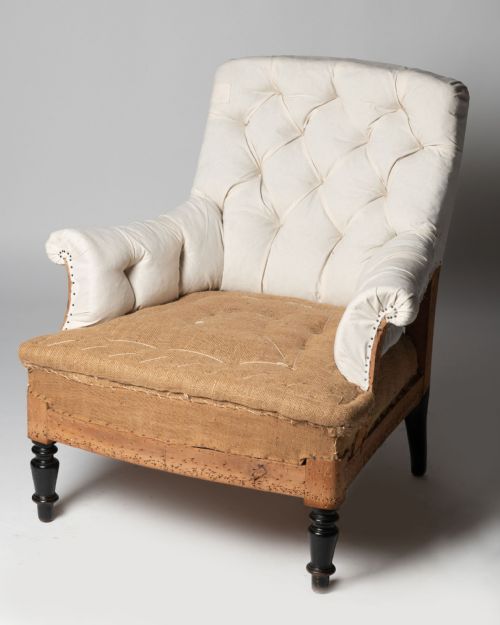
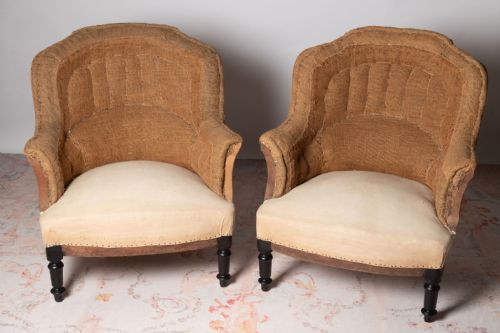
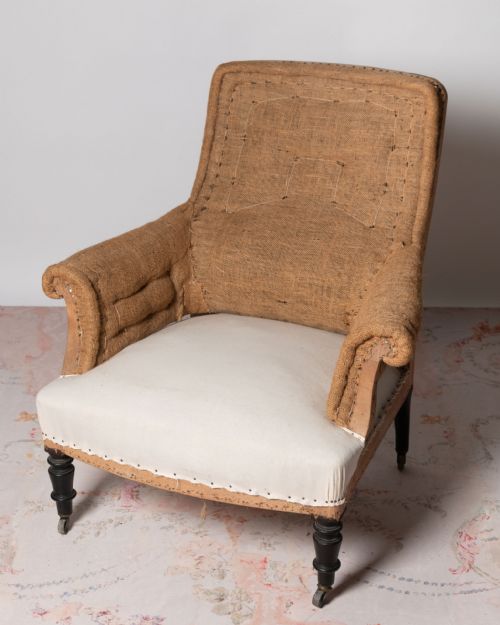
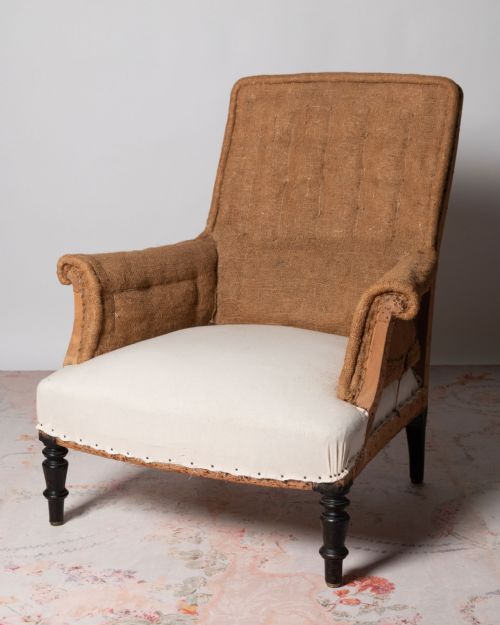
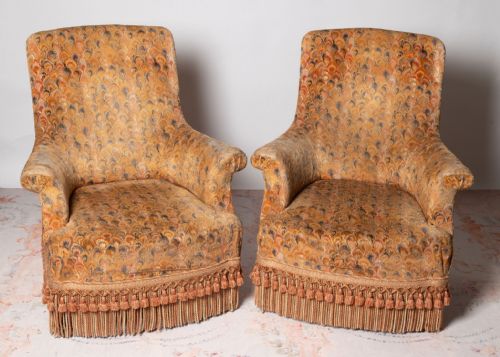
The form typically manifests as pairs of chairs or individual armchairs and boudoir chairs intended for intimate domestic spaces. Many examples appear ready for upholstery, allowing a buyer to finish the timber frame and springs to personal taste.
How They Were Made
These seats are constructed upon sturdy timber and beech frames, providing the underlying architectural support for the heavy padding. Traditional makers built the internal structure to be completely concealed beneath layers of padding and fabric.
The visible and hidden layers rely on natural textiles including calico, velvet, hessian, and linen, secured occasionally with brass detailing. Frames exhibit the refined aesthetic of French Napoleon III craftsmanship and nineteenth century joinery.
Vintage Crapaud Seating Retail Price Guide 2026
Typical asking prices for vintage crapaud seating among the pieces listed under this phrase on Sellingantiques today, from the lower quarter to the upper quarter. They describe what is for sale here now, not the wider market.
The inventory spans single armchairs and matched pairs, with several examples offered specifically in need of fresh upholstery.
What Varies in Quality
Quality in these low armchairs rests upon the integrity of the underlying beech framework and the historical authenticity of the period frame. Pieces showing untouched nineteenth century construction hold greater traditional character than later interpretations.
The condition of the springs and internal stuffing dictates the seating comfort, while the presence of original wooden elements distinguishes finer examples from those requiring extensive structural intervention.
The Vintage Crapaud Seating Glossary
- Crapaud
- A low, heavily upholstered armchair with fully covered arms, designed in nineteenth century France to resemble a toad. The style prioritises soft comfort and deep seating over exposed wood.
- Napoleon III
- A decorative style spanning the mid to late nineteenth century in France, known for eclectic revivals and comfort-driven domestic furniture. This aesthetic often influences the curved profiles of these chairs.
- Hessian
- A coarse woven fabric traditionally utilised as the foundational scrim beneath finer upholstery textiles. It holds the stuffing securely within the frame.
- Calico
- A plain-woven cotton fabric frequently employed as a tightly fitted undertick or base layer for antique upholstery. It provides a clean surface before decorative velvet or linen is applied.
Vintage Crapaud Seating: Frequently Asked Questions
What is a crapaud chair?
A crapaud chair is a low, fully upholstered French armchair characterised by its rounded, enveloping shape and hidden wooden frame. The design emerged to offer supreme comfort in boudoirs and small salons.
These pieces wrap around the sitter, featuring padded arms and a low seat height that defines the traditional nineteenth century aesthetic.
How do I choose upholstery?
Selecting upholstery involves balancing historical accuracy with modern interior schemes, using traditional materials like velvet or linen to match the French aesthetic. Many frames are sold bare, requiring a professional upholsterer to rebuild the springs and inner stuffing.
Heavier textiles suit the grand nineteenth century proportions, while lighter calico layers often form the necessary foundation beneath the final cover.
Where did they originate?
These armchairs originated in France during the nineteenth century, gaining popularity through Napoleon III designs and chateau furnishings. The low-slung format was tailored for intimate conversation and relaxed domestic lounging.
Examples span the decades into the nineteen thirties, maintaining the core French craftsmanship traditions across different periods.
Are they comfortable for daily use?
They are exceptionally comfortable due to the deep padding and low seating position designed specifically for lounging. The supportive beech frames and traditional sprung interiors provide a durable seat when properly restored.
Living with these chairs brings a touch of classic French boudoir style into contemporary living rooms without sacrificing physical ease.