





Border Glass Mirror
A border glass mirror brings architectural depth and reflective light into a room, combining sections of glass to frame a central plate.
Border Glass Mirror
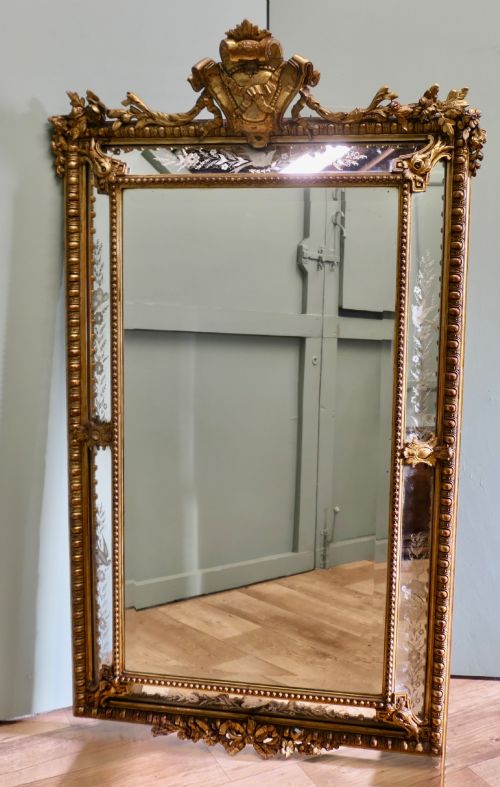
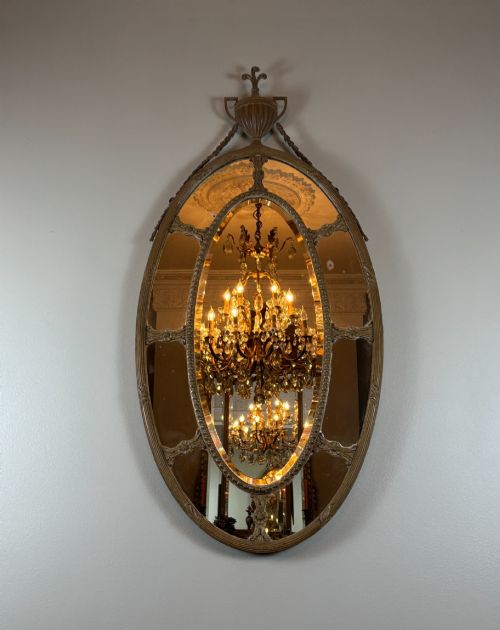
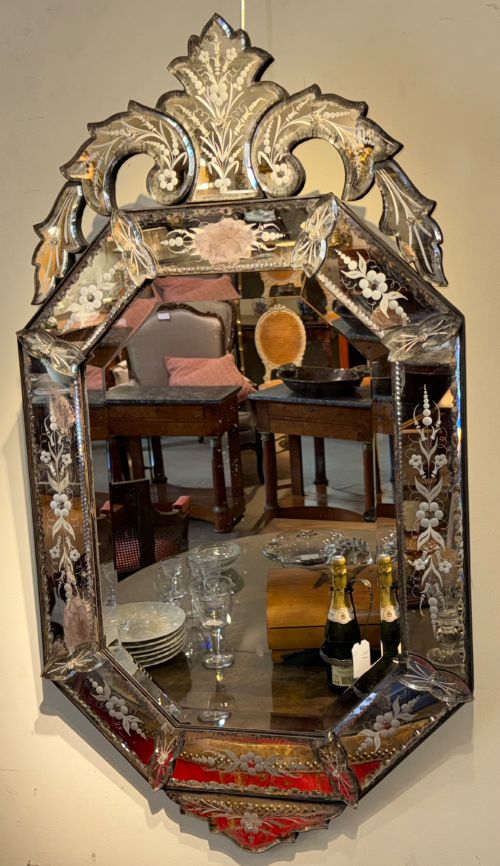
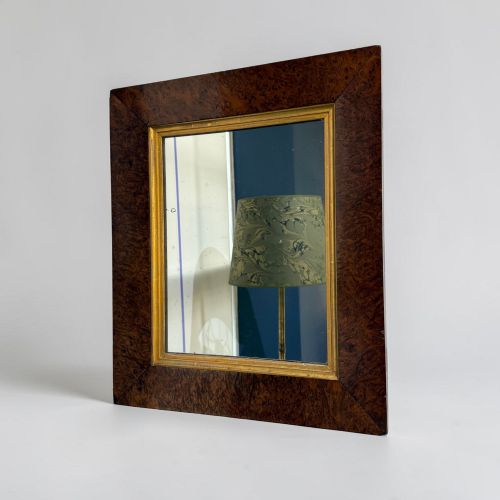
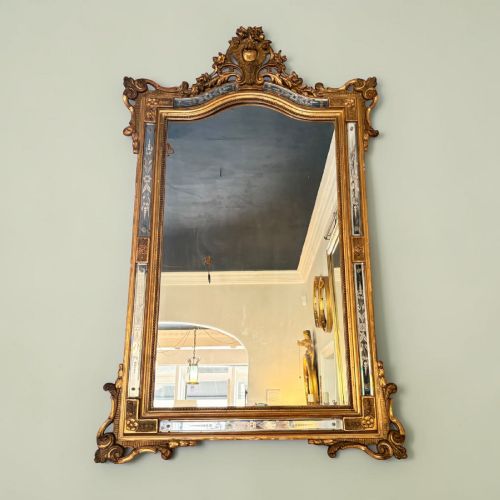
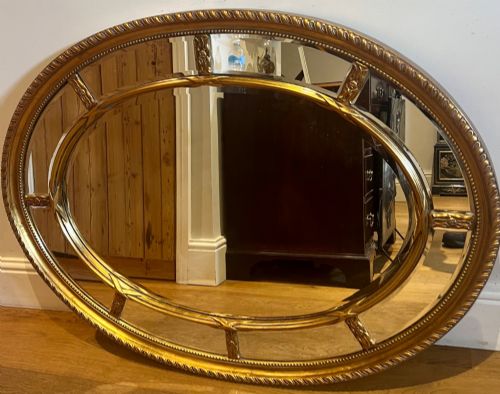
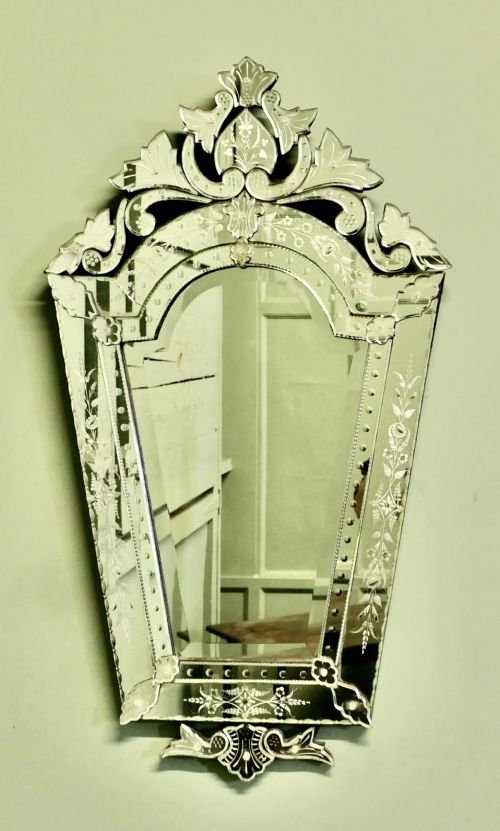
A border glass mirror, also known as a margin mirror, consists of a central reflective plate surrounded by smaller individual glass segments that form a decorative border. These pieces appear in forms such as wall mirrors, overmantel mirrors, dressing mirrors, and plateau mirrors.
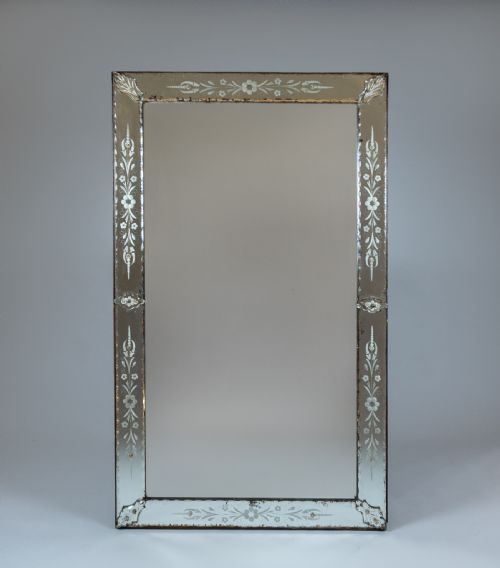
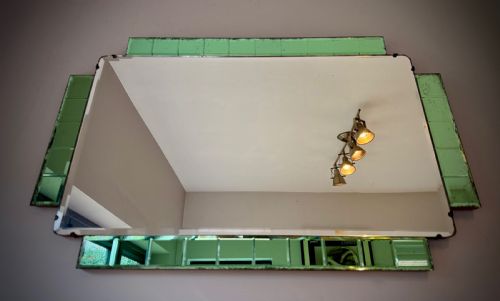
The most common examples on this page date from the nineteenth century through the art deco period of the 1930s. They range from Venetian and Italian designs to English Regency and Victorian styles, often featuring shaped margins and etched glass.
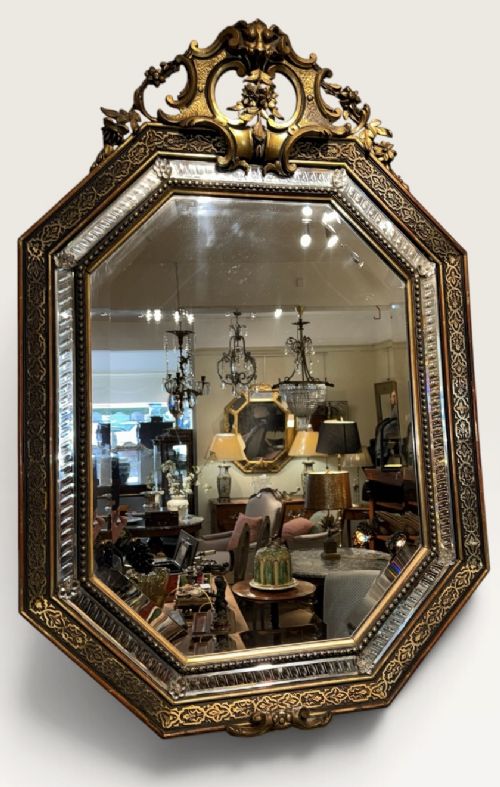
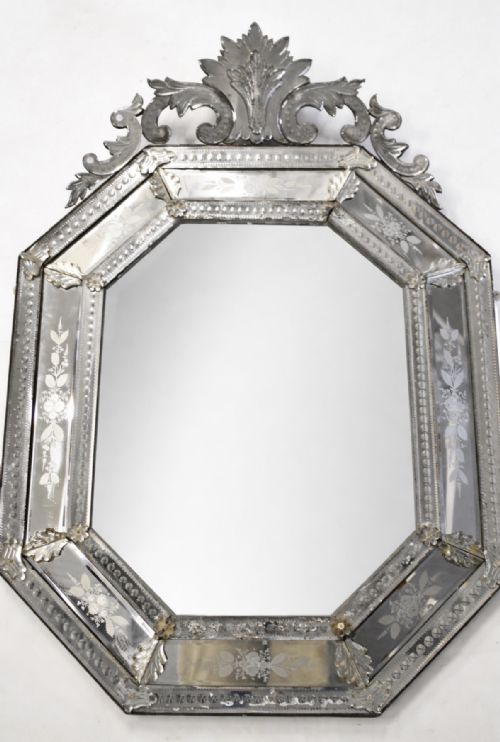
Buyers choose these mirrors for their distinct framing techniques, where the separate border panels catch the light from multiple angles. Whether selecting an octagonal Venetian cushion mirror or a rectangular art deco piece, the construction prioritises decorative glasswork over simple timber or metal frames.
Materials and construction
Makers constructed these mirrors using mirrored glass and plain glass panels fixed to wooden substrates, supported by materials such as giltwood, gesso, brass, and parcel-gilt mahogany. Individual glass sections for the borders were cut, bevelled, and sometimes etched or engraved before being secured around the central plate.
Techniques varied from traditional Venetian cushion framing, where glass plates curve outwards over wooden carcasses, to the flat layered panels seen in later art deco designs incorporating peach, emerald green, and cobalt blue glass. Frames utilised gilt wood, rope twist carvings, painted silk, and embossed elements to hold the glass assemblies together.
Border Glass Mirror Retail Price Guide 2026
Typical asking prices for border glass mirror among the pieces listed under this phrase on Sellingantiques today, from the lower quarter to the upper quarter. They describe what is for sale here now, not the wider market.
Materials recorded across the inventory include giltwood, gesso, brass, mahogany, and specialised coloured glass panels in peach, blue, and green.
Separating top examples from standard pieces
Quality in a border glass mirror rests upon the precision of the glass cutting and the complexity of the marginal arrangement. Superior examples display meticulously bevelled individual border panes that fit tightly together, alongside fine hand-engraving or etching upon the glass surface.
The choice of secondary materials also distinguishes the tier of a piece, such as substantial giltwood carvings, parcel-gilt mahogany frames, or unusual coloured glass panels like cobalt blue and emerald green rather than standard clear mirror glass. The integration between the decorative border segments and the main plate dictates the overall harmony of the object.
The Border Glass Mirror Glossary
- Margin mirror
- A mirror featuring a border composed of separate smaller glass plates surrounding the main central reflective surface. This style highlights the skill of cutting and assembling multiple glass segments.
- Cushion mirror
- A mirror with a convex, swelling frame profile where glass panels curve outward toward the edges. Venetian examples often utilise this form to catch and multiply ambient room light.
- Overmantel mirror
- A large horizontal mirror designed specifically to hang above a fireplace mantel. These pieces frequently incorporate extensive border glass panels or etched ornamentation.
- Girandole
- A wall mirror that incorporates one or more candle sconces attached to the frame. The reflective glass serves to amplify the light of the candles.
- Plateau mirror
- A mirrored tray or low table centrepiece originally used for displaying tableware or ornaments. Examples in the evidence include sorcerer type plateau mirrors.
Border Glass Mirror: Frequently Asked Questions
What is a border glass mirror?
A border glass mirror is a looking glass where the main central plate is framed by a series of smaller, separate glass panels. These surrounding sections are often bevelled, etched, or shaped to create a decorative perimeter.
Such mirrors appear in various historical styles, ranging from Venetian cushion designs to English Regency and Art Deco forms.
Where were these mirrors placed?
These mirrors served multiple domestic functions depending on their format and size. Wall mirrors and overmantel versions hung in reception rooms to bounce light around the space, while dressing mirrors stood on tables for personal use.
Plateau mirrors sat horizontally on surfaces to display decorative objects or candles, reflecting them from below.
How do I date a border glass mirror?
Dating relies on examining the construction methods of the frame and the characteristics of the glass. Nineteenth-century examples often feature hand-etched Venetian details, parcel-gilt wood, or heavy cushion frames.
Pieces from the 1920s and 1930s frequently display geometric art deco lines, sometimes utilising coloured glass panels in peach, green, or blue.