

Bone Inlaid Table
A bone inlaid table brings intricate geometric patterns and dense botanical carving into a room through centuries of diverse regional craftsmanship.
Bone Inlaid Table
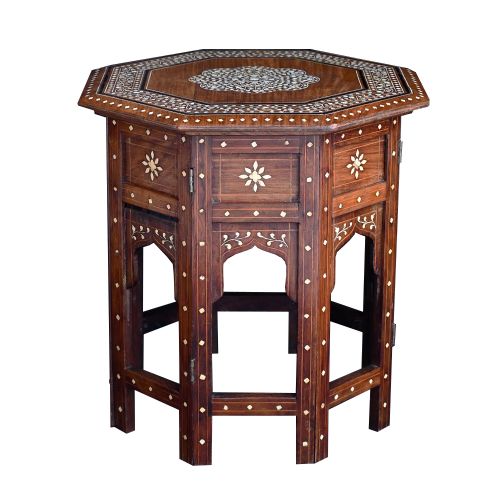
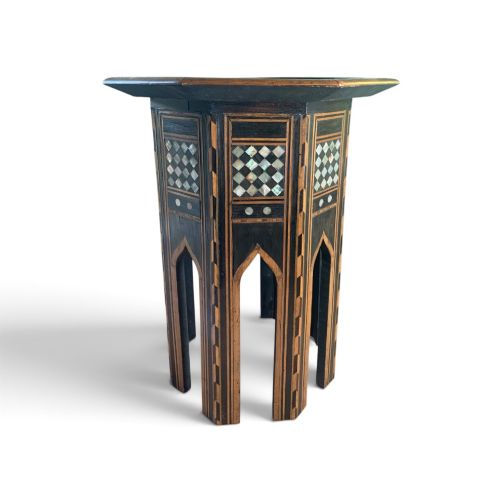
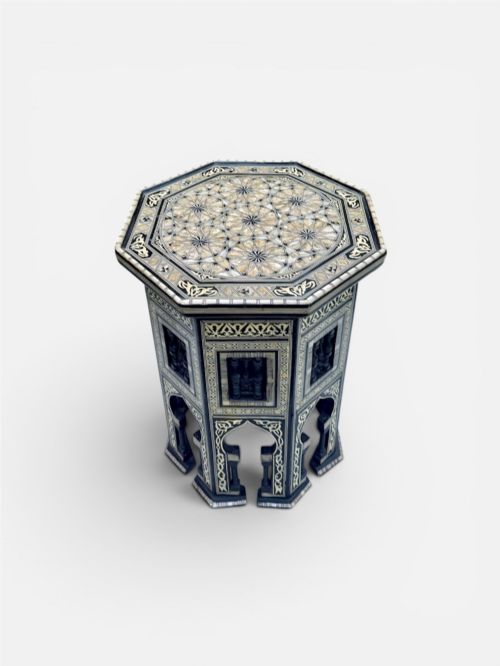
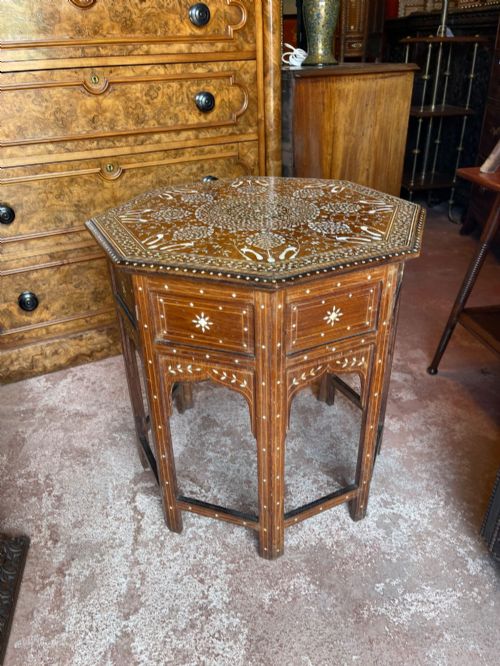
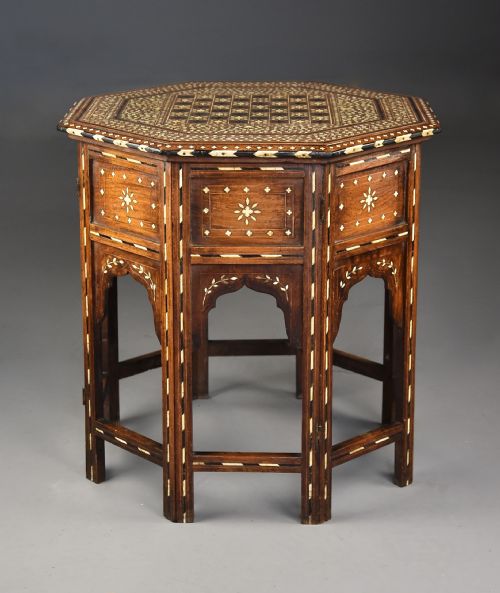
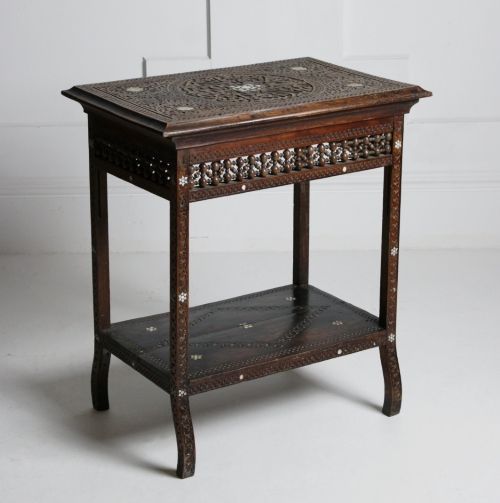
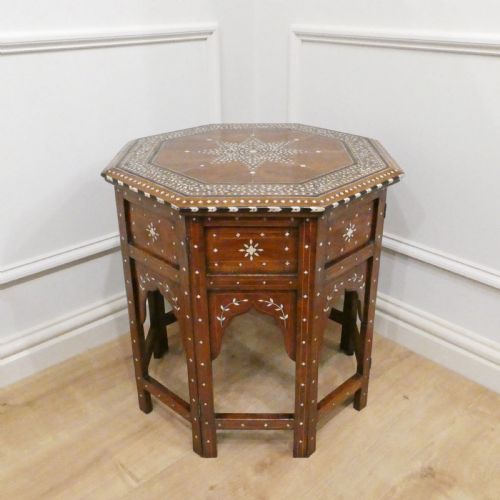
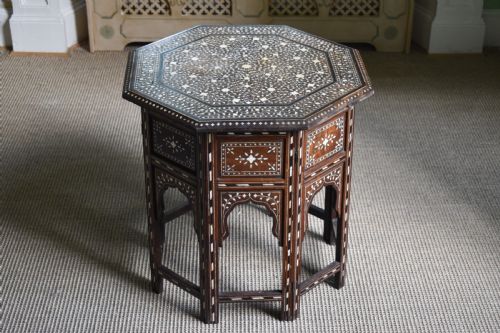
A bone inlaid table encompasses low occasional forms, occasional side surfaces, and octagonal shapes originating primarily from the nineteenth and early twentieth centuries. The most common version encountered here is the octagonal Hoshiarpur table from northern India, alongside Syrian and Moorish examples.
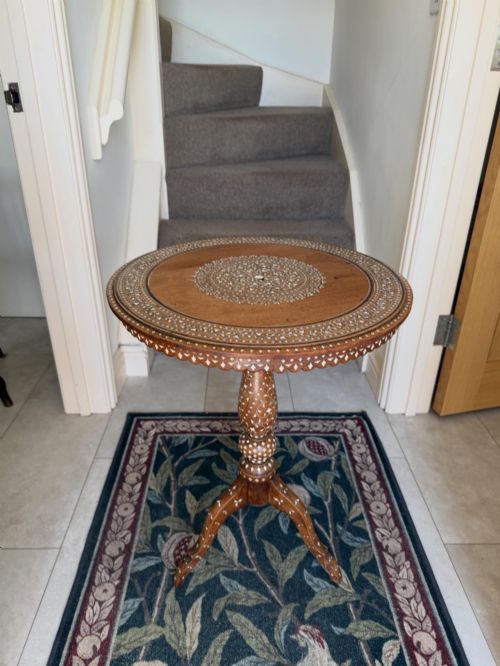
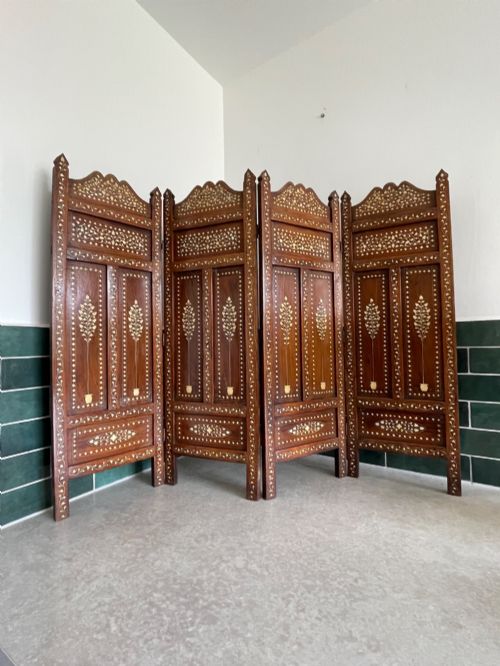
Makers and workshops across different regions utilised dense floral and geometric schemes on teak, shisham, rosewood, and ebonised timber. These surfaces combine fragments of bone and mother-of-pearl to create striking tonal contrast against dark wood grounds.
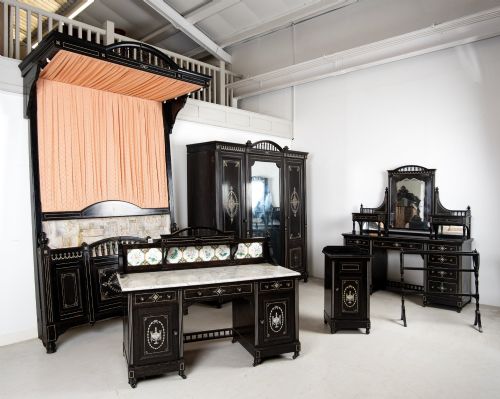
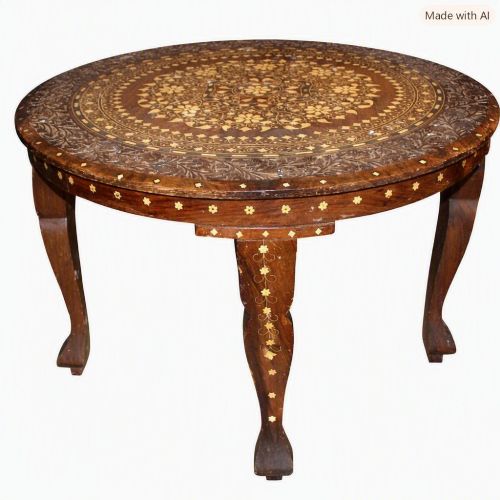
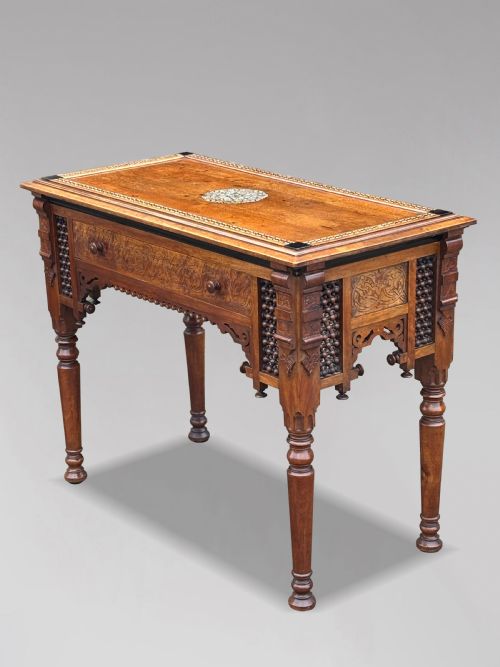
Beyond standard side tables, the category extends to larger coffee tables, folding chess boards, and occasional stands. Surviving items often reflect Victorian Aesthetic Movement tastes or Liberty & Co retailing imports from the late nineteenth century.
How they were made
Craftsmen shaped animal bone into delicate geometric tesserae, floral motifs, and thin strips before pressing them into hand-chiselled recesses within hardwood bases. Teak, shisham, walnut, and ebonised woods provided a dark foundation that made the pale bone elements stand out clearly.
Intricate piercing and deep relief carving frequently accompany the inlay work, particularly on Anglo-Indian pieces featuring scrolling foliage and animal figures. Mother-of-pearl pieces are often integrated alongside the bone to add iridescent highlights to Syrian and Moorish geometric compositions.
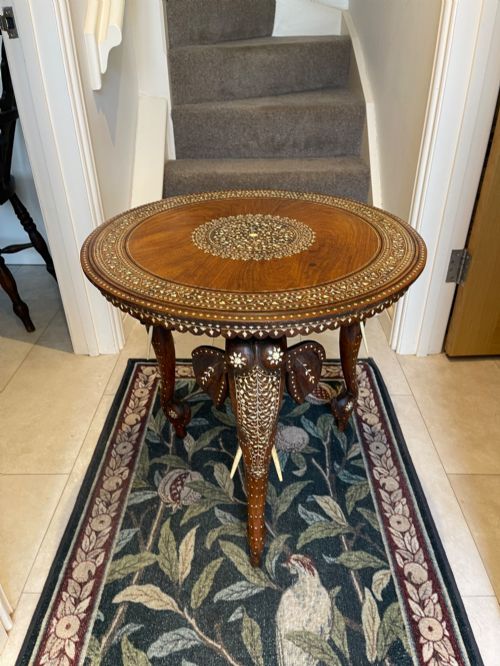
Elephants occasionally support the tops, ensuring your tea rests on the back of a hand-carved pachyderm.
What varies in quality
The density and precision of the surface decoration separate standard examples from finer works. Master carvers executed tight, uniform geometric tessellations and deeply undercut foliage without visible gaps or coarse filler around the bone fragments.
The choice of secondary timbers and the structural stability of folding or multi-tiered mechanisms also indicate the tier of production. Pieces bearing retail stamps or attribution to established firms generally demonstrate superior cabinet-making standards alongside the surface ornamentation.
Liberty & Co
The Bone Inlaid Table Glossary
- Hoshiarpur
- A town in Punjab, northern India, renowned for producing intricate wood furniture decorated with bone and shisham inlay. Pieces from this centre often feature dense foliate carving and octagonal tops.
- Shisham
- An Indian rosewood commonly utilised as the primary timber base for Anglo-Indian inlaid furniture. Its dense grain supports fine chisel work and holds bone tesserae securely.
- Tesserae
- Small individual pieces of bone cut into geometric shapes to form mosaic patterns across a wooden surface. Artisans arranged these fragments by hand into carved channels.
- Aesthetic Movement
- A late nineteenth-century design style that embraced eclectic global influences, leading to the incorporation of Anglo-Indian and Moorish inlaid tables into British interiors.
- Moorish Revival
- An architectural and decorative style popular in the Victorian era that adapted traditional Islamic geometric motifs, arches, and intricate surface inlay for European domestic furniture.
Bone Inlaid Table: Frequently Asked Questions
How do I clean a bone inlaid table?
Dust surfaces regularly with a soft, dry cloth to prevent particles from settling into the microscopic recesses of the carved wood and bone mosaic. Avoid using liquid polishes, damp cloths, or chemical cleaners, as moisture can dislodge delicate bone tesserae or stain the surrounding timber.
Apply a microcrystalline wax sparingly if the wood appears dry, but take care not to let wax build up within the inlaid channels. Maintaining a stable indoor humidity level protects the timber from expanding or contracting, which otherwise causes the inlay to lift over time.
Where were Hoshiarpur tables made?
These tables originated in Hoshiarpur, a district in the Punjab region of northern India that developed a specialised cottage industry for carved wooden furniture. Local artisans worked primarily with shisham wood, embellishing surfaces with intricate bone and brass wire inlay.
During the late nineteenth century, British importers such as Liberty & Co shipped these distinctive octagonal and folding tables to London. Their popularity grew significantly during the Victorian Aesthetic Movement, satisfying a broad European demand for exotic domestic furnishings.
How do I date an antique inlaid table?
Examine the construction methods, timber choice, and overall style to establish a general timeframe within the nineteenth or early twentieth centuries. Late Victorian examples often utilise rosewood or ebonised bases with dense floral patterns, while pieces marked by retailing firms typically date from the late nineteenth to the 1920s.
Check the underside and interior joints for hand-cut fixings, tool marks, and signs of age such as oxidation on the bone components. Variations in the hue of the bone, ranging from crisp white to a mellow amber patina, also help indicate the age of the materials.
Are these tables sturdy enough for daily use?
Most occasional and side tables in this category suit normal placement for lamps, books, or decorative objects. However, octagonal folding variants and pieces with intricate pierced carving require careful handling when moved or subjected to heavy weight.
Position the furniture away from direct sunlight and heat sources to prevent the wood from warping and the natural adhesives from failing. Gentle everyday use preserves both the structural integrity of the frame and the fragile bone tessellation.