




Bombee Chest of Drawers
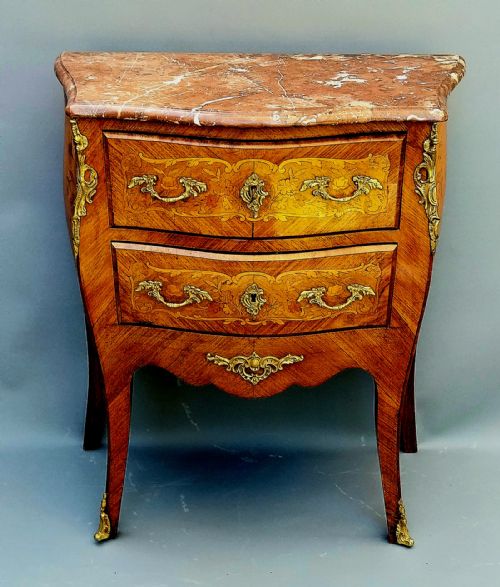
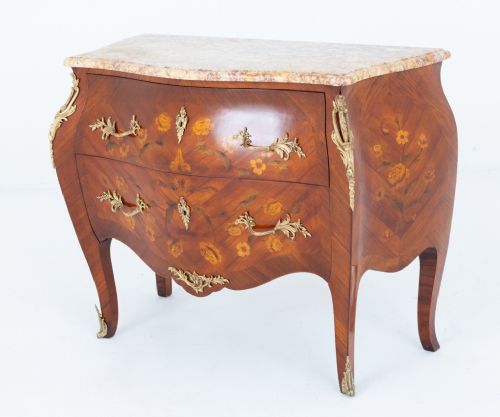
A bombee chest of drawers brings serpentine curves and generous proportions to a room, offering both sculptural presence and deep storage.
Bombee Chest of Drawers
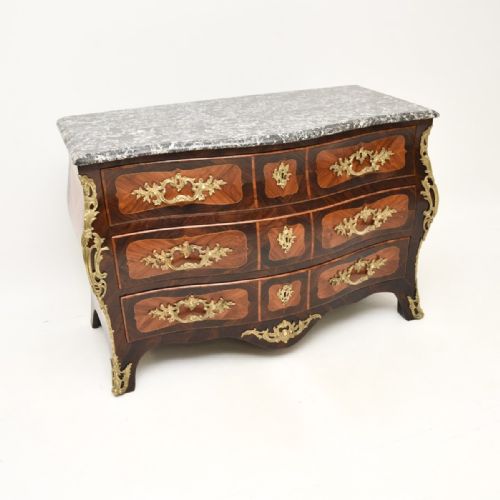
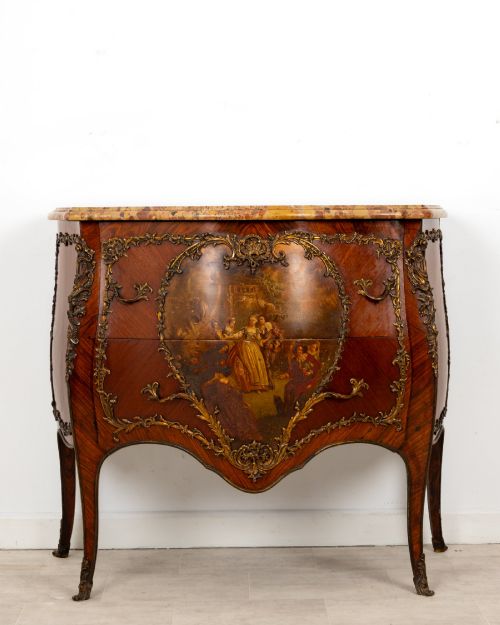
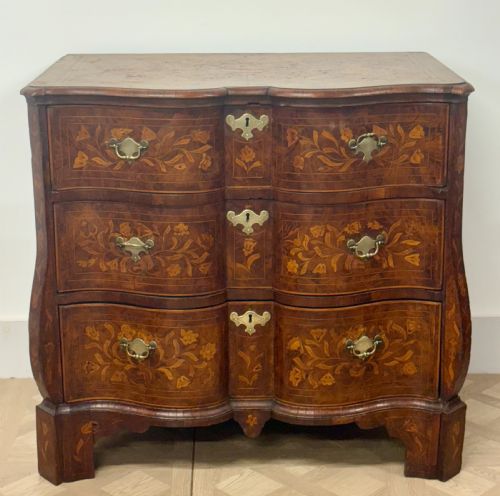
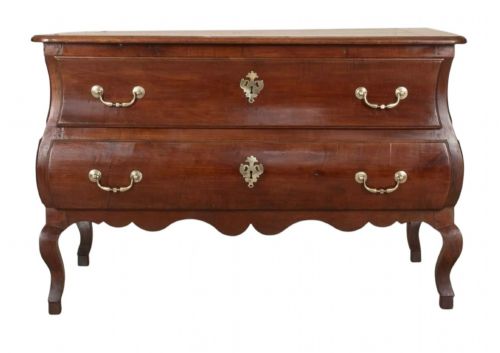
A bombee chest of drawers, frequently styled as a commode or bureau, presents a distinct outward-swelling profile on its front and sides. These pieces trace their origins primarily to continental workshops across the eighteenth and nineteenth centuries, spanning French, Dutch, and Bavarian traditions.
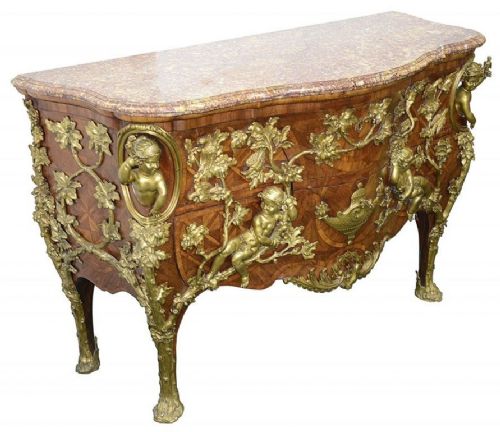
The forms on this page range from full-sized salon commodes with marble tops to smaller apprentice pieces and miniature furniture. Buyers will most frequently encounter nineteenth-century revival interpretations alongside genuine eighteenth-century examples featuring elaborate marquetry.
Makers working in the Louis XV and Dutch Rococo manners utilised this sweeping contour to showcase complex wood veneers. The silhouette requires precise carpentry to maintain structural integrity while achieving the characteristic rounded swell.
Judging execution and finish
Quality rests in the fluidity of the serpentine contour and the precision with which the veneer wraps around the curved angles of the carcase. Superior examples display seamless continuity in their marquetry patterns across intersecting drawer fronts and panels.
The refinement of the cast bronze mounts and the integration of the marble top indicate the tier of the workshop. Better pieces maintain crispness in the chased metalwork and precise fitting where the stone meets the wooden frame.
Apprentice chests provided young woodworkers a miniature canvas to prove their mastery before building full-sized commodes.
Jacques Bircklé·Charles Cressant
The Bombee Chest of Drawers Glossary
- Bombe
- A French term describing furniture with a bulging or swelling front and sides. This outward curve demands advanced cabinetmaking techniques to shape the wood successfully.
- Marquetry
- The art of applying pieces of veneer to a structure to form decorative patterns and pictures. Craftsmen utilise various coloured woods to create floral or geometric designs.
- Ormolu
- Gilt bronze mounts applied to the angles and feet of fine furniture. This decorative hardware enhances the sculptural quality of the piece.
- Commode
- A low chest of drawers originating in France during the eighteenth century. These pieces often feature marble tops and elaborate veneering.
- Sauteuse
- A small commode featuring two drawers rather than the deeper three-drawer arrangement. This lighter form became popular in French provincial workshops.
Bombee Chest of Drawers: Frequently Asked Questions
What is a bombee chest of drawers?
A bombee chest of drawers is a continental storage piece defined by its swelling, rounded front and sides. The silhouette emerged from eighteenth-century Rococo design and continued through later revival periods.
Cabinetmakers shaped the wooden carcase to curve outward, creating a sculptural form that frequently featured elaborate veneer work. These pieces served primarily as commodes in grand rooms and private chambers.
How do I distinguish eighteenth-century pieces from nineteenth-century revivals?
Distinguishing the periods involves examining the construction methods, secondary timbers, and the wear patterns on the interior surfaces. Eighteenth-century examples display hand-cut joinery and period-specific timber usage.
Nineteenth-century revival pieces, such as those from the Louis XV revival movement, often utilise machine-sawn elements while closely copying earlier continental silhouettes and decorative motifs.
Where were these chests originally placed?
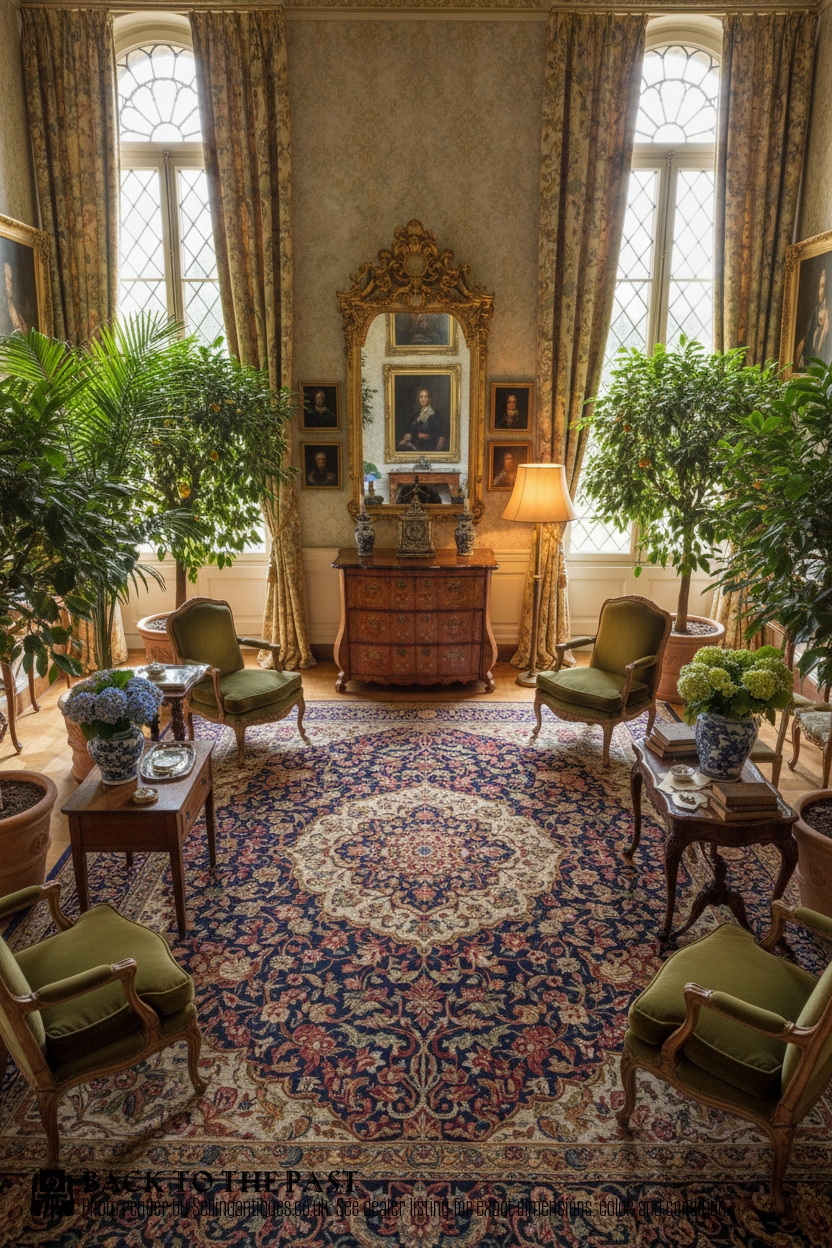
These commodes stood in formal reception rooms, bedchambers, and salons of continental residences. Their decorative facades and marble tops ensured they functioned as both display surfaces and storage.
Smaller variations, including apprentice pieces and miniature chests, served different decorative or training purposes within cabinetmaking workshops.
How should I care for a veneered marble-top commode?
Caring for these pieces requires maintaining stable humidity levels to protect the delicate wood veneers and marquetry from shifting. Gentle dusting with a dry cloth preserves the polished surface.
The marble top benefits from periodic cleaning with neutral soap and water, avoiding acidic substances that might etch the polished stone.