






Bombe Walnut Bureau Desk
These bombe walnut bureau desk examples combine serpentine shaping with rich timber surfaces, offering storage and a writing slope for any traditional study.
Bombe Walnut Bureau Desk
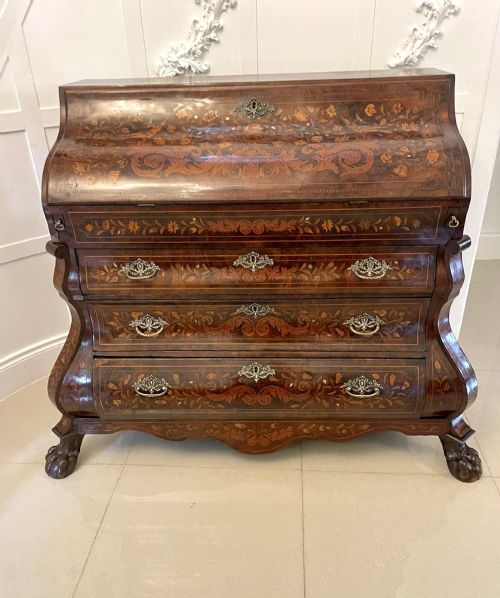
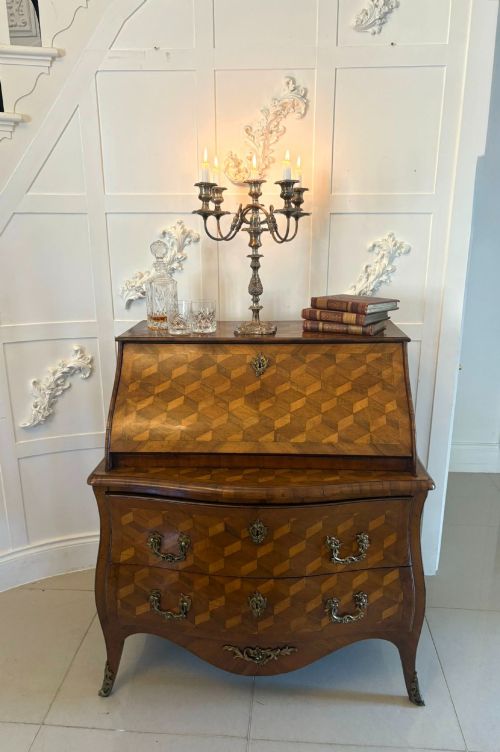
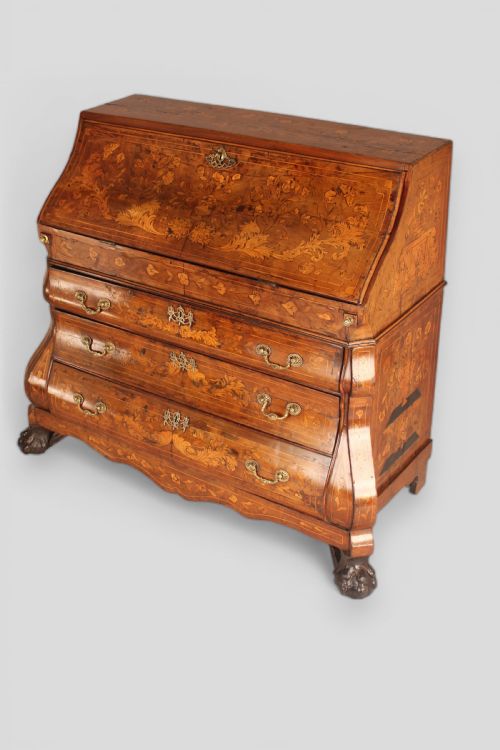
A bombe walnut bureau desk provides a sloping writing surface above drawer storage, distinguished by its swelling, outward-curving front and sides. These pieces emerge predominantly in Dutch Baroque, Dutch Rococo, and Georgian styles, bringing substantial presence to a room.
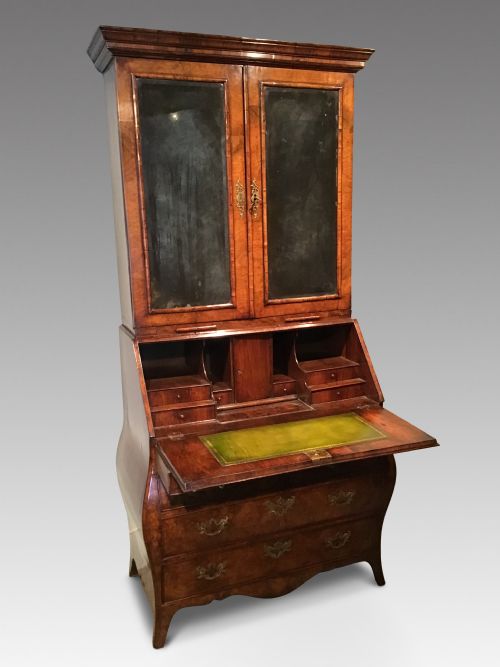
Buyers frequently encounter variants with upper glazed or panelled bookcase sections, resting on the characteristic bulging lower bureau base. These functional forms served as writing furniture and status items for affluent households.
How they were made
Cabinetmakers constructed these pieces using solid oak or fruitwood carcases overlaid with figured walnut and burr walnut veneers. The characteristic bulging bombe shape required skilled steaming and shaping of timber to achieve the curved profiles.
Surfaces were frequently decorated with intricate floral marquetry and parquetry using contrasting fruitwoods, set into the walnut background. Brass handles, escutcheons, and hinges were fitted to secure drawers and fall-front writing slopes.
Materials appearing across the current inventory include solid walnut, burr walnut, oak, brass, and diverse fruitwood marquetry.
What varies in quality
The finesse of the fruitwood marquetry dictates the visual sophistication of the piece, ranging from simple geometric banding to elaborate floral arrangements across the entire facade. Superior examples display precise cutting and tight alignment where the veneers meet the curved contours.
The handling of the bombe shape itself separates standard cabinetwork from master craftsmanship, particularly in how smoothly the convex curves flow across the drawers and sides. The choice of burr walnut veneer also influences character, with densely figured grain patterns commanding greater visual depth.
Morison of Edinburgh
The Bombe Walnut Bureau Desk Glossary
- Bombe
- A bulging, convex furniture shape that curves outward on the front and sides. This technique originated on the continent before influencing British cabinetmaking.
- Marquetry
- Decorative patterns formed by fitting together small pieces of tinted wood, fruitwood, and other materials into a veneer. Craftsmen applied this to the sloping falls and drawer fronts.
- Burr walnut
- Wood taken from a walnut tree growth or burl, yielding highly swirled and mottled grain patterns. Cabinetmakers utilised this timber for its decorative surface appeal.
- Parquetry
- A geometric mosaic of wood pieces used for decorative floors and furniture surfaces. It appears in contrasting tones on select writing desks.
- Bureau bookcase
- A writing desk with a sloping fall front, surmounted by an upper shelved cabinet with doors. These combined units served multiple domestic functions.
Bombe Walnut Bureau Desk: Frequently Asked Questions
How do I care for walnut veneer?
Keep the timber away from direct sunlight and heat sources to prevent the burr walnut veneer from drying and lifting. Apply appropriate furniture wax sparingly to maintain the polish.
Dust the intricate marquetry and carved sections regularly with a soft cloth to avoid grit settling in the grain recesses.
Where were most bombe desks made?
The majority of these pieces originate from Dutch workshops influenced by continental Baroque and Rococo design traditions. English cabinetmakers also adopted these curved forms during the Georgian period.
Dutch makers frequently combined the bulging profile with extensive floral marquetry using various fruitwoods.
What is inside the bureau interior?
Lifting the sloping fall front reveals a fitted interior containing small drawers, pigeonholes, and occasionally a central concealed compartment. These compartments were designed for storing letters and writing implements.
Secret drawers were often built behind pigeonholes or sliding panels in eighteenth-century models.
How do I distinguish eighteenth-century pieces?
Look at the construction methods, timber choice, and secondary woods such as oak used for drawer linings. Eighteenth-century examples display hand-cut dovetails and natural ageing in the walnut and fruitwood.
Later revival pieces from the nineteenth and twentieth centuries often show different internal construction and less uniform timber patination.