



Bombe Chest Cabinet
A bombe chest cabinet brings sweeping, swelling proportions and rich marquetry into a room, combining practical storage with dramatic continental presence.

Bombe Chest Cabinet
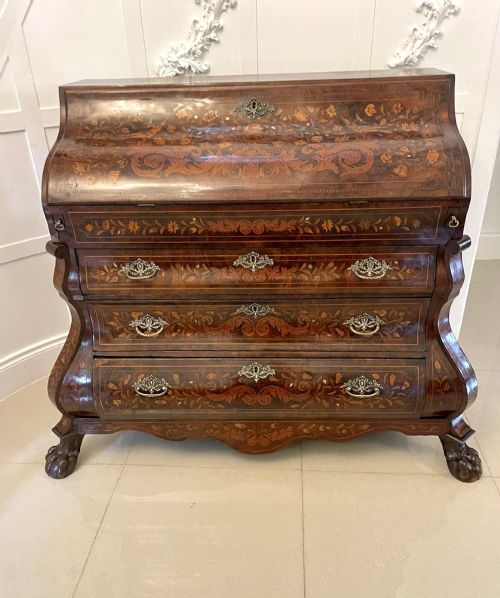
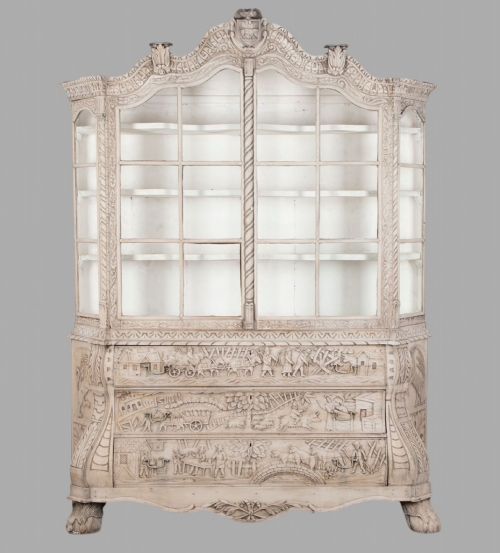
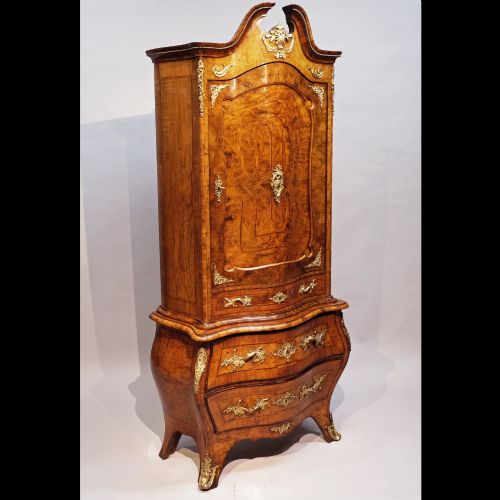
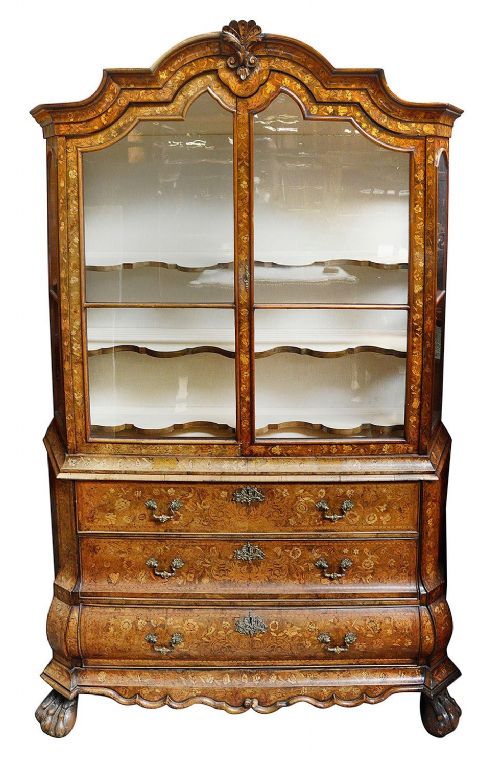
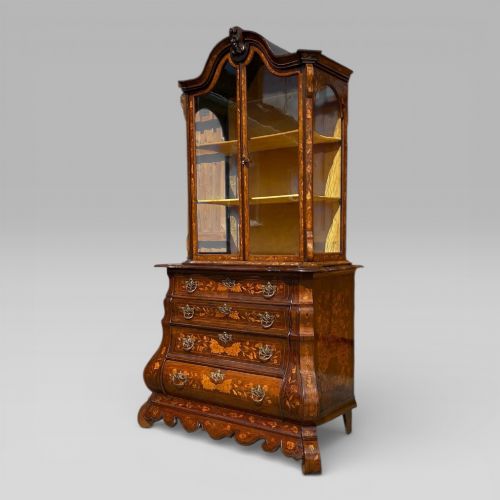
A bombe chest cabinet unites the outward-swelling profile of a serpentine commode with the height of a display vitrine or bookcase, forming a substantial architectural piece. These items emerge primarily from Dutch and French workshops, taking forms such as bureau bookcases, display cabinets on chests, and commodes.
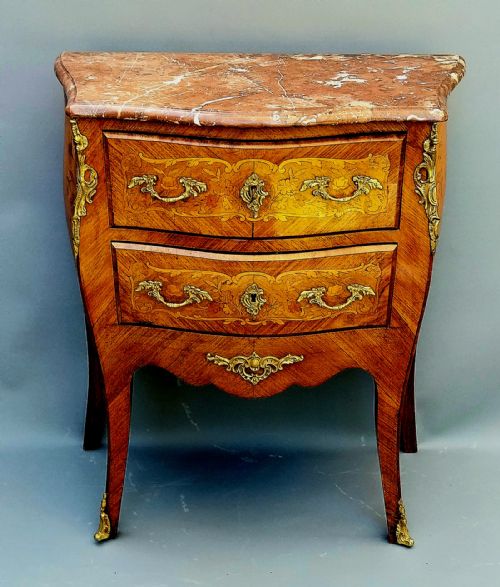
The pieces on this page span the eighteenth century through to the early twentieth century, encompassing both period originals and later revivals in Dutch Baroque, Dutch Rococo, and Louis XV styles. Walnut, burr walnut, and kingwood dominate the forms, frequently paired with intricate floral marquetry or lacquer work.
How They Were Made
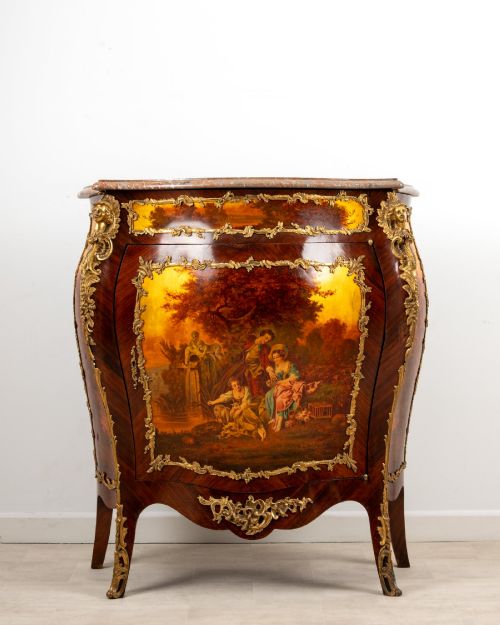
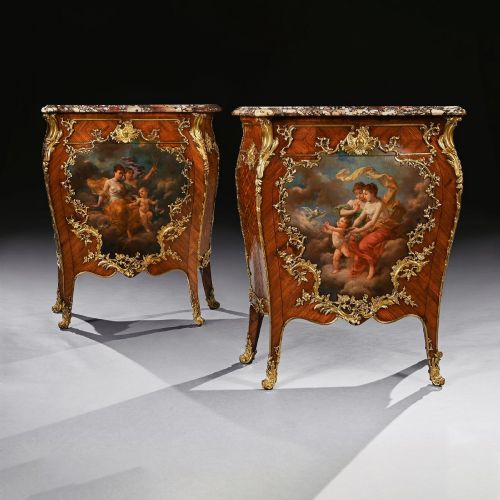
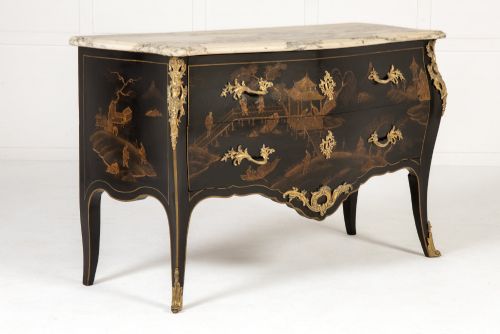
Carpenters shaped the characteristic bulging profile of a bombe chest cabinet by building up curved frameworks of fruitwood, walnut, or oak before applying fine veneers. Marquetry details utilised contrasting woods laid into floral and pictorial patterns, while specific French examples relied on Vernis Martin lacquer and hand-painted Chinoiserie.
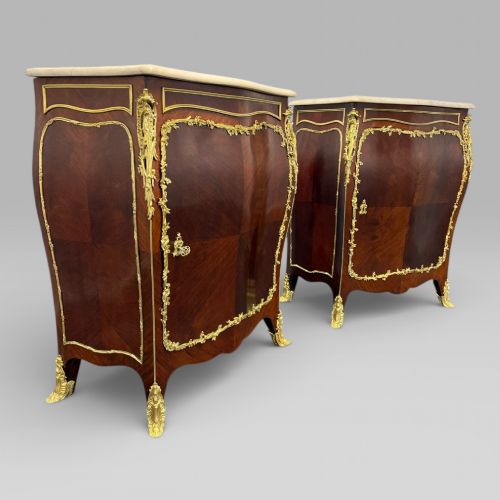
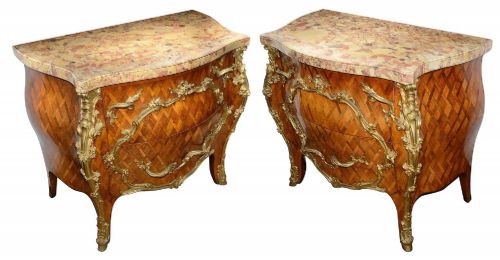
Structural embellishments relied on cast or gilt bronze and ormolu mounts fixed to corners, handles, and aprons, while top surfaces frequently received fitted slabs of marble. Joinery incorporated traditional dovetailing within the drawer construction to support the heavy timber frames.
Some bedroom suites include matching bedside tables designed to echo the grand swelling curves of the main cabinet.
What Varies in Quality
The standard of a bombe chest cabinet rests on the precision of the veneer work and the fluidity of the swelling carcass curves. Superior examples display seamless floral marquetry that flows naturally across the drawer lines and doors without awkward interruptions.
Hardware and secondary materials further separate the tiers of quality. Finer pieces employ chased ormolu and heavy cast bronze mounts rather than simpler brass stampings, alongside thicker cuts of marble and dense burr walnut timbers.
E. Kahn·Edwards & Roberts
The Bombe Chest Cabinet Glossary
- Bombé
- A French term describing furniture with an outward-swelling, bulging front and sides. This undulating profile requires considerable woodworking skill to achieve successfully.
- Marquetry
- The art of applying decorative pieces of veneer to a structure to form intricate designs or pictures. Craftsmen utilise various coloured woods to create floral or geometric motifs.
- Ormolu
- Gilded bronze used for decorative mounts and furniture hardware. The technique involves applying a mercury and gold amalgam to cast bronze.
- Vernis Martin
- A European imitation of Asian lacquer developed in France during the eighteenth century. It employs multiple layers of varnish to achieve a glossy, decorative finish.
- Vitrine
- A glass-fronted cabinet designed for displaying porcelain, books, or curiosities. These pieces often sit atop a swelling bombe base.
Bombe Chest Cabinet: Frequently Asked Questions
What is a bombe chest cabinet?
A bombe chest cabinet is a large storage or display item featuring distinctive outward-curving sides and fronts. These pieces combine cabinet work with bombé shaping.
Originating largely in continental Europe, they serve as focal points for a room while offering concealed storage or glazed display space.
How do I date a bombe chest cabinet?
Dating relies on examining the timber species, construction methods, and decorative styles present. Eighteenth-century examples typically feature hand-cut dovetails and native walnut or marquetry.
Later nineteenth- and twentieth-century revivals often adopt French Louis XV styles, machine-cut elements, or kingwood veneers associated with specific cabinet makers.
Where were these cabinets made?
The listings show production primarily centred in the Netherlands and France. Dutch pieces frequently feature substantial walnut and floral marquetry.
French iterations tend to incorporate kingwood, ormolu mounts, marble tops, and Vernis Martin lacquer finishes.
How do I care for marble top cabinets?
Marble surfaces require gentle cleaning with mild soap and water to avoid dulling the polish. Acidic substances should be kept away from the stone.
The wooden body underneath benefits from occasional waxing to maintain the lustre of walnut or kingwood veneers.