

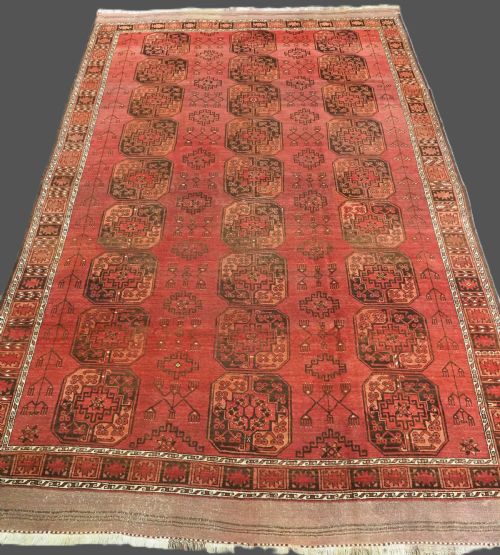


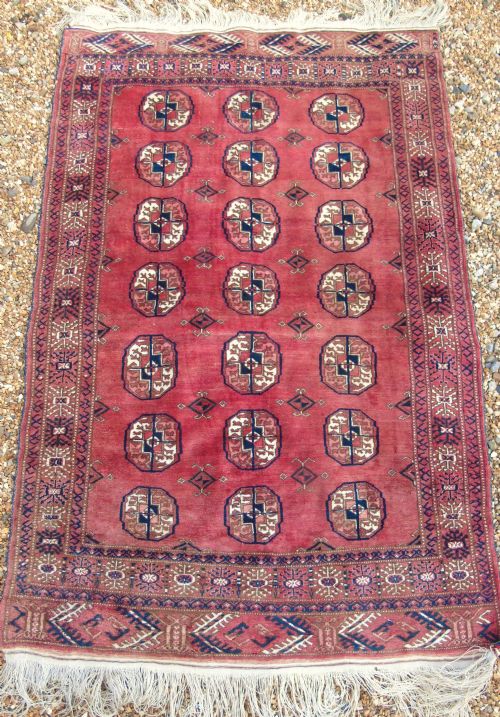


Bokhara Wool Carpet
A bokhara wool carpet brings the rich palette and geometric tribal designs of Central Asian weaving directly into domestic rooms.
Bokhara Wool Carpet
A bokhara wool carpet represents the tribal weaving traditions of Central Asia, particularly associated with the Turkmen groups such as the Tekke and Ersari peoples. These textiles typically feature repeating geometric motifs, known as guls, arranged across fields of warm red, burgundy, or brownish-red hues. Buyers searching this phrase most frequently encounter nineteenth-century and early twentieth-century examples produced across the region.
The selection includes various formats ranging from large main carpets intended for central floor placement down to smaller dowry rugs, wedding trappings, and torba fragments. Many pieces originate from Afghan village workshops or tribal encampments, reflecting traditional nomadic designs that transitioned into domestic exports. Regional variations display distinct border configurations and secondary ornaments accompanying the primary medallion structures.
Dating across the current inventory spans from the mid-nineteenth century through to the decades following nineteen hundred, encompassing both utilitarian heavy-duty floor coverings and finer ceremonial pieces. These floor coverings bridge nomadic heritage with interior decoration, offering durable construction alongside deep historical associations.
Materials and Weaving Methods
The construction relies fundamentally on wool, utilised for both the pile and the foundational warps and wefts, providing a dense and resilient structure. Natural dyes contribute the characteristic warm red colour palettes, occasionally enriched by cochineal highlights or contrasting golden tones.
Selected finer pieces incorporate silk highlights to accentuate specific details within the geometric design fields. The weave density varies from robust village work to extremely fine knots found in specialised dowry pieces and fragments.
Bokhara Wool Carpet Retail Price Guide 2026
Typical asking prices for bokhara wool carpet among the pieces listed under this phrase on Sellingantiques today, from the lower quarter to the upper quarter. They describe what is for sale here now, not the wider market.
Several wedding dowry rugs appear with unusually stubborn geometric guls that refuse to align straight.
Distinguishing Fine Examples
Quality in these carpets rests upon the precision of the weave and the complexity of the gul arrangement across the field. Finer examples display high knot density and crisp delineation of geometric motifs, whereas utilitarian floor coverings prioritize heavy-duty structural resilience.
Colour saturation and the use of secondary materials such as silk highlights or cochineal distinguish exceptional ceremonial weaving from standard village production. Preserved condition and the integrity of original borders further separate superior pieces from heavily worn specimens.
The Bokhara Wool Carpet Glossary
- Gul
- Gul. A primary octagonal or medallion motif repeated in rows across Central Asian carpets, serving as the defining design element for tribal identification.
- Dowry Rug
- Dowry Rug. A smaller textile woven specifically for a bride's household or wedding ceremonies, often featuring finer execution and symbolic design variations.
- Torba
- Torba. A small tribal storage bag face, frequently preserved as a fragment, displaying characteristic main carpet guls in miniature scale.
- Main Carpet
- Main Carpet. A large floor covering format produced for domestic use within a tent or house, distinct from smaller rugs and tent bands.
- Coarse Weave
- Coarse Weave. A structural characteristic typical of heavier utilitarian village carpets made for sustained daily wear rather than ceremonial display.
Bokhara Wool Carpet: Frequently Asked Questions
What is a gul motif?
A gul is the repeating octagonal medallion pattern that anchors the design field of these Central Asian tribal rugs. Different tribal groups utilised distinct gul shapes to signal their specific heritage.
These motifs are arranged in structured rows across the red or burgundy background, forming the geometric rhythm characteristic of nineteenth-century weaving.
How do I care for an antique wool carpet?
Antique wool rugs require gentle vacuuming without a rotating beater brush to protect the pile and foundational warps. Professional specialist cleaning is recommended for addressing deep-seated dust or historic stains.
Keeping the textile out of direct sunlight prevents the natural dyes from fading over time while maintaining the rich colour saturation.
Where were these carpets made?
These pieces originated across Central Asia, produced by tribal groups including the Tekke and Ersari Turkmen peoples inhabiting regions spanning modern Turkmenistan and Afghanistan. Many were woven in nomadic encampments or local village workshops.
Later examples reflect production geared toward Russian export markets and Western domestic interiors during the late nineteenth and early twentieth centuries.
What distinguishes a dowry rug?
A dowry rug is a smaller format textile created for a bride's wedding preparations, often incorporating finer knot counts, silk highlights, or unusual border variations. These pieces carried significant cultural value and ceremonial function.
Because they were made for specific family events rather than heavy floor traffic, surviving examples frequently retain soft wool textures and vibrant cochineal accents.