


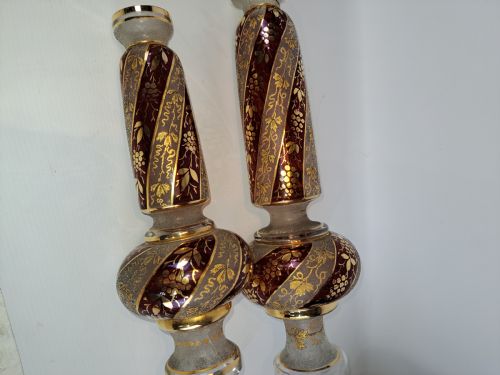


Bohemian Flash Glass
These bohemian flash glass pieces bring rich ruby and green colour together with intricate wheel-engraving, offering genuine nineteenth-century decorative presence for your interior.
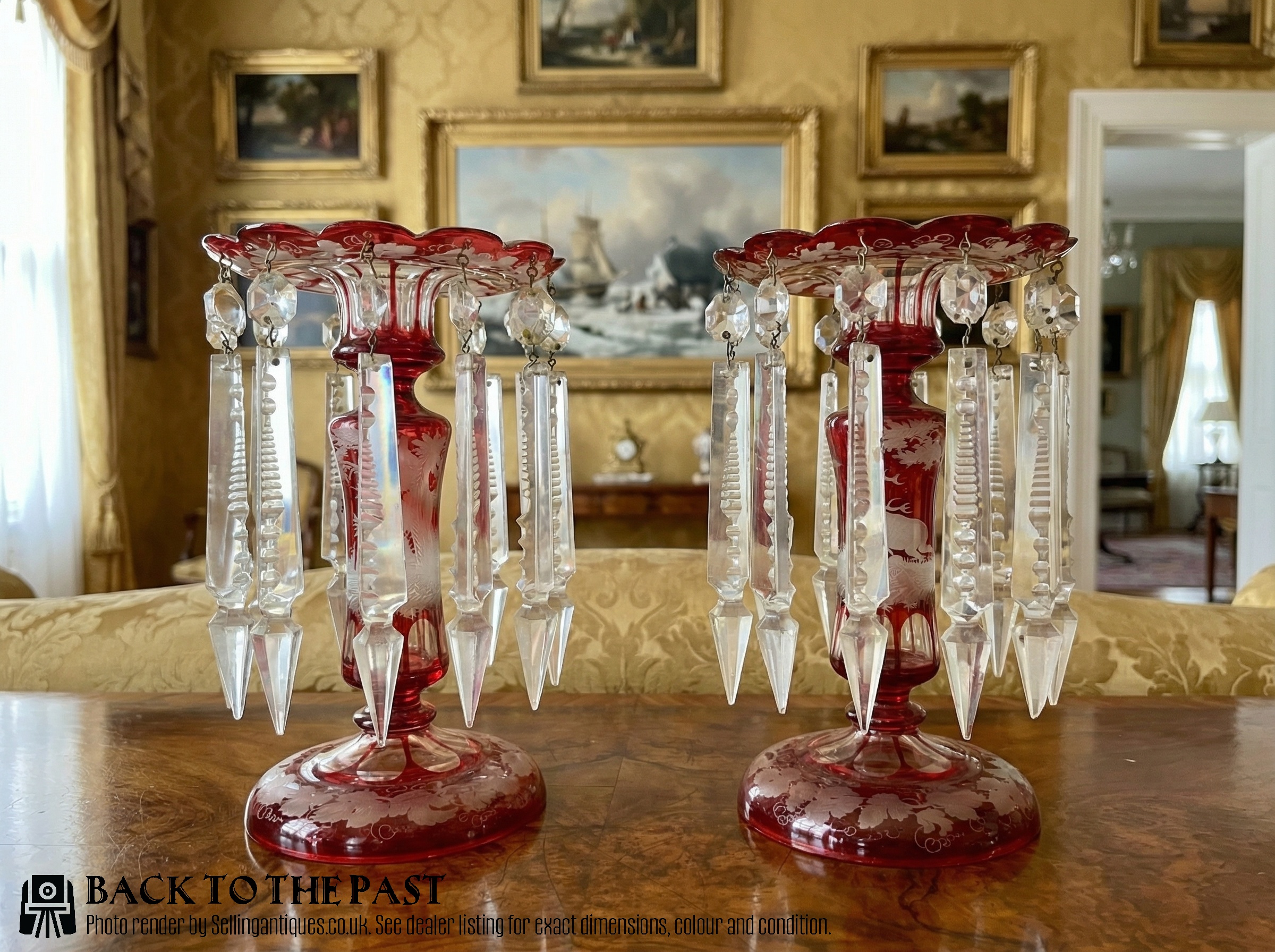
Bohemian Flash Glass
When you search for bohemian flash glass, you enter a distinct world of nineteenth-century decorative objects, encompassing everything from table glassware and decanters to lighting components and chandelier elements. The pieces span Victorian, Bohemian, and Biedermeier styles, taking forms such as ovoid vases, lustres, tumblers, scent bottles, and centrepiece bowls with animal decoration.
The majority of what you will encounter on this page originates from the nineteenth century, including specific dates from eighteen sixty through to nineteen hundred, alongside occasional eighteenth-century examples. These items demonstrate the technical mastery of Bohemian glasshouses, combining layered colours with clear glass to create striking visual contrast.
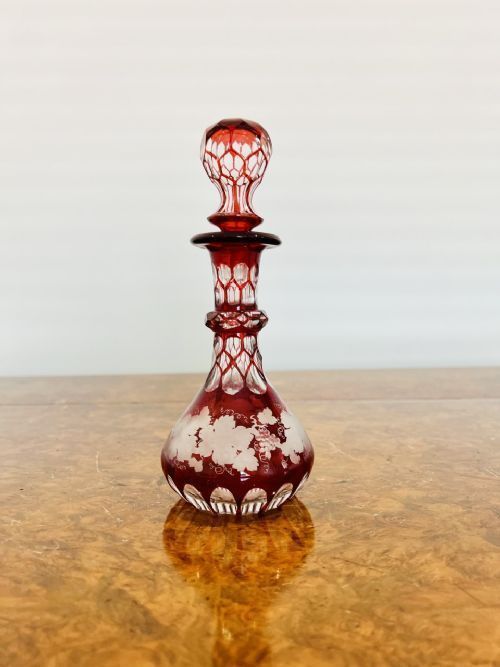
Vessels and lighting parts alike display the characteristic flashed surface, where a thin layer of coloured glass coats a clear or contrasting body before being cut or engraved away. You will find ruby red predominantly, alongside cobalt blue, green, and white overlays enriched with gilding, frosting, and enamel work.
Materials and technique
The foundation of these pieces lies in dual-layer construction, where a gather of clear glass receives an outer casing of intensely coloured glass, most frequently ruby, green, or cobalt blue. Glassmakers then shaped these vessels by blowing them into moulds or free-blowing, preparing them for the crucial decorative reduction process.
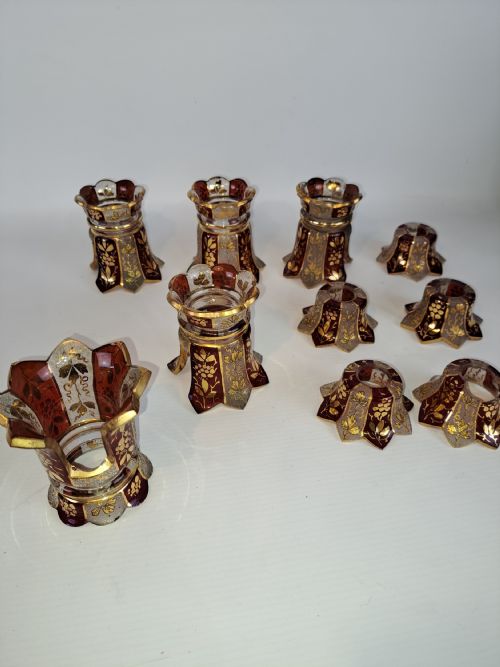
Craftsmen utilised wheel-cutting and engraving techniques to carve through the outer coloured layer, exposing the clear glass underneath and creating crisp patterns, panels, and motifs. Guilders and enamellers finished the surfaces by applying gold leaf and detailed pictorial designs, which were subsequently fired to bond with the glass.
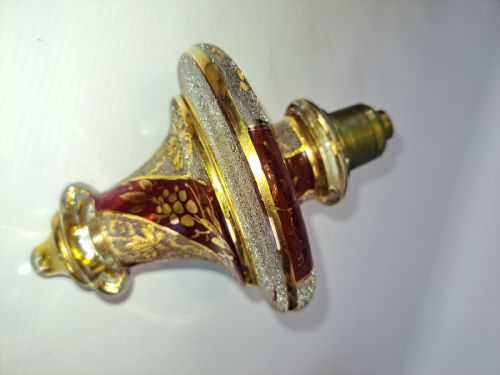
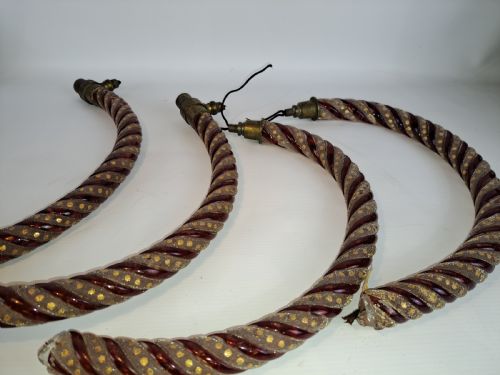
Several pieces include detachable glass chandelier arms and hanging bells designed to tinkle gently whenever a Victorian draft stirred the room.
Assessing quality and craftsmanship
The precision and depth of the wheel-cutting separate standard vessels from exceptional examples, as master engravers achieved remarkable sharpness and intricate detail through the coloured layer down to the clear body. Surface embellishments such as gold leaf application and enamel work display varying degrees of hand-painted finesse, with superior pieces retaining crisp gilding and sophisticated animal or geometric decoration.
Proportion, weight, and the clarity of the underlying crystal also dictate the standing of a piece, alongside the complexity of the glass form itself, whether an ovoid vase, a panelled decanter, or multi-component chandelier elements. Integrity of matching pairs, complete stoppers, and untouched original components carry significant weight in establishing the calibre of these nineteenth-century works.
The Bohemian Flash Glass Glossary
- Flash Glass
- Glass formed by blowing a thin layer of coloured glass over a core of clear or contrasting glass. This method allowed craftsmen to cut away sections and reveal the colour beneath.
- Lustres
- Mantel ornaments featuring a central bowl or vase hung with long glass prisms. These pendants caught and refracted candlelight in nineteenth-century interiors.
- Gilding
- The application of gold leaf or powdered gold to the surface of the glass. It is often fired to ensure permanence alongside etched and enamelled details.
- Overlay
- A technique where a thick layer of coloured glass encases a clear body before heavy cutting. It differs from flashing by possessing greater depth and dimension.
- Chandelier Components
- Individual structural or decorative elements of lighting fixtures, including arms, bowls, stems, and finials. They frequently showcase the same cut and engraved ruby glass as tableware.
Bohemian Flash Glass: Frequently Asked Questions
What is bohemian flash glass?
Bohemian flash glass refers to nineteenth-century decorative glassware featuring a thin exterior layer of coloured glass fused over a clear or contrasting body. Craftsmen cut through this outer coating to reveal intricate patterns beneath.
Items range from vases and decanters to lighting components and lustres, heavily associated with Victorian and Bohemian manufacturing centres.
Are these items strictly for display?
While many pieces like vases and decorative bells serve primarily as display objects, items such as tumblers, decanters, and spirit bottles were made for functional use. You should handle functional vessels with care to protect their historic glass surfaces.
Placing them away from direct, harsh sunlight helps preserve the vibrancy of the ruby and green flash coloration.
How can I tell the period?
Dating relies on stylistic markers, pontil marks on the base, and the specific cutting and engraving techniques employed by nineteenth-century glasshouses. Victorian and Bohemian examples often exhibit deep ruby colouration paired with heavy gilding and frosted panels.
Examination of wear marks on the base also provides helpful context regarding the age and handling history of the piece.