


Bohemian Overlay Glass
When searching for bohemian overlay glass, you encounter richly coloured vessels created by layering contrasting glass panes before cutting.
Bohemian Overlay Glass
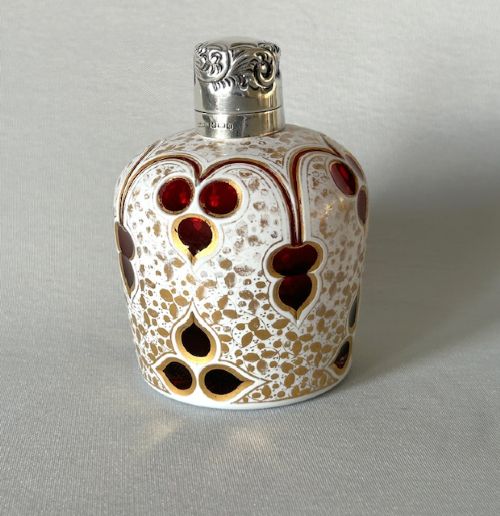
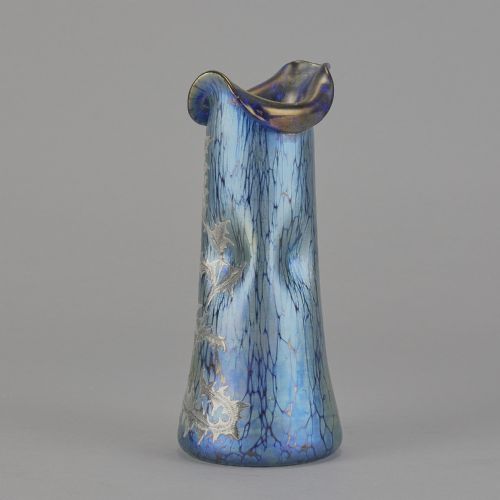
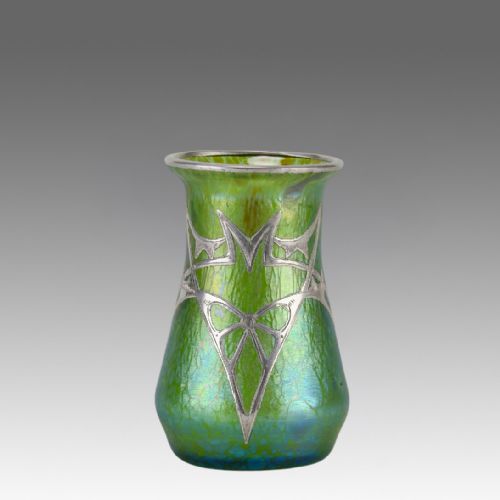
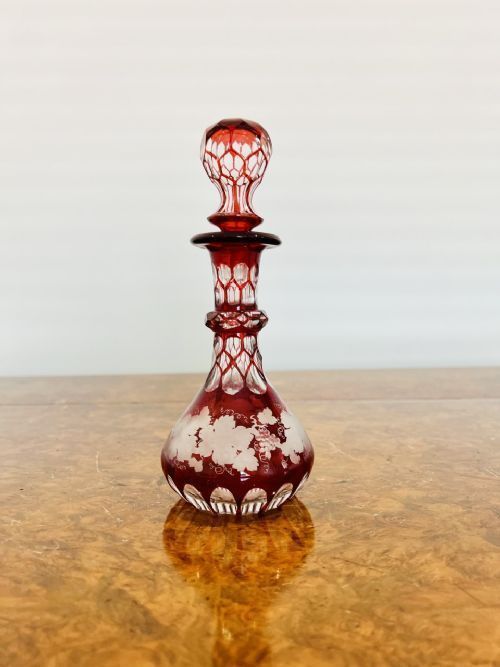
When you search for bohemian overlay glass, you find decorative and functional objects produced primarily during the Victorian and 19th-century periods. The selection commonly includes scent bottles, vases, decanters, and goblets featuring distinct colour layers.
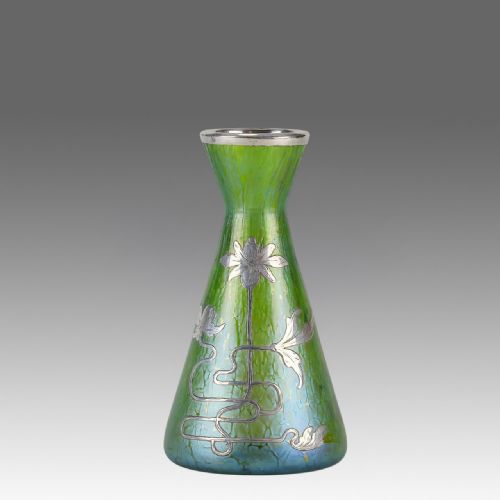
Vessels span ruby, emerald green, amethyst, and cobalt blue hues contrasted against clear or white crystal foundations. These items often incorporate silver mounts, gilt decoration, or cut panels that expose the underlying glass.
How they were made
Makers fused a coloured layer of glass over a clear or contrasting base gather while hot, creating a solid multi-layered blank. Artisans then used wheel-cutting and engraving techniques to carve through the outer skin and reveal the different colour beneath.
Finishing work frequently involved the application of gold leaf gilding, enamel details, or fitted sterling silver mounts and collars.
Tiny glass bells chime quietly on Victorian dressing tables.
What varies in quality
Depth and precision of the wheel cutting dictate the crispness of the panels and medallions, separating standard vessels from more intricate examples. The weight of the base glass and the complexity of the layering also determine the refinement of the piece.
Preservation of original gilding and the presence of hallmarked silver mounts or stoppers contribute to the overall integrity of surviving items.
Loetz Witwe·Johann Loetz·The Boots Company·Mousley Brothers·George Brace·Charles May
The Bohemian Overlay Glass Glossary
- Overlay
- A technique where a layer of coloured glass is fused over a contrasting body before being cut back.
- Cased glass
- Multiple distinct layers of coloured or clear glass gathered together during the blowing process.
- Lustre
- A decorative table ornament featuring hanging crystal prisms designed to reflect candlelight.
- Gilt
- A thin application of gold leaf or paint used to accent rims, panels, and motifs.
- Decanter
- A stoppered glass vessel intended for holding and serving wine or spirits.
Bohemian Overlay Glass: Frequently Asked Questions
What is bohemian overlay glass?
It is multi-layered glassware from Central Europe where an outer skin of coloured glass is carved away to expose a contrasting base colour underneath.
Craftsmen utilised this method to create deep visual contrast on vases, decanters, and small scent bottles.
How do I identify Victorian pieces?
Victorian examples frequently combine rich jewel tones like cranberry or cobalt blue with hand-painted gilt motifs and sometimes fitted silver mounts.
Examining the depth of the cut panels and the wear on the base helps indicate nineteenth-century production.
Were these vessels used daily?
Many items, such as scent bottles and claret jugs, served practical functions on dressing tables and dining sideboards during the nineteenth century.
Others, like lustre sets and decorative vases, functioned primarily as mantelpiece ornaments.
What colours are most common?
Ruby red, emerald green, amethyst, and cobalt blue appear frequently across historical listings and surviving examples.
These bold hues provided the necessary contrast when cut back to clear or white crystal layers.