


Bohemian Art Nouveau Ceramics
Bohemian art nouveau ceramics bring fluid organic lines and sculptural grace into a room through figures, vases, and centrepieces.
Bohemian Art Nouveau Ceramics
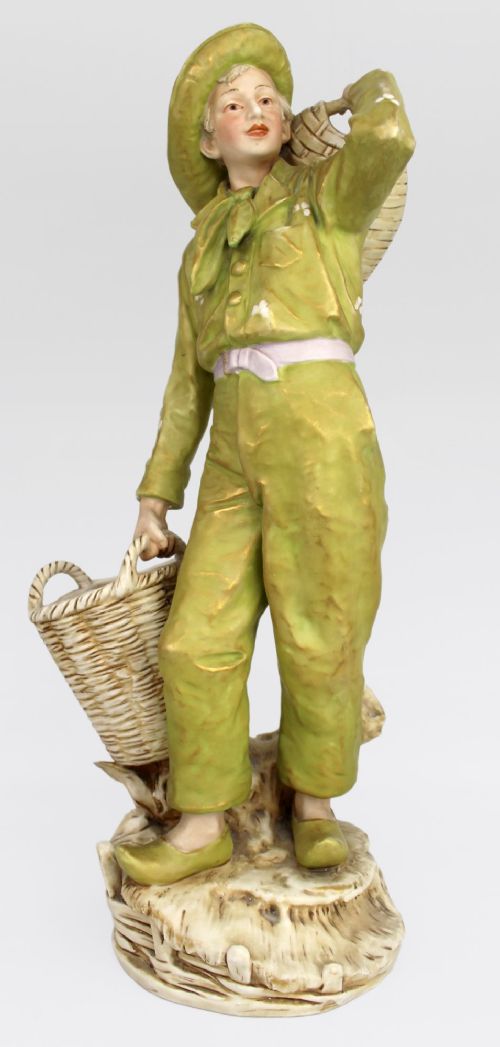
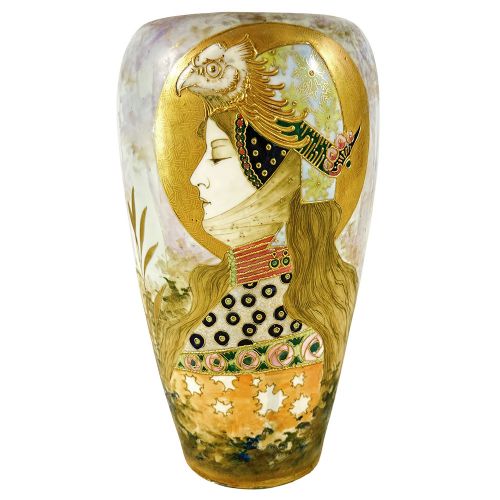
When you search for bohemian art nouveau ceramics, you encounter sculptural works produced in the late nineteenth and early twentieth centuries, spanning the Victorian, Edwardian, and early modernist eras. The selection on this page consists predominantly of porcelain and earthenware figures, monumental vases, ewers, and decorative centrepieces.
Figurines depicting maidens, water nymphs, and pastoral figures dominate the available forms, often modelled with characteristic flowing hair and natural drapery. Large vases and ewers complete the range, displaying botanical motifs and orientalist influences typical of the period.
Originating largely from major Bohemian potteries operating around nineteen hundred, these works merge utilitarian vessel forms with high sculptural ambition. Collectors find both domestic mantle pieces and monumental exhibition items created by prominent regional makers.
How they were made
Potters shaped these pieces using porcelain, earthenware, and biscuit porcelain, employing slip-casting and hand-modelling techniques to achieve complex organic contours. Artisans then applied intricate glazes alongside hand-painted polychrome decoration.
Gilt and gold leaf accents frequently highlight the raised botanical reliefs and garment folds, catching the light across the flowing surfaces. Firing methods allowed for both high-gloss finishes and the matte, stone-like texture characteristic of unglazed biscuit porcelain.
Listings feature works spanning the nineteenth century through the nineteen twenties, encompassing porcelain, earthenware, and biscuit porcelain.
What varies in quality
Model complexity and sheer scale separate standard production pieces from monumental exhibition works, with larger figure groups and detailed centrepieces demanding greater technical mastery from the modeller. The crispness of the original moulding defines how cleanly the organic folds and facial expressions emerge from the clay.
The precision of the hand-painting and the preservation of the delicate gilt and enamel work determine the visual impact of each surface. Early numbered models often display sharper detailing and more careful finishing than later commercial iterations.
Royal Dux Bohemia·Reissner, Stellmacher and Kessel·Ernst Wahliss·Julius Dressler·Paul Dachsel·Eichwald
The Bohemian Art Nouveau Ceramics Glossary
- Bisque
- Unglazed ceramic fired once to create a matte, porous finish resembling smooth marble. This surface absorbs minimal light, emphasising the sculptural modelling of figures.
- Ewer
- A large ornamental jug with a flared spout and curved handle, often paired with a basin or designed as a decorative vessel. These pieces frequently showcase elaborate floral handles typical of the era.
- Majolica
- Low-fired earthenware coated with an opaque tin-glaze and painted with metallic oxide colours before a second firing. This technique produces vibrant, glossy surfaces found on decorative jardinières.
- Vide poche
- A small decorative dish designed for holding pocket items, frequently combined with figural elements such as maidens leaning on shells. These desk or hallway accessories merge utility with organic art nouveau styling.
- Centrepiece
- A large ornamental centre table arrangement, often modelled as a shallow shell or basin supported by figures. They served as formal dining table decorations during the Edwardian period.
Bohemian Art Nouveau Ceramics: Frequently Asked Questions
Where were these ceramics made?
These works originated primarily in the Bohemia region of the Austro-Hungarian Empire, centred around towns renowned for rich clay deposits and skilled ceramic artisans. Major factories operated in areas like Trnovany and Dux.
This localized concentration of kilns, modellers, and painters created a distinct regional style combining traditional craftsmanship with modern artistic trends.
How should I clean porcelain figures?
Dust surfaces gently using a soft, dry artist brush to prevent accumulation in delicate crevices and modelled hair. Avoid submerging unglazed biscuit porcelain in water, as moisture can penetrate the porous body.
Keep pieces away from direct sunlight and areas prone to heavy smoke or grease to preserve fragile painted details and gilt highlights.
What defines art nouveau ceramics?
Art nouveau design relies on asymmetrical organic forms, whiplash curves, and motifs drawn directly from plants, water, and the female human form. Ceramic artists translated these fluid principles into three dimensions.
Instead of rigid geometric symmetry, these pieces emphasise movement, naturalism, and a harmonious integration between the vessel and its decorative surface.