


Art Nouveau Porcelain Bowl
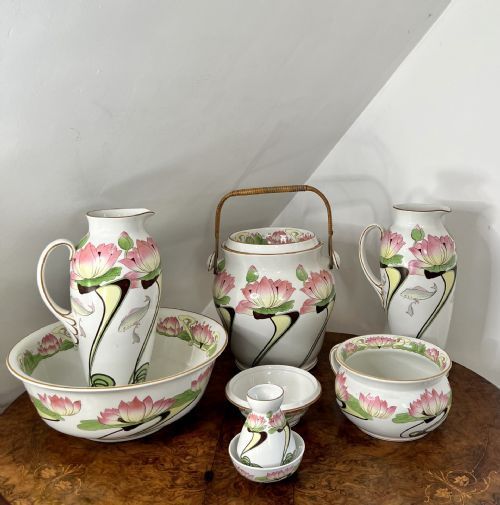
An art nouveau porcelain bowl brings organic line and iridescent glaze to a table, combining fluid form with rich surface decoration.
Art Nouveau Porcelain Bowl
When you search for an art nouveau porcelain bowl, you encounter table pieces, centrepieces, and decorative vessels shaped by the sweeping plant forms and figurative motifs of the early twentieth century. These objects bridge functional ceramic design and expressive sculpture through stylized curves and botanical references.
The versions you meet most often on this page date from the Edwardian era and the decades around nineteen ten, frequently carrying elaborate coloured finishes or metallic accents. Makers applied these fluid styles to standard table vessels as well as larger figural centrepieces incorporating maidens, shells, and aquatic themes.
How they were made
Potters shaped these vessels using porcelain, bone china, and ceramic bodies, often building complex figural elements or octagonal structures by hand and mould. Kiln workers applied lustre glazes, gold leaf, and surface gilding to create shimmering, reflective finishes across the ceramic body.
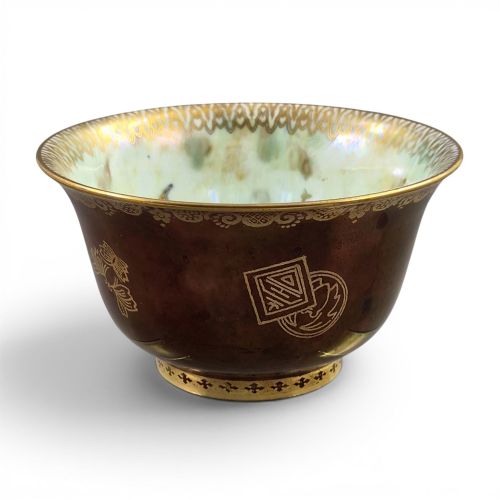
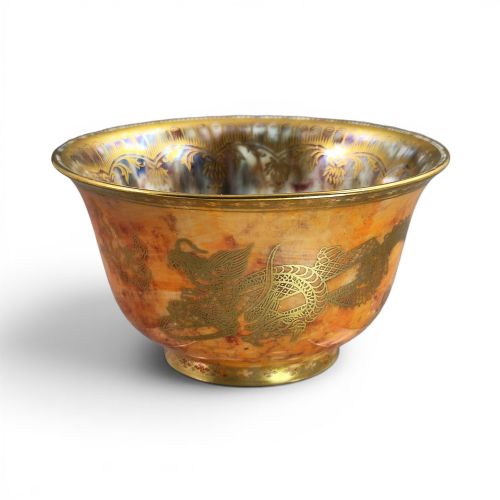
Specialised decorators painted intricate patterns like fairyland scenes, butterflies, and dragons onto the prepared surfaces before firing them to set the rich colour. The combination of fluid porcelain moulding and specialised chemical glazes defined the distinctive appearance of these pieces.
Listings feature porcelain, bone china, and ceramic vessels decorated with lustre glaze, gold leaf, and gilding.
What varies in quality
Quality rests in the crispness of the moulded relief and the depth of the lustre glaze applied across the porcelain surface. Pieces with detailed figural modelling and complex hand-painted motifs demonstrate higher technical skill than simpler vessels.
The precision of the gilding and the preservation of the gold leaf and enamel colours determine the overall standard of the finished object. Finer examples maintain vibrant iridescence and sharp definition within the decorative patterns.
Daisy Makeig Jones·James Hodgkiss·Paul Louchet·Royal Dux·Royal Doulton·Shelley·Wedgwood·Amphora
The Art Nouveau Porcelain Bowl Glossary
- Lustre Glaze
- A type of ceramic glaze containing metallic oxides that produce an iridescent, pearl-like sheen upon firing. This finish shifts in colour under changing light.
- Bone China
- A soft-paste porcelain incorporating bone ash for enhanced strength and translucency. It allows for thin, delicate vessel walls.
- Centrepiece
- A large decorative bowl or figural sculpture designed to sit in the middle of a dining table. These objects often incorporate figures or elaborate shell forms.
- Gilding
- The application of gold leaf or gold powder to the surface of porcelain. It highlights moulded details and adds metallic contrast to the glaze.
Art Nouveau Porcelain Bowl: Frequently Asked Questions
How do I identify an art nouveau porcelain bowl?
Look for characteristic organic lines, plant motifs, and figurative elements integrated directly into the ceramic shape.
These pieces often feature flowing contours and iridescent lustre glazes typical of the period around nineteen hundred.
What materials were used to make them?
Potters used porcelain, bone china, and general ceramic bodies as the primary base for these decorative vessels.
Surface decoration frequently involved lustre glaze, gold leaf, and hand-applied gilding to enhance the visual depth.
How were centrepieces used originally?
Large centrepieces and figural bowls served as decorative focal points on dining tables and sideboard displays.
Some specialised sets included matching components for fruit, flowers, or formal table service.
How do I care for antique lustre glaze?
Clean these delicate porcelain surfaces gently with a soft, dry cloth to prevent abrasion to the metallic finish.
Avoid using water, chemical cleaners, or immersion, which can damage fragile gold leaf and lustre coatings.