


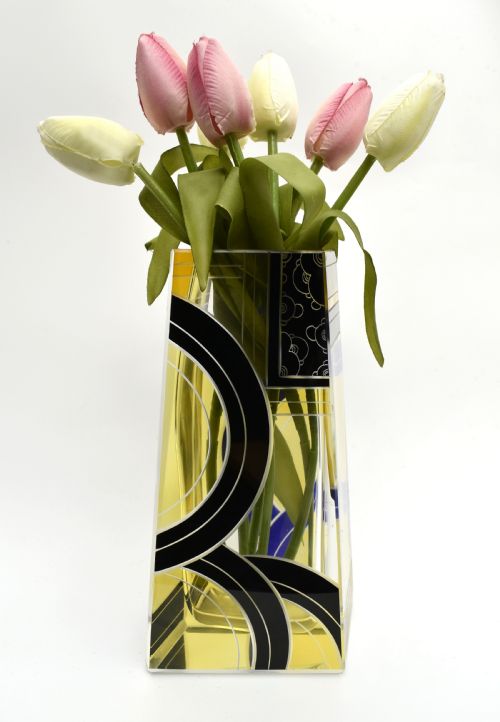


Bohemian Art Deco Vase
A bohemian art deco vase brings striking geometric lines and rich coloured glass into a room, combining continental flair with bold modernist design.
Bohemian Art Deco Vase
A bohemian art deco vase captures the spirit of the 1920s and 1930s through sharp forms, stylised motifs, and innovative glassmaking techniques originating from Czech workshops. These vessels range from tall, slender silhouettes to square and geometric profiles that display the distinct aesthetic of the period.
Most examples encountered on this page date from around 1930 and showcase the characteristic union of glass with contrasting surface treatments such as enamel, etching, and metal overlays. Makers embraced both vibrant palettes and opaque finishes to create visually commanding decorative objects for the home.
How they were made
Glass forms were shaped using pressing and blowing techniques, often utilising coloured glass, uranium glass, or black hyalite glass as a foundation. Artisans then applied intricate surface decoration through acid etching, hand-painted enamel, and applied silver or gold gilding.
Specialised workshops employed talented designers to create striking visual contrasts, pairing transparent or opaque bodies with detailed geometric or figural etchings. Some pieces integrated sterling silver mounts directly into the design, elevating the finished vessel through mixed media craftsmanship.
Some uranium glass vases glow intensely under ultraviolet light, revealing a hidden neon personality.
What varies in quality
Quality in a bohemian art deco vase rests on the precision of the glass cutting, the complexity of the etching, and the vibrancy of the enamel work. Superior examples demonstrate crisp geometric lines and meticulous hand-applied details that remain sharp and well-defined across the surface.
The sophistication of the design and the reputation of the workshop also dictate distinction within the range. Pieces featuring combined techniques, such as silver overlay on coloured glass or intricate multi-coloured enamelling, represent the higher tier of production.
Karl Palda·Paul Heller·Booms glass·Libochovice·Moser
The Bohemian Art Deco Vase Glossary
- Hyalite glass
- An opaque black glass developed in Bohemia, prized for its glossy, obsidian-like finish and suitability for contrasting enamel decoration. It provides a striking dark ground for bright geometric patterns.
- Uranium glass
- Glass containing trace amounts of uranium oxide, which glows a vibrant green under ultraviolet light. This material was frequently utilised by bohemian makers to achieve luminous transparency in art deco vessels.
- Silver overlay
- A decorative technique where pure silver is bonded directly onto the glass surface in intricate patterns. It creates a tactile metallic contrast against the smooth glass body.
- Enamel
- A durable vitreous substance fused to glass through firing to add vibrant colour and pattern. It allows for detailed geometric and floral motifs across the vessel's exterior.
Bohemian Art Deco Vase: Frequently Asked Questions
How do I identify a bohemian art deco vase?
Look for characteristic 1930s geometric shapes, bold use of coloured or hyalite glass, and surface decorations such as acid etching or enamel work. Czech pieces often incorporate distinct architectural silhouettes and stylised motifs typical of the period.
Examining the base and the precision of the applied decoration helps confirm the origin, while signatures or attributed forms connect specific examples to renowned Bohemian workshops.
Where were these glass vases made?
These decorative vessels originate primarily from Bohemia and the Czech Republic, which was a major global centre for innovative glass production during the 1920s and 1930s. Regional factories and independent designers developed pioneering techniques in pressing and surface finishing.
Workshops in towns renowned for glassmaking produced both utilitarian and artistic pieces that reached international markets, defining the modernist aesthetic of the interwar years.
How should I display a glass vase?
Place the vessel where natural light can pass through the coloured or uranium glass to highlight its tone and transparency. Position opaque or black hyalite pieces against a contrasting background to emphasise their sharp geometric contours and silver overlay.
Ensure the vessel stands on a stable, flat surface away from high-traffic edges, allowing its decorative form to remain the focal point of the room.
What materials are typical for these pieces?
The primary material is glass, which appears in various forms including pressed glass, coloured glass, uranium glass, and opaque black hyalite glass. Artisans enhanced these vitreous bodies with secondary materials such as enamel, gold gilding, and sterling silver.
This combination of glass and applied surface media creates the rich textural contrast that defines the art deco style.