


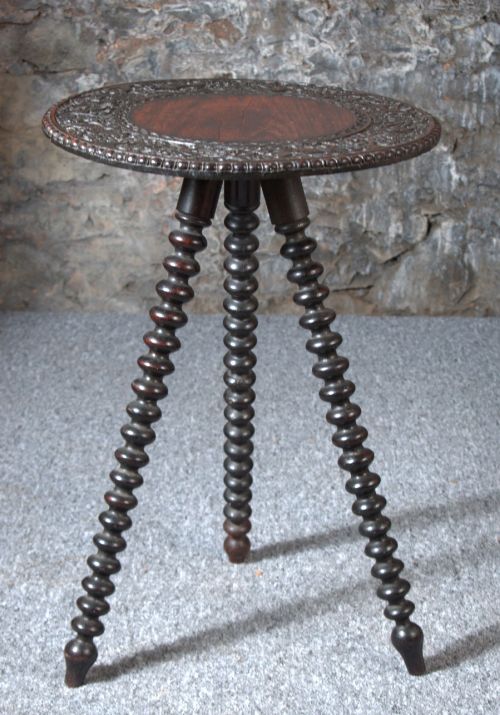

Bobbin Turned Furniture
Bobbin turned furniture brings repetitive spool-like spindles and structural rhythm to interiors through seating and tables.
Bobbin Turned Furniture
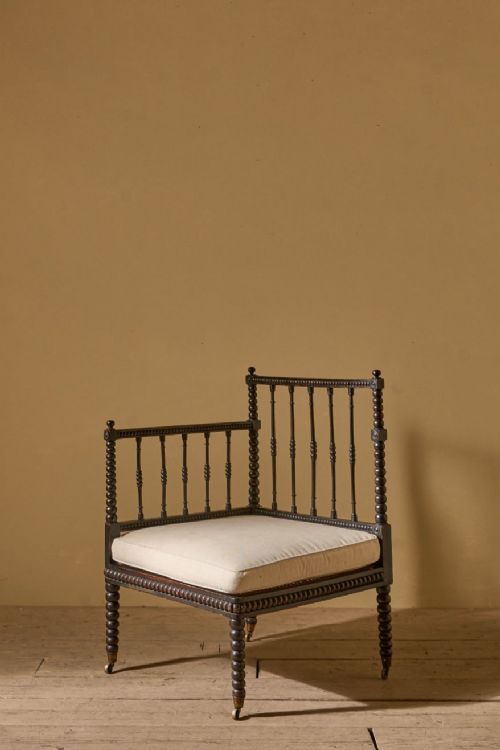
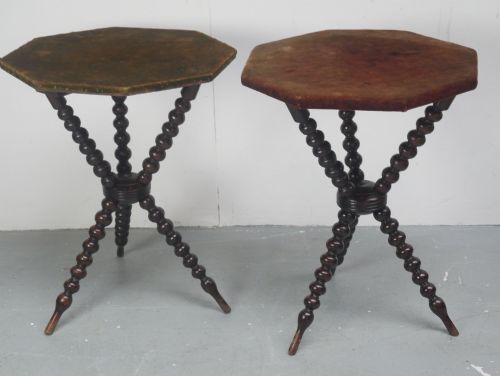
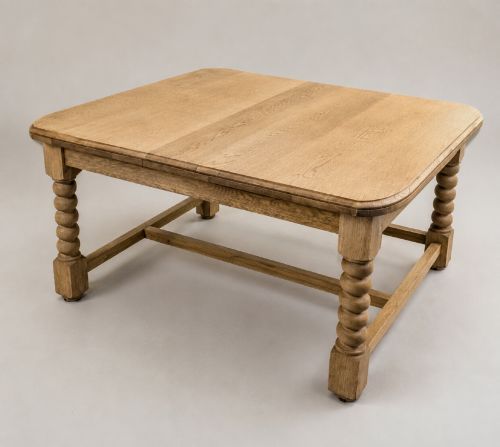
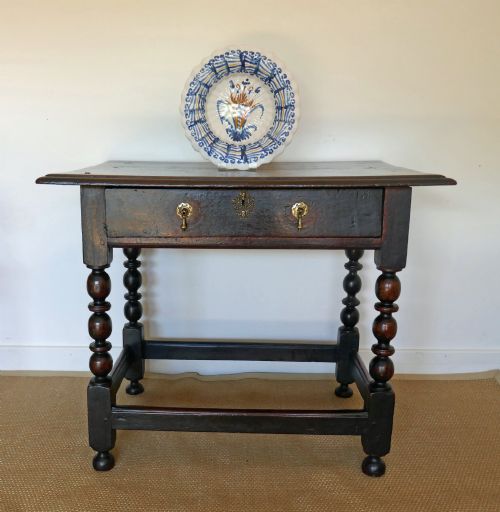
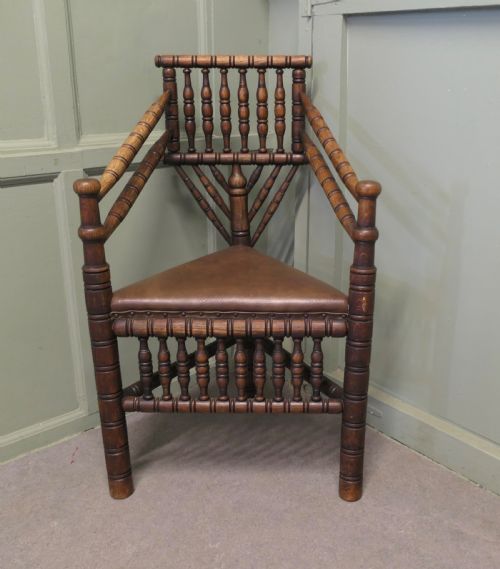
Bobbin turned furniture comprises seating and tables shaped with distinctive spindle turnings resembling spools or bobbins. Buyers encounter pieces spanning seventeenth-century origins through to nineteenth-century revivals.
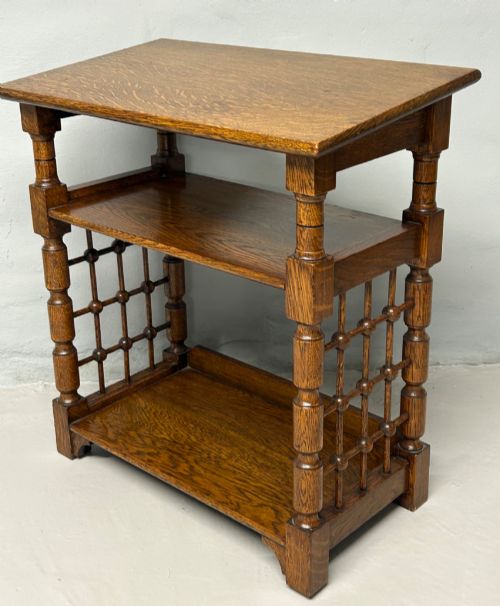
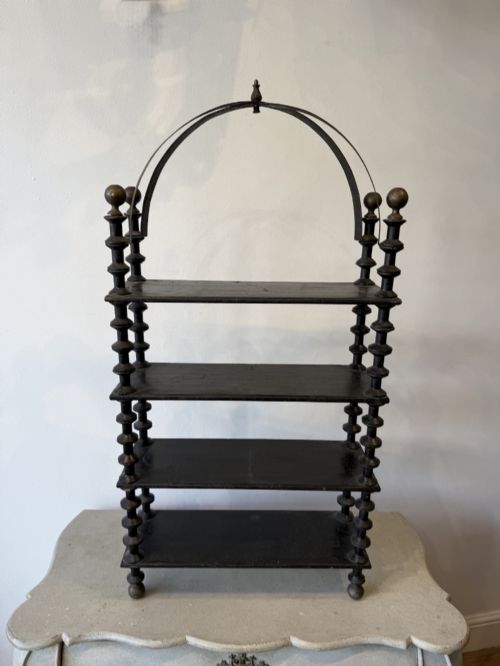
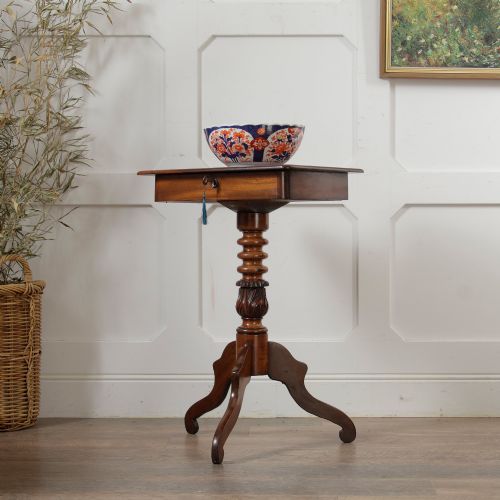
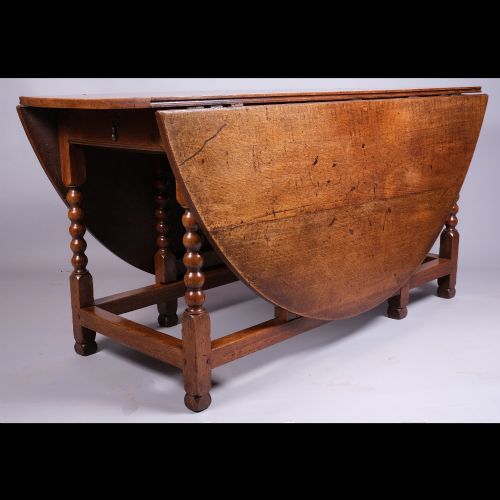
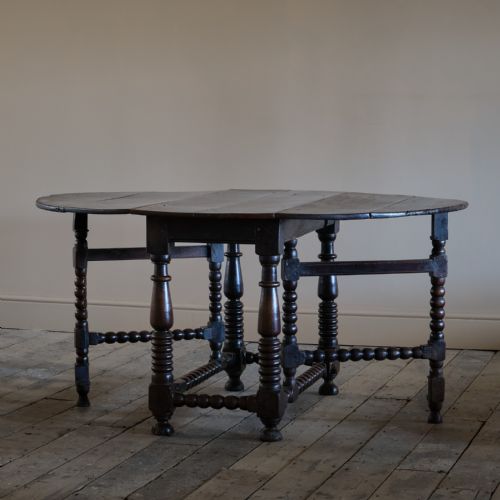
The selection ranges from gateleg tables and side tables to corner chairs, armchairs, and wall shelves. Seventeenth-century examples appear alongside Victorian and later nineteenth-century interpretations.
Tables and chairs dominate the selection, utilising turned elements across legs, stretchers, and framing. Oak and ebonised wood frequently form the structural framework for these designs.
Defining Quality
Quality rests upon the crispness of the turning work and the integrity of the timber joints. Seventeenth-century survivals display hand-turned precision that differs from later revival production.
The choice of material, such as figured oak, dense walnut, or uniform ebonised wood, dictates the visual weight of the piece. Proportions and structural balance separate standard utilitarian items from finer examples.
Listings feature oak, walnut, mahogany, and ebonised wood across seventeenth-century and nineteenth-century periods.
Liberty and Co
The Bobbin Turned Furniture Glossary
- Bobbin turning
- A form of woodturning creating a series of rounded protrusions resembling spools or bobbins threaded onto a string. This decorative moulding defines seventeenth-century and revival frames.
- Gateleg table
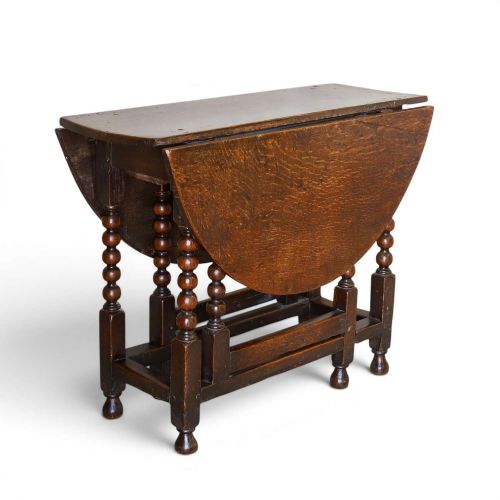
- A table with hinged drop leaves supported by legs that swing outward like a gate. Seventeenth-century examples frequently employ bobbin turned legs.
- Ebonised wood
- Timber treated with a dark stain or finish to imitate ebony. This technique appears on nineteenth-century aesthetic movement and revival pieces.
- Backstool
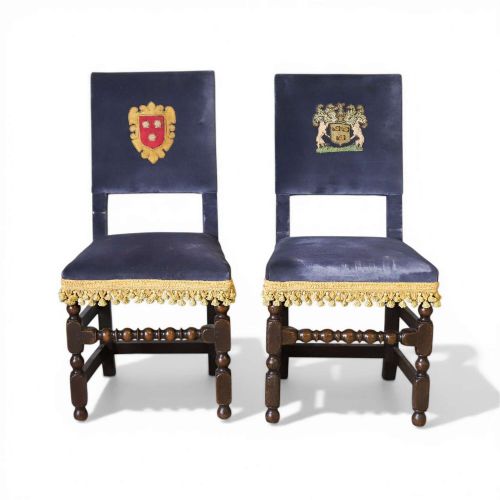
- An early form of chair without arms, featuring a padded or solid wooden back. These appear in seventeenth-century oak configurations.
Bobbin Turned Furniture: Frequently Asked Questions
What is bobbin turned furniture?
Bobbin turned furniture consists of wooden frames shaped on a lathe to create a sequence of rounded spool-like segments. The style appears predominantly on seventeenth-century pieces and later nineteenth-century revivals.
Items range from gateleg tables and side tables to corner chairs and wall shelves. The turned decoration runs along structural components like legs, stretchers, and uprights.
How do I identify seventeenth-century pieces?
Seventeenth-century examples typically utilise solid oak with traditional joinery and patination developed over centuries. Construction details and timber characteristics help distinguish early periods from later copies.
Revival pieces from the nineteenth century often employ ebonised wood, walnut, or mahogany alongside machine-assisted turning methods. Comparing timber ageing and joint construction clarifies the period.
Where were these pieces used?
These tables and chairs served functional roles in domestic interiors as dining surfaces, side tables, and seating. Gateleg tables provided adaptable surface space in seventeenth-century rooms.
Shelves and smaller tables accommodated display and storage needs across various historic periods. Their sturdy wooden construction suited daily household use.
How should I care for wooden surfaces?
Maintain timber surfaces by avoiding direct sunlight and excessive moisture fluctuations. Periodic application of suitable wax helps preserve the finish of antique oak and walnut.
Upholstered components require gentle cleaning appropriate to fabrics such as velvet. Regular dusting prevents particle accumulation within the turned details.