

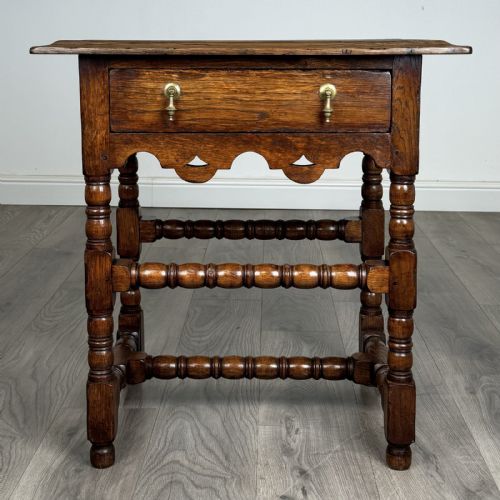

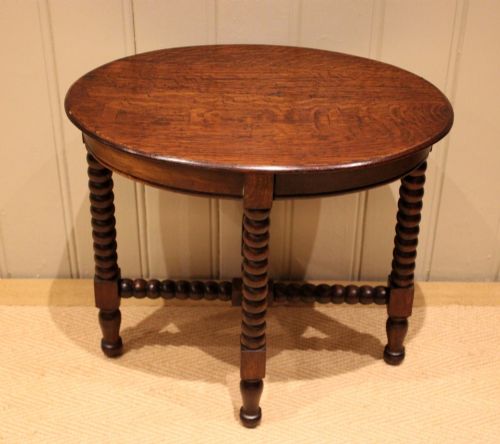


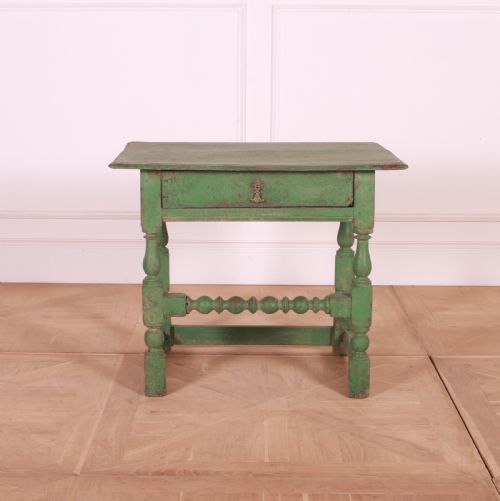
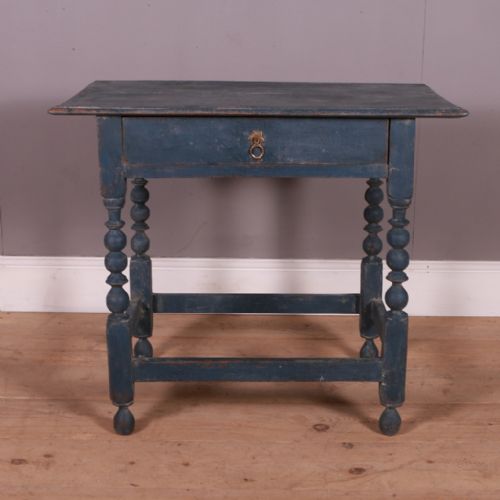


Bobbin Leg End Table
A bobbin leg end table brings crisp turnings and sturdy timber to a corner, offering a compact surface built to last.
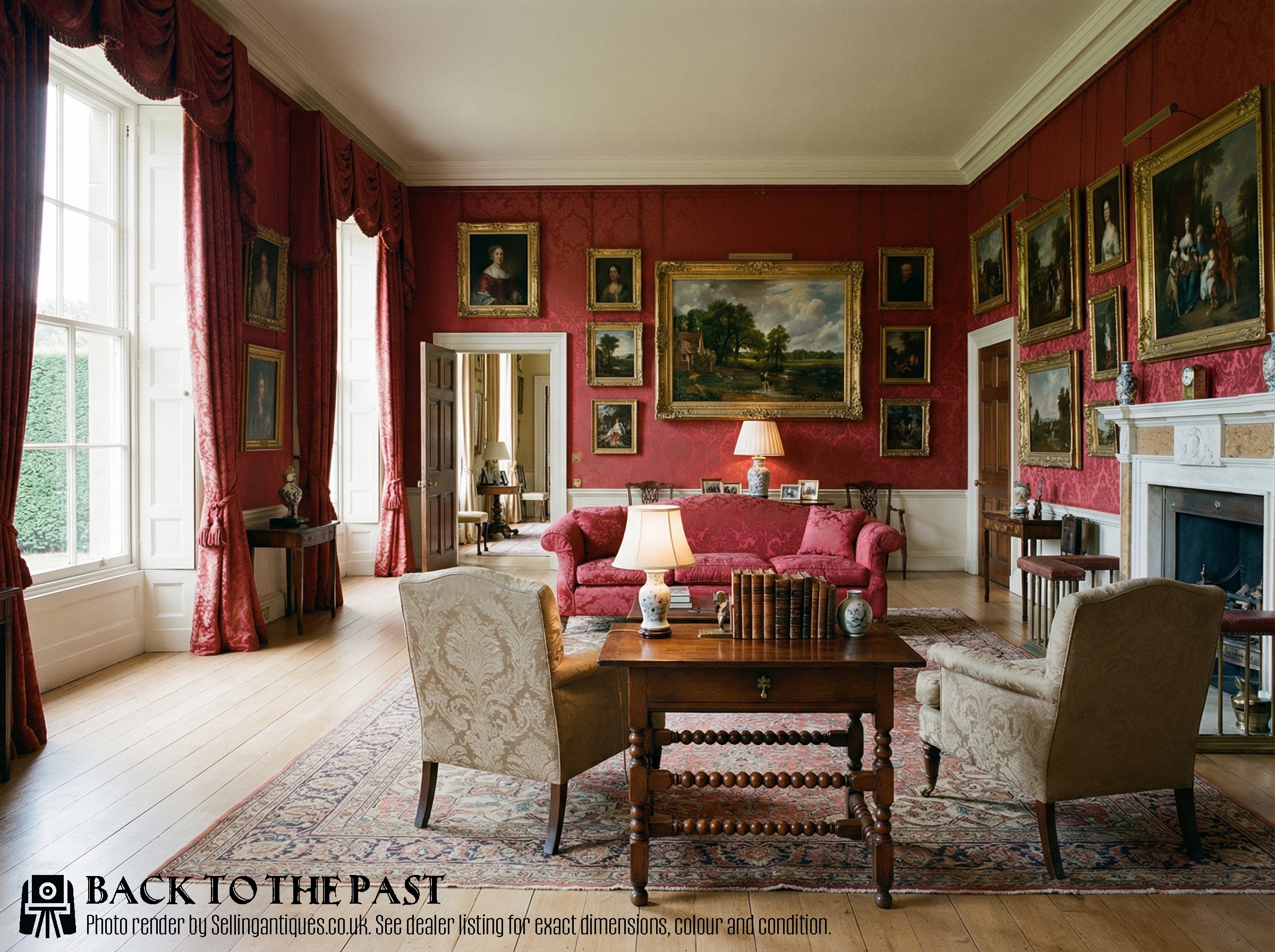
Bobbin Leg End Table
A bobbin leg end table is a practical piece of furniture designed to sit beside a chair or in a hallway, offering a convenient surface for daily use. These tables appear in forms such as side tables, occasional tables, and lamp tables, adapting easily to various rooms in a home.
When searching for a bobbin leg end table, buyers frequently encounter oak and walnut examples spanning from the seventeenth century through the nineteenth century. Revival movements also bring pieces into the Victorian era, keeping earlier turning traditions alive.
Originating in styles ranging from English Country and Jacobean to Dutch Traditional and Italian, these tables show considerable variety in their regional turning details. Oak and yew wood versions often reflect straightforward local craftsmanship, while walnut pieces introduce richer grain patterns.
How they were made
Makers shaped the distinctive spool turnings of a bobbin leg end table using a lathe to carve repeating spherical and cylindrical motifs along the timber. Oak, walnut, and yew wood served as the primary structural timbers, chosen for their strength and ability to hold crisp joinery.
Surface decoration on these tables includes carved details, marquetry inlay, leather tops, and painted finishes depending on the period and regional workshop. Brass fittings and ceramic elements occasionally appear to accent the primary timber construction.
Bobbin Leg End Table Retail Price Guide 2026
Typical asking prices for bobbin leg end table among the pieces listed under this phrase on Sellingantiques today, from the lower quarter to the upper quarter. They describe what is for sale here now, not the wider market.
Listings feature oak, walnut, pine, yew wood, and burr walnut across seventeenth, eighteenth, and nineteenth-century periods.
What varies in quality
The quality of a bobbin leg end table rests on the crispness of the turnings and the selection of the timber. Finely executed spool work shows consistent proportions and careful smoothing along every contoured section.
The integrity of the construction and the choice of materials, such as burr walnut or solid yew wood, separate standard utility pieces from more ambitious cabinet work. Regional styles from seventeenth-century Jacobean to Victorian revivals demonstrate varying degrees of decorative carving on the tops and skirts.
The Bobbin Leg End Table Glossary
- Bobbin turning
- A type of lathe turning that produces a series of rounded, spool-like shapes resembling bobbins of thread along the length of a furniture leg. This decorative technique defines the classic appearance of seventeenth-century and revival tables.
- Occasional table
- A small, movable table designed for intermittent use around a room rather than a fixed primary function. These versatile pieces often serve as lamp tables or side tables.
- Jacobean Revival
- A nineteenth-century stylistic movement that drew inspiration from the robust forms and dark oak timbers of the early seventeenth century. Pieces from this period often incorporate bold turnings and carved panels.
- Marquetry inlay
- A decorative technique where small pieces of contrasting veneer are fitted into a pattern on the wooden surface of a table top. This method adds geometric or floral enrichment to walnut and other fine timbers.
- Gate leg table
- A table featuring hinged legs that swing outward to support folding drop leaves on either side. This clever construction allows the surface area to expand when needed.
Bobbin Leg End Table: Frequently Asked Questions
Where should I put a bobbin leg end table?
These compact tables fit neatly beside an armchair or sofa to hold a lamp, book, or cup. They also function well as small accent pieces in hallways and narrow corners.
Their restrained footprint allows them to integrate smoothly into both traditional and contemporary room layouts without overwhelming the surrounding space.
How do I care for a wooden table top?
Dust the surface regularly with a soft, dry cloth to prevent the accumulation of grit. Avoid placing timber tables in direct sunlight or near heat sources to protect the finish.
Applying a suitable wax polish occasionally helps to nourish older oak and walnut surfaces while preserving their natural sheen.
How can I tell the age of these tables?
Examining the timber species, joinery methods, and turning style provides strong clues regarding the period of manufacture. Seventeenth and eighteenth-century examples typically feature hand-cut joints and dense native timbers like oak or yew.
Revival pieces from the Victorian era often combine traditional turning profiles with nineteenth-century structural characteristics and secondary woods.
What is the difference between a side table and a lamp table?
Side tables and lamp tables both offer secondary surfaces for everyday living, though terminology often overlaps in antique listings. Lamp tables generally emphasise a compact top designed specifically to support a lighting fixture.
Side tables may feature drawers, drop leaves, or gate leg actions for added versatility in daily use.