



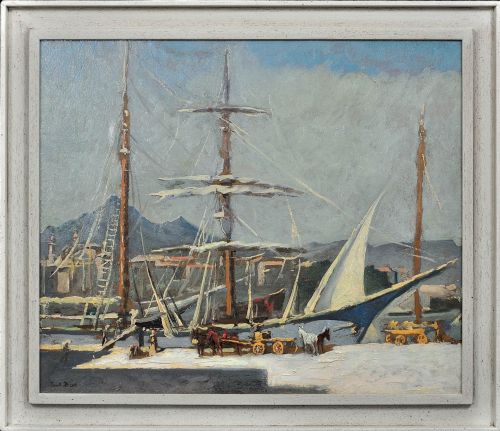
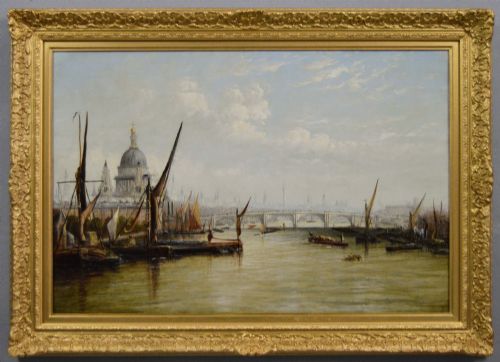
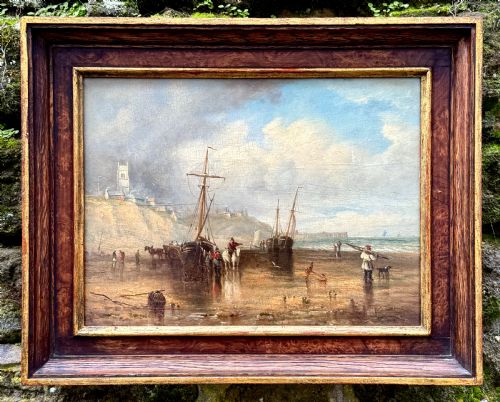
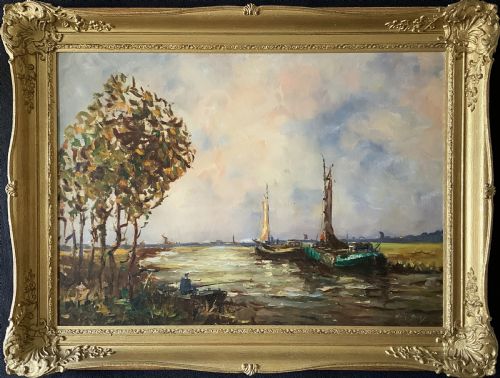
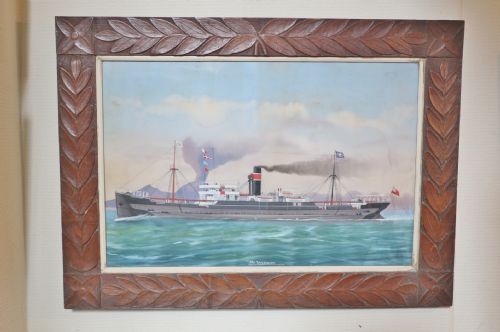
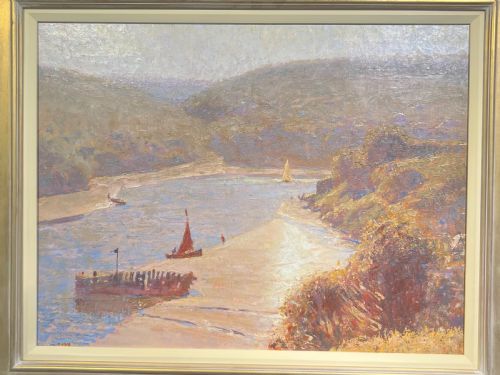
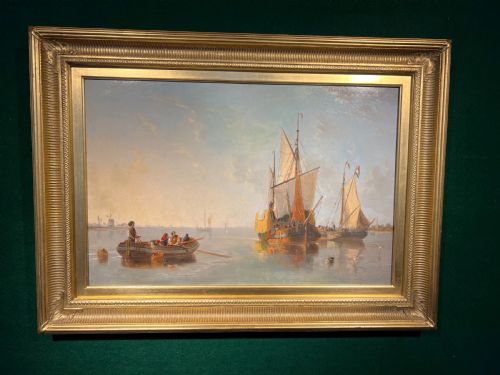
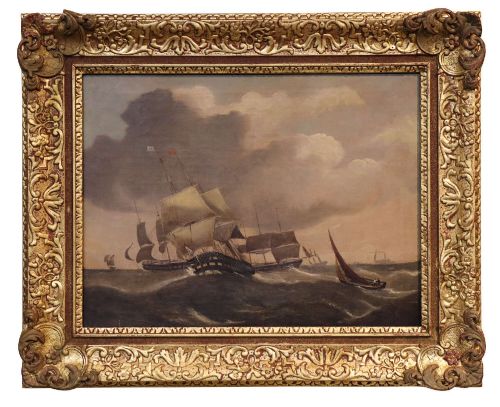
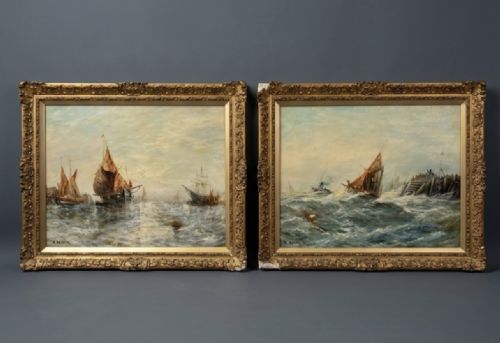
Boating Oil Painting
When you search for a boating oil painting, you are looking at centuries of maritime life captured on canvas and wood.
Boating Oil Painting
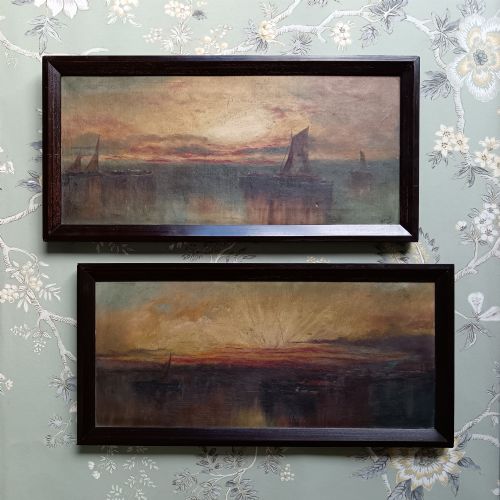
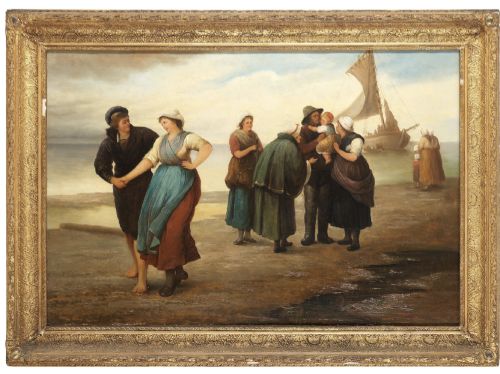
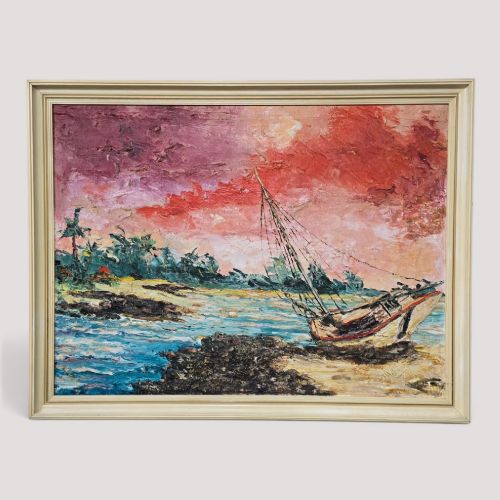
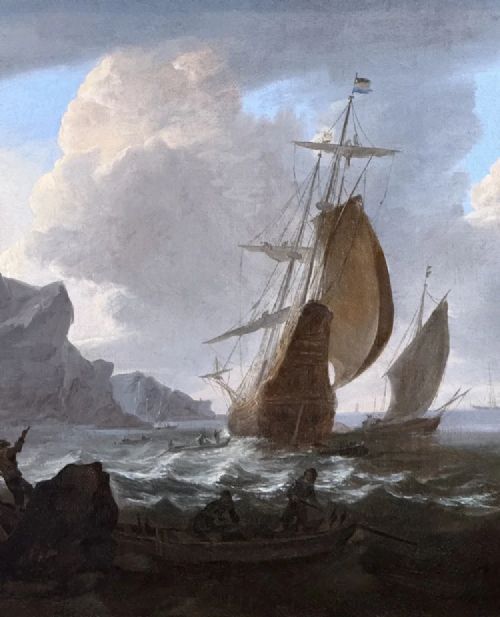
A boating oil painting records maritime activity, river scenes and coastal views through pigment applied to canvas or board. These works range from small depictions of leisure craft on inland lakes to large portrayals of commercial shipping in heavy seas.
The pieces on this page span several eras, moving from 19th-century Victorian and Edwardian maritime traditions into mid-century modern interpretations. You will encounter works originating from British, French, Dutch and Italian artists, capturing harbours, canals and open waters.
The most common formats on this page are framed oils on canvas or board, often set within period giltwood surrounds. Subjects vary from calm harbour moorings and tranquil river boating to vessels navigating gales and stormy coastal waters.
How They Were Made
Artists utilised oil paint layered onto stretched canvas, prepared wood panels or board to build depth and texture in water and sky. Pigments were brushed, knifed or impastoed to render the reflective qualities of the sea and the weathered timber of boats.
Support materials typically include canvas or wood, frequently housed inside decorative gilt or giltwood frames. The craftsmanship extends to the stretcher frames and the period mounting which often bears the marks of original framers and retailers.
Listings feature works spanning from the 17th century through the Victorian era to the mid-20th century.
What Varies in Quality
Quality rests in the artist's command of light, movement and atmosphere, distinguishing a flat record from a compelling maritime study. Skilled brushwork captures the transient effects of weather, water motion and the specific rigging of vessels with precision.
The handling of the original frame relative to the canvas also defines the standard of a piece. Works preserved in appropriate period gilt frames maintain a unified historical integrity that enhances the visual weight of the painting.
Bonaventura Peeters·Francis Moltino·Thomas Creswick·Willem Bos·John Wilson Carmichael·John Moore of Ipswich·Richard B Spencer·William Henry Williamson·Bernard Benedict Hemy·Abraham Hulk I·Elisabeth Bardon·William Edward Webb·Edward Matthew Elliott·Charles Napier Hemy·Jean-Baptiste Olive·Raymond Picque·Gabriel Dauchot·Gustave De Bréanski·Pieter Cornelis Dommersen·John Holland Senior·N H Christiansen
The Boating Oil Painting Glossary
- Impasto
- Paint applied thickly to a canvas or board, standing out from the surface so that texture and brush marks remain visible. This technique is frequently used to render the churning motion of waves or thick clouds.
- Seascape
- A painting depicting the sea, coastal views or ships on the water. It forms the primary genre for maritime oil works.
- Giltwood
- Wood that has been coated with a thin layer of gold leaf or gilt. Many period frames are constructed from this material.
- Canvas
- A heavy woven fabric used as a surface for oil painting, typically stretched tightly over a wooden frame. It remains the most common support found in these listings.
- Provenance
- The documented history of ownership of a work of art. It provides verifiable evidence of origin and past exhibitions.
Boating Oil Painting: Frequently Asked Questions
How do I date a boating oil painting?
Dating relies on stylistic evidence, artist signatures, framing methods and materials such as canvas or wood panel construction. Clothing styles of figures and the type of vessels depicted also offer clear chronological clues.
Many works carry inscriptions, artist biographies or exhibition dates on the reverse or within the frame. Comparing these details with known active periods of the artist helps narrow the decade of creation.
Where should I hang a maritime oil painting?
These works suit rooms with stable humidity and indirect natural light to protect the oil pigments and gilt frames from degradation. Positioning them away from direct heat sources preserves both the canvas and the wooden support.
Consider eye-level placement in spaces where the lighting allows the texture of the brushwork and the reflective quality of the water to emerge clearly.
What is the difference between a seascape and a harbour scene?
A seascape primarily focuses on the open water, coastal waves, weather conditions and ships navigating the sea. The emphasis lies on the vastness of the marine environment and atmospheric effects.
In contrast, a harbour or canal scene centres on human activity, architecture, docks, loading vessels and calmer inland or sheltered waters. These compositions often feature tighter framing around boats and shore structures.
How do I care for an antique oil painting?
Care involves keeping the surface free of dust using a soft, dry brush without applying pressure to the canvas. Avoid liquid cleaners or chemical agents on both the paint layer and the gilt frame.
Maintain a consistent indoor climate to prevent the wood and canvas from expanding or contracting. Professional conservation should be sought if the paint layer shows signs of cracking or instability.