






Blue Wool Ziegler Rug
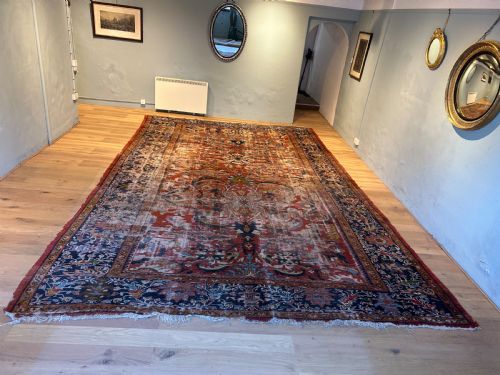
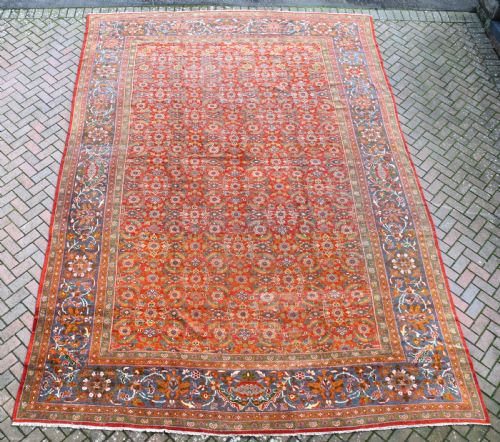
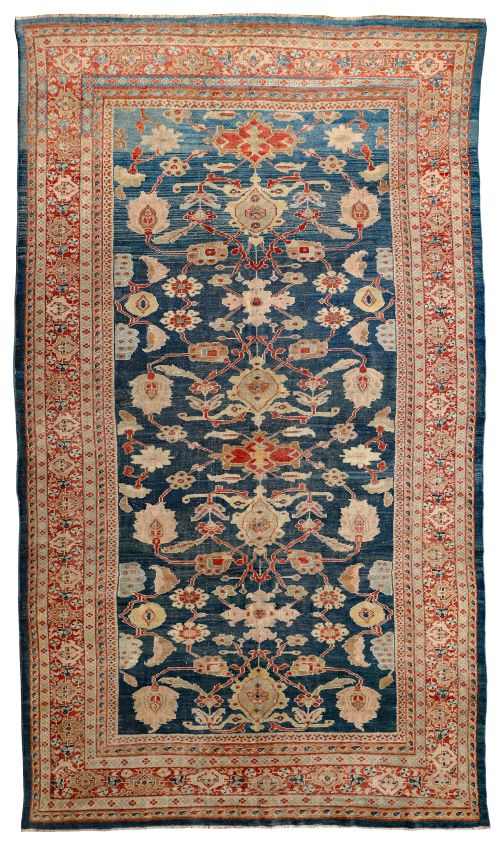
A blue wool ziegler rug brings nineteenth-century Persian workshop design into a room, offering softened palettes and large-scale floral patterns.
Blue Wool Ziegler Rug
When you search for a blue wool ziegler rug, you are looking at nineteenth-century Persian carpets produced primarily during the 1880s, 1890s, and around 1900. These pieces emerge under Persian Ziegler, Sultanabad, and Fereghan Ziegler classifications, often made to European tastes with more open fields and muted tones than traditional village carpets.
The format ranges from smaller area rugs measuring around one and a half metres to massive palace-size carpets exceeding five metres in length. Most examples encountered here belong to the broader Sultanabad and Mahal traditions, sharing the distinctive commercial workshop origin that defined late nineteenth-century Persian production.
Materials and construction
These rugs are constructed using wool pile on a cotton foundation, combining durable natural fibres designed to withstand heavy foot traffic. The wool provides a thick, resilient surface while the cotton warps and wefts allow for structural stability across large carpet formats.
Workshop weavers utilised hand-knotting techniques to execute the expansive floral motifs and curved palmette designs characteristic of the style. Natural dye traditions ensured that the blue grounds and secondary tones mellowed gradually over decades of exposure and use.
Materials across the inventory consist strictly of wool and cotton, utilised together to form heavy workshop carpets and area rugs.
Distinguishing quality
Quality in these carpets rests upon the balance of the design and the drawing of the large-scale floral patterns. Stronger examples maintain crisp proportions across expansive fields, whereas lesser pieces can appear heavy or crowded in their composition.
The handling of the wool and the preservation of the original borders also dictate the grade of a piece. Rugs retaining their full perimeter detailing and even pile wear demonstrate superior original manufacture and careful subsequent preservation.
Ziegler and Co
The Blue Wool Ziegler Rug Glossary
- Ziegler
- A nineteenth-century commercial carpet enterprise operating in Persia that adapted traditional designs for Western interiors. Their rugs are known for softer palettes and generous floral scales.
- Sultanabad
- A regional Persian weaving centre in the west of the country associated with large-scale decorative carpets. These pieces frequently share overlapping aesthetic traits with Ziegler productions.
- Mahal
- A category of commercial carpets woven in the district surrounding Sultanabad during the late nineteenth century. They typically feature all-over patterns and relaxed floral arrangements.
- Fereghan
- A Persian weaving region renowned for finely knotted rugs with durable foundations. Pieces from this tradition often exhibit disciplined floral repetition.
- Pile
- The upright yarn surface of a carpet formed by individual knots tied to the warp and weft foundation. The height and density of this wool layer determine how the rug feels underfoot.
Blue Wool Ziegler Rug: Frequently Asked Questions
How do I date a ziegler rug?
Dating relies on stylistic markers, structural analysis, and historical attribution to the late nineteenth century, specifically between 1880 and 1900. Commercial workshop records and specific design nuances help narrow the production window.
Examinations of the cotton foundation and wool characteristics also assist in placing the carpet within the primary active eras of Sultanabad weaving.
Where were these carpets woven?
These pieces were produced in western Persia, primarily in and around the town of Sultanabad, which served as a major hub for commercial carpet manufacture. European firms managed much of the design output to suit Western tastes.
The regional workshops combined local weaving expertise with imported design preferences, resulting in carpets tailored for large drawing rooms in Europe and America.
How should I care for a wool carpet?
Maintenance requires regular gentle vacuuming without beater bars to protect the wool pile and cotton foundation. Keeping the rug out of direct, intense sunlight prevents premature fading of the blue dyes.
Professional cleaning by specialists familiar with antique Persian textiles ensures the natural fibres remain hydrated and structurally sound over time.
What defines the ziegler style?
The style is characterised by oversized, spaced-out floral motifs, palmettes, and vines set against open fields of blue or neutral tones. This design restraint was specifically developed for Victorian and Edwardian interiors.
By avoiding the dense medallion formats of earlier Persian carpets, these rugs offered a calmer aesthetic that complemented period furnishings.