


Blue Wool Tribal Bag
A blue wool tribal bag brings nomadic craftsmanship directly into a modern interior through rich indigo tones and geometric storytelling.
Blue Wool Tribal Bag
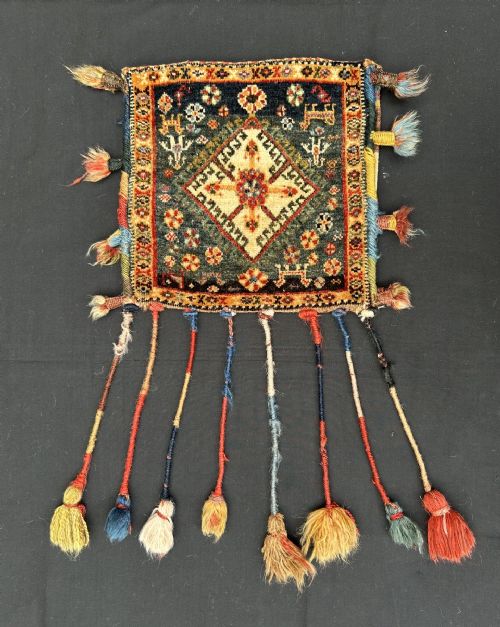
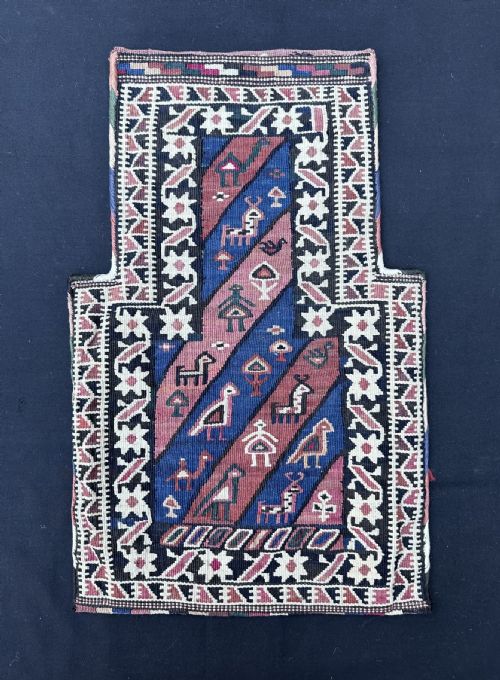
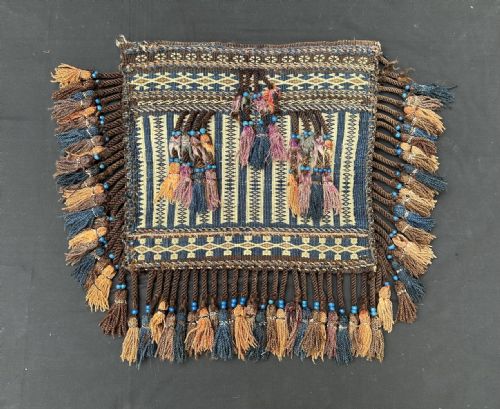
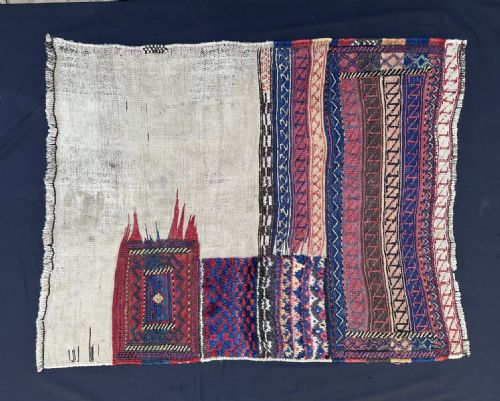
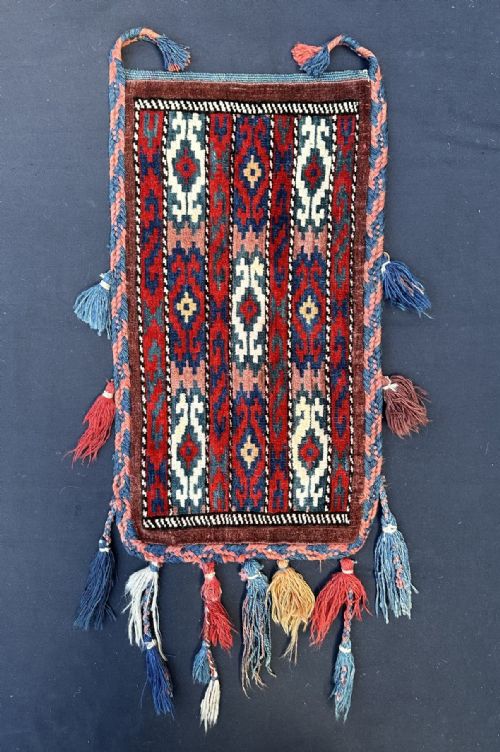
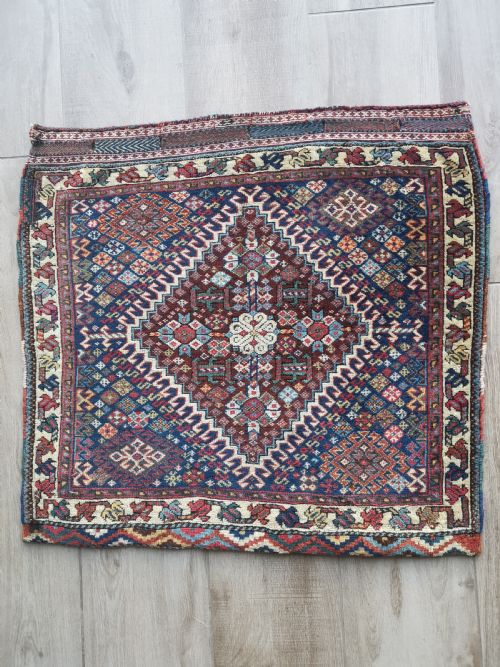
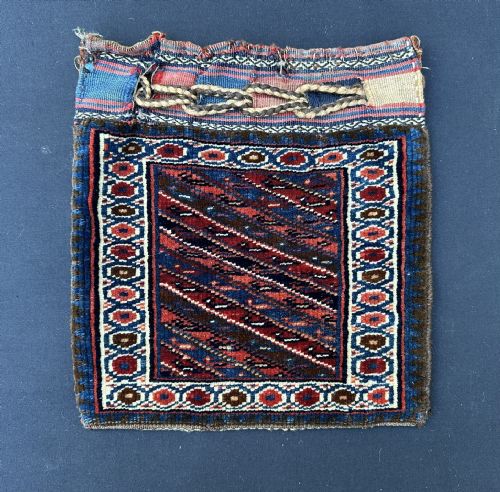
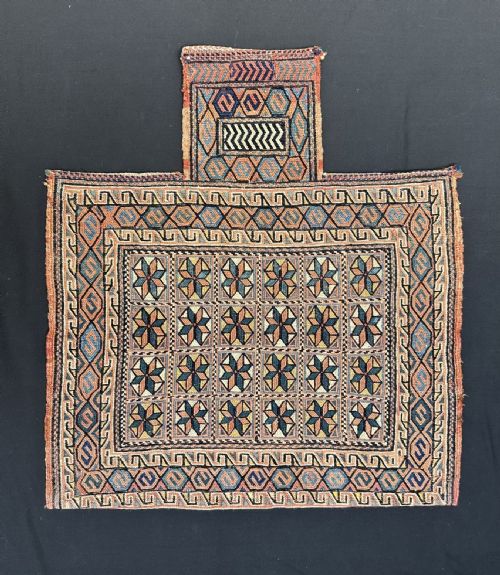
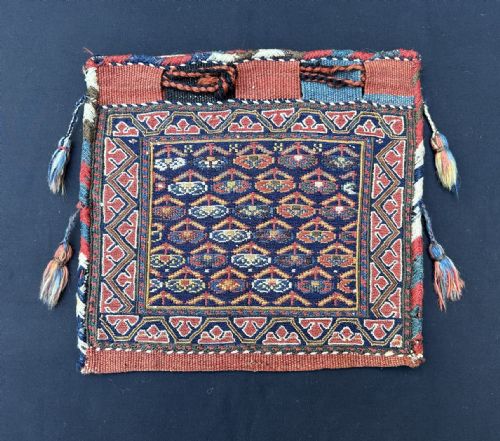
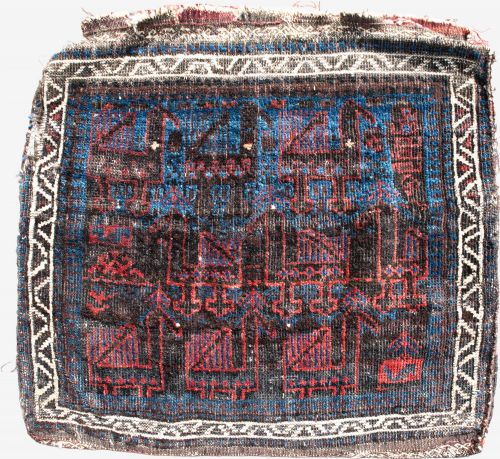
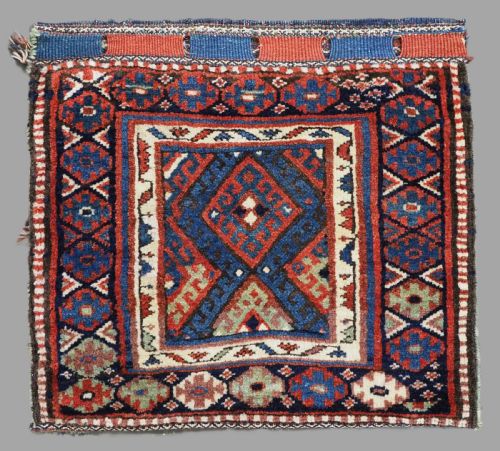
A blue wool tribal bag encompasses utilitarian woven containers created by nomadic and village weavers across Persia, the Caucasus, and Central Asia during the nineteenth and early twentieth centuries. These functional objects served daily roles as salt bags, vanity bags, storage containers, and saddlebag faces for pastoral communities on the move.
The pieces on this page span diverse tribal groups such as the Afshar, Qashqa'i, Baluch, Shahsavan, and Kurdish confederacies, showcasing distinct regional patterns. Many survive as singular bag faces or complete khorjin halves, retaining the dense pile and flatweave structures intended for rigorous nomadic life.
Materials and Construction
Weavers relied on hand-spun wool for its durability and natural capacity to absorb colour from vegetable dyes, producing deep indigos alongside madder reds and yellows. Structural foundations frequently incorporated sturdy goat hair or cotton warps to support heavy daily use.
Techniques varied between symmetrical or asymmetrical knotting for plush pile surfaces and intricate flatweave structures like soumac or plain weave for crisp geometric definition.
Nomadic spinners often tucked stray tufts of camel hair into their spinning baskets for luck, leaving tiny hidden fibre surprises.
Assessing Quality
The calibre of a weaving rests on the density of the knotting and the handling of natural dyes, which yield shifting heathered tones rather than flat uniformity. Finer examples display precise execution in complex tribal motifs, such as boteh designs or central medallions, executed by experienced hands.
Preservation of the original structural integrity, including complete side cords and intact flatweave backs where present, elevates an individual piece within its category.
The Blue Wool Tribal Bag Glossary
- Khorjin
- A traditional double saddlebag used for transport on animals during tribal migrations. These were often cut apart over time, leaving individual bag faces.
- Soumac
- A wrapping technique producing a textured, flat-woven surface resembling embroidery. This method creates durable geometric patterns without a pile.
- Torba
- A wide storage bag utilised in Turkmen households for domestic organisation. They display distinctive guls and precise border arrangements.
- Boteh
- A swirling almond or paisley motif with ancient roots in Persian textile art. It symbolises life and eternity within tribal weaving.
Blue Wool Tribal Bag: Frequently Asked Questions
What were tribal bags used for?
Nomadic groups utilised these containers for storing salt, grain, spindle tools, and personal items during seasonal migrations across harsh terrain.
They functioned as practical household storage as well as essential transport equipment loaded onto horses, camels, and donkeys.
How do I display a bag face?
Many collectors mount these textile fragments onto neutral backing fabrics for safe wall hanging in contemporary domestic spaces.
Alternatively, smaller pieces find new life as decorative cushion covers when supported by sturdy backing materials.
Are these pieces genuinely antique?
The listings on this page originate primarily from the nineteenth and early twentieth centuries, representing traditional nomadic production methods.
Such items predate modern commercial chemical dyes and industrial manufacturing processes entirely.
How can I identify different tribes?
Distinctive colour palettes, specific structural weaves, and signature border motifs point directly to the producing confederacy, such as Afshar or Qashqa'i.
Regional preferences in geometric abstraction and animal symbols provide reliable clues for attribution.