


Blue Wool Bag Face
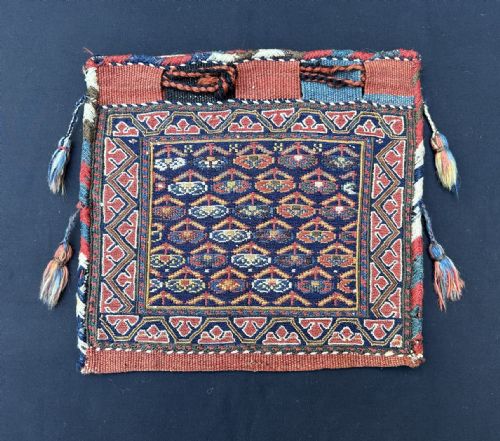
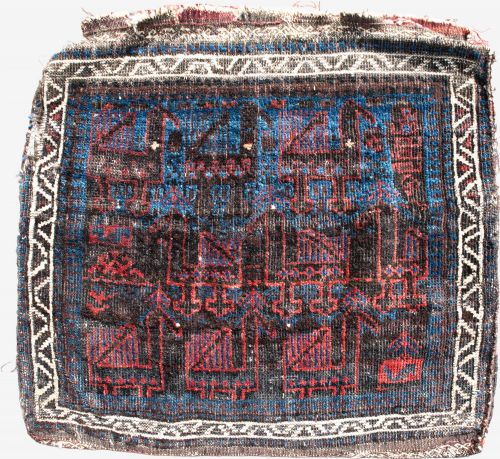
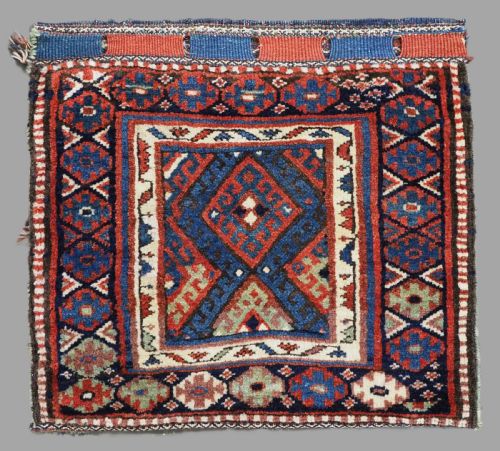
A blue wool bag face represents the woven front of a tribal storage sack, prized for rich colour and geometric nomadic artistry.
Blue Wool Bag Face
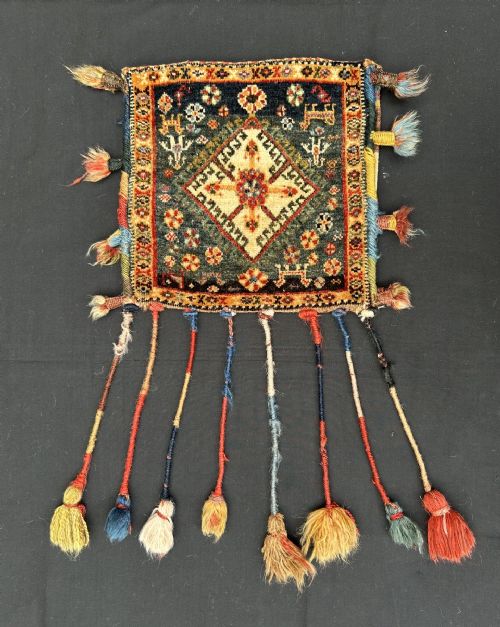
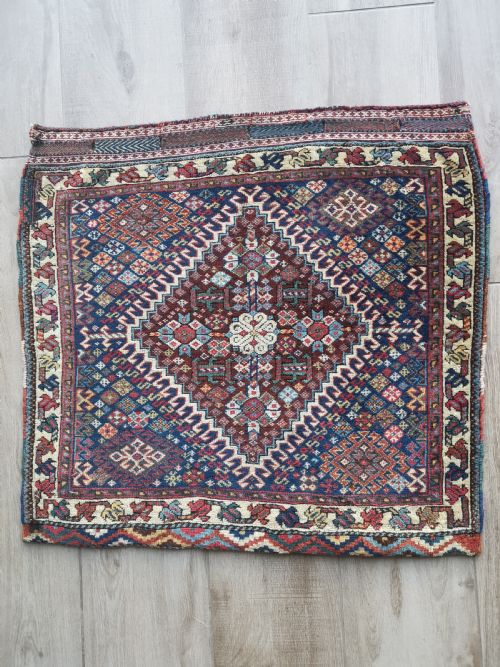
A blue wool bag face is the surviving front panel of a nomadic storage sack, originally used for domestic storage or animal transport across Persia and the Caucasus. These pieces originate from tribal confederations such as the Qashqai, Baluch, Shahsavan, and Luri, created during the nineteenth and early twentieth centuries.
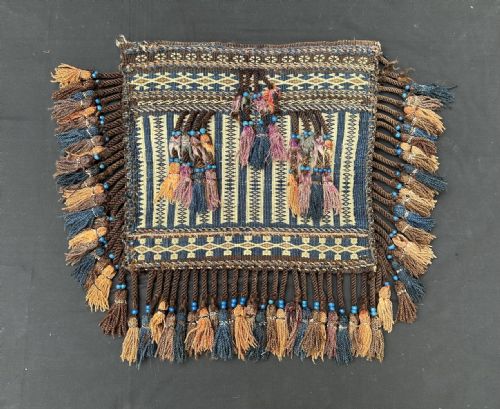
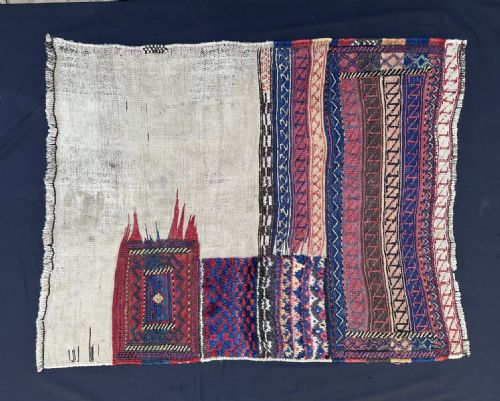
The format usually involves a square or rectangular panel separated from its plain weave back, designed to hang in a tent or mount on a pack animal. Collectors encounter half-khorjin, torba, and vanity bag fragments that preserve intricate tribal iconography.
Tribal weavers utilised local materials to construct these utilitarian objects, resulting in portable textiles that double as tribal art. The surviving faces demonstrate the domestic output of regional nomadic groups.
What distinguishes quality
Quality rests upon the handled quality of the wool and the depth achieved through natural dyeing processes, which yield luminous surfaces. Finer knotting density and precise execution of tribal motifs elevate a piece above standard domestic weaving.
The artistic merit of the design arrangement, such as balanced medallions or crisp bird and dragon depictions, separates exceptional examples from ordinary utility pieces.
Current listings span from eighteen-fifty to nineteen-thirty, showcasing wool, cotton, and glass bead constructions across tribal Persian styles.
The Blue Wool Bag Face Glossary
- Khorjin
- A double saddlebag used by nomads for transport, which is frequently found divided into individual bag faces today.
- Soumak
- A flatweave technique involving wrapped weft threads that creates a textured surface distinct from knotted pile.
- Torba
- A wide storage bag traditionally hung inside a nomadic tent for household belongings.
- Boteh
- A traditional almond or paisley motif representing a floral shoot or cypress tree, common in Persian textiles.
- Gul
- A repeating medallion or octagonal motif used by tribal groups to identify specific clans or lineages.
Blue Wool Bag Face: Frequently Asked Questions
How were these bags used?
Nomadic tribes utilised these containers for packing household possessions, storing grain, or transporting goods across difficult terrain on pack animals.
Over decades of use, the durable front panels survived while the plain backs wore away, leaving decorative fragments behind.
How do I display a bag face?
Many collectors mount these textile panels on fabric backings for wall display, treating them as concentrated examples of tribal flatweave or pile art.
They also function effectively as small floor mats or cushion covers when properly lined and protected from heavy foot traffic.
How do I identify the tribe?
Tribal attribution relies on specific structural traits, palette choices, and characteristic iconography associated with groups like the Shahsavan or Baluch.
Familiarity with regional weaving habits and knotting structures helps clarify the geographical origin of each piece.
Are natural dyes easy to spot?
Natural dyes display subtle variations in tone, known as abrash, where the colour shifts gently across the wool surface due to variable dye uptake.
Vegetable and insect dyes age gracefully, maintaining a rich harmony that synthetic counterparts rarely replicate.