
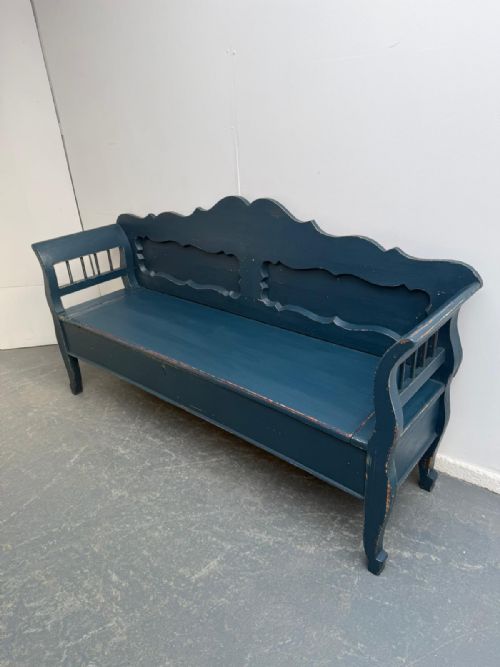


Blue Wooden Coffer
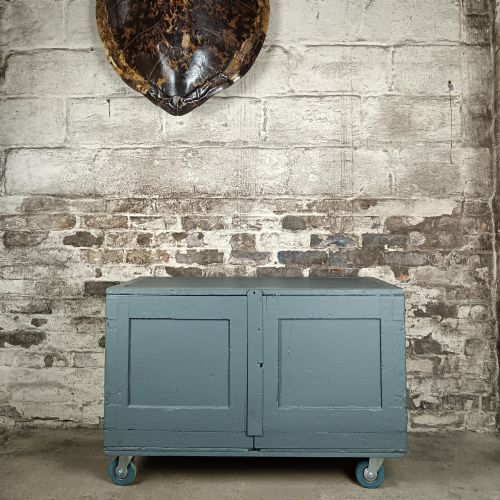
A blue wooden coffer brings robust folk artistry and practical storage into a room, offering enduring utility wrapped in regional charm.
Blue Wooden Coffer
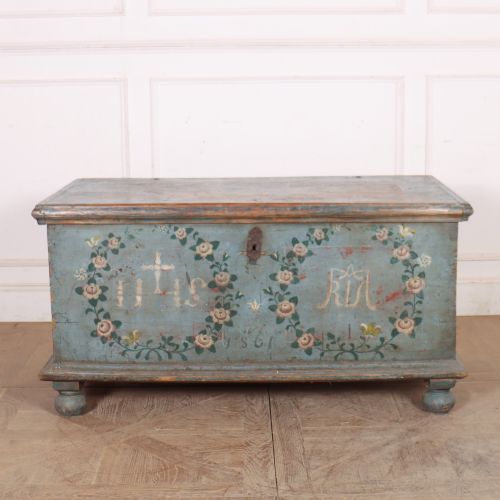
A blue wooden coffer serves as a substantial storage box, blanket chest, or trunk, frequently rooted in Scandinavian, Hungarian, and Alpine folk traditions. When searching for a blue wooden coffer, buyers encounter domestic pine and oak receptacles spanning the eighteenth, nineteenth, and early twentieth centuries.
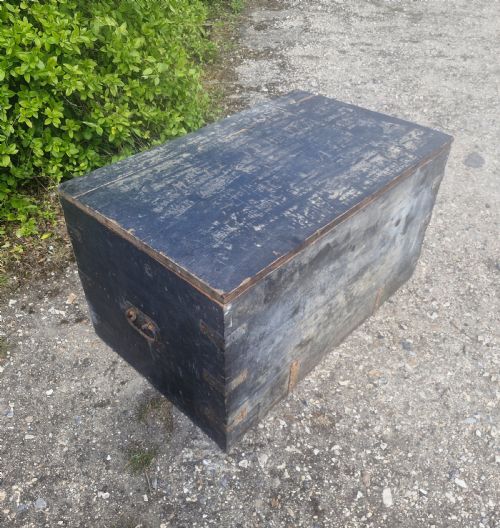
The most common examples on this page are nineteenth-century Swedish pine coffers and dome-top chests decorated with original pigment paint. These rural pieces range from simple storage boxes to elaborate marriage chests and heavy-duty campaign transport cases.
Form follows function across the selection, encompassing mule chests fitted with drawers, primitive shepherds coffers, and three-seater painted benches with hidden compartments. Each variation reflects the regional customs of its maker, from Alpine workshops to Scandinavian homesteads.
How they were made
Carpenters constructed these coffers primarily from solid pine and oak planks, joining the carcases with traditional dovetail or pegged joints to withstand heavy domestic use. Paint was applied directly to the wood using regional pigments, often sealing the timber while providing decorative surface colour.
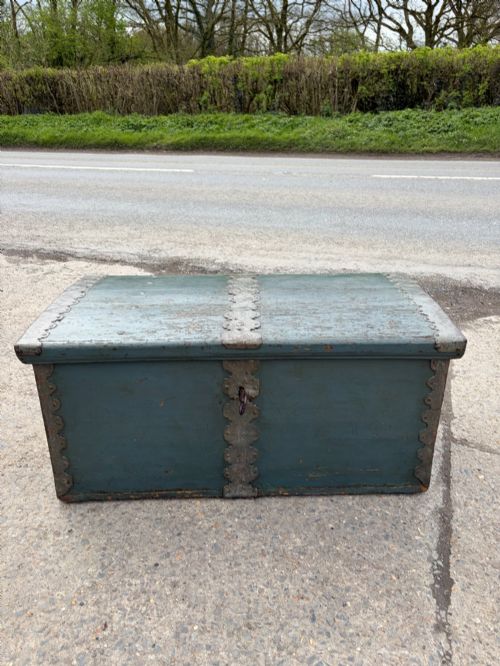
Iron, wrought iron, and brass featured heavily in the hardware, securing corners, forming strap hinges, and providing sturdy carrying handles for transport. Metal bindings and strong locks turned simple pine boxes into secure repositories for valuables and textiles.
The listings here span from the 18th century through the 1930s, featuring pine, oak, iron, and brass.
What varies in quality
The survival and integrity of the original paint layer determine the primary distinction between ordinary examples and superior survivals. Pieces retaining their unretouched historic pigment show genuine character, whereas heavily restored or later painted surfaces alter the visual weight.
Structural honesty and the preservation of original ironwork, hinges, and locks separate everyday utility boxes from exceptional folk art pieces. The finesse of the hand-painted decoration, particularly on marriage chests and dome-top coffers, dictates the artistic merit.
The Blue Wooden Coffer Glossary
- Mule chest
- A traditional storage chest that incorporates one or more drawers beneath the main compartment. This form bridges the gap between a standard coffer and a chest of drawers.
- Dome top
- A rounded lid profile designed to shed water and increase interior capacity. This shape appears frequently on nineteenth-century Scandinavian travelling trunks.
- Campaign chest
- A portable case or trunk built for military officers on the move. These pieces often feature recessed brass handles and robust iron reinforcements.
- Folk art
- Decorative and utilitarian objects made within a regional tradition by self-taught or local artisans. These items prioritize practical function and cultural motifs over academic academic design.
Blue Wooden Coffer: Frequently Asked Questions
What is a blue wooden coffer used for?
These pieces serve primarily as functional storage for blankets, linen, and household items while anchoring a room with distinct colour and texture.
Placed at the foot of a bed or beneath a window, they provide accessible capacity without sacrificing floor space.
How do I date a painted wooden chest?
Dating relies on examining construction marks, timber shrinkage, and the type of hardware used in the hinges and locks.
Hand-cut dovetails and authentic pigment paint layers characteristic of nineteenth-century Scandinavian workshops offer reliable chronological markers.
Are these chests made of solid wood?
Traditional coffers utilise solid timber planks, most commonly pine or oak, joined by hand rather than modern manufactured boards.
This solid construction accounts for their survival through centuries of domestic and travel use.
How do I care for original painted wood?
Maintenance requires keeping the piece away from direct sunlight and maintaining stable indoor humidity to protect the fragile pigment layers.
Dusting with a dry cloth is sufficient, avoiding harsh cleaning agents that might strip the historic finish.