


Blue Wing Chair
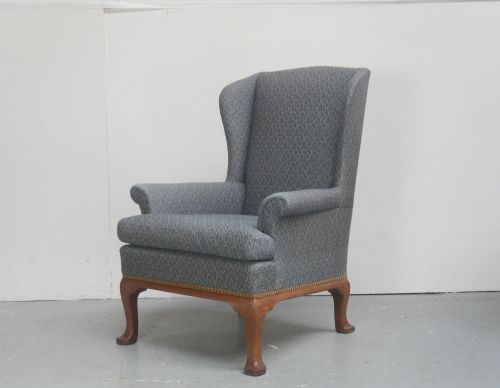
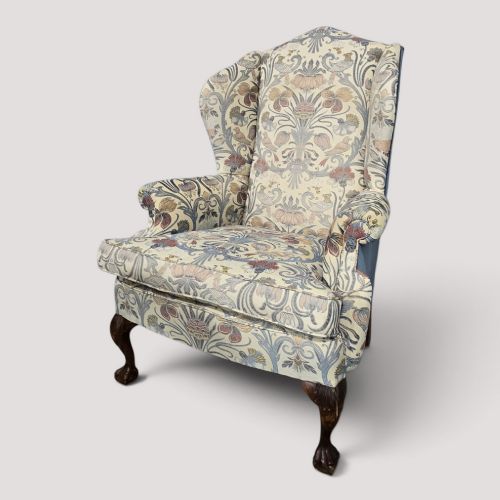
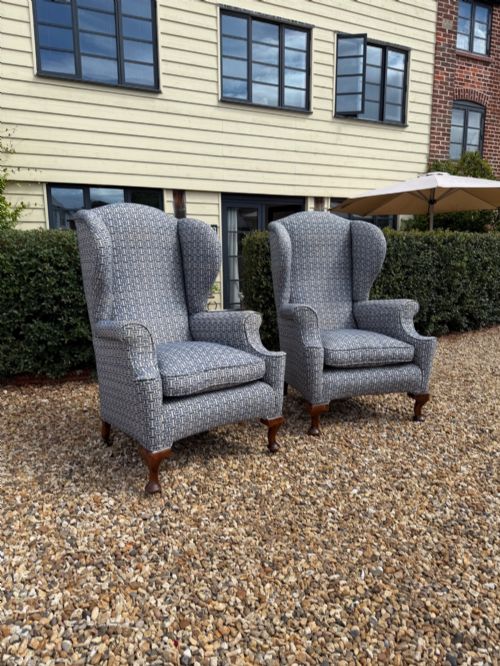
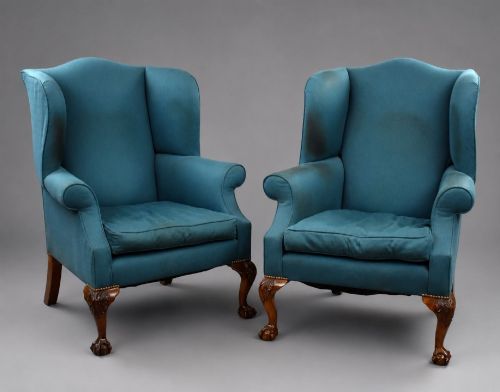
A blue wing chair brings profound comfort and stately presence to a room, drawing on centuries of upholstery tradition.
Blue Wing Chair
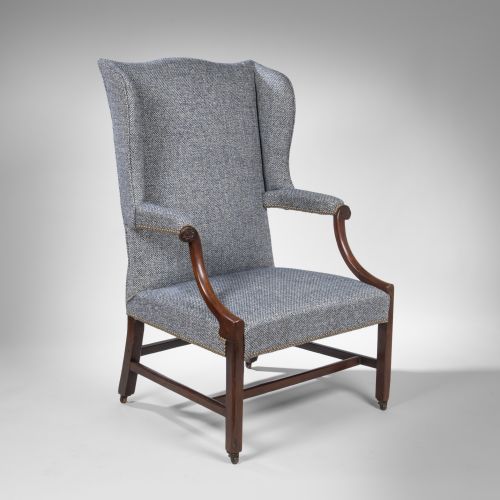
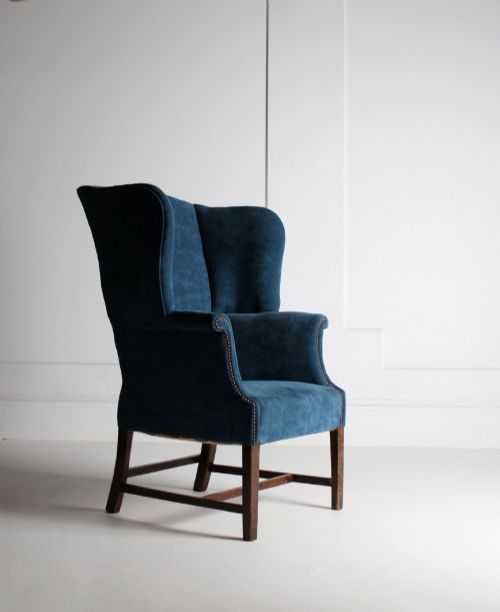
A blue wing chair is an upholstered armchair designed with protective side panels on the backrest, historically intended to shield the sitter from draughts. The selection spans periods from the Georgian era through the Victorian epoch into the early twentieth century, encompassing revival styles like Queen Anne and Rococo.
Most examples you encounter here are framed in timbers such as mahogany or walnut, upholstered in textiles that range from damask and velvet to ribbed fabrics. Forms vary from country house armchairs to substantial library seating and pairs of large wing armchairs.
Makers and origins diversify the selection, ranging from Scottish workshops to Continental and American pieces. Whether you examine an Edwardian wingback or a nineteenth-century model, each blue wing chair combines sturdy timber frames with deep cushioning.
How they were made
The construction of a blue wing chair relies upon a hardwood frame, typically fashioned from mahogany or walnut, providing structural integrity. Joinery techniques connect the legs and seat rails securely before the upholstery phase begins.
Upholstery materials involve textiles such as velvet, damask fabric, and heavy textile covers stretched over internal stuffing. Brass details, castors, and hand-carved elements complete the assembly of these substantial armchairs.
An adventurous nineteenth-century maker upholstered an armchair in American Stars and Stripes fabric.
What varies in quality
Quality in a blue wing chair rests upon the crispness of the timber carving and the architectural proportion of the wings and arms. Superior pieces display harmonious lines and substantial framing timber rather than purely decorative surface embellishment.
The choice and execution of the textile upholstery separate standard examples from finer works. Original or sympathetic period fabric choices, alongside robust frame construction, determine the enduring standing of the armchair.
Whytock & Reid·Howard & Sons·William Morris·Thomas Chippendale
The Blue Wing Chair Glossary
- Wingback
- An armchair style featuring characteristic side panels attached to the backrest. These wings were originally designed to trap heat around the sitter's head.
- Bergère
- An enclosed upholstered armchair with wooden framing exposed around the sides and back. This French-inspired form often includes woven cane or upholstered panels.
- Damask
- A reversible figured fabric traditionally woven on a Jacquard loom. It provides a patterned, textured surface frequently utilised for formal upholstery.
- Castor
- A small wheel mounted on a swivel attached to the foot of a chair leg. It allows heavy armchairs to be moved across floors with ease.
- Giltwood
- Timber that has been coated with a thin layer of gold leaf. This finish appears on decorative European frames from the eighteenth and nineteenth centuries.
Blue Wing Chair: Frequently Asked Questions
What is a blue wing chair?
A blue wing chair is a traditional upholstered armchair featuring protective side panels designed to block draughts. These chairs appear in various historical periods from the Georgian era to the early twentieth century.
They combine timber frames of mahogany or walnut with textile upholstery such as velvet, damask, or ribbed fabric. Each piece offers a distinct silhouette shaped by the design conventions of its era.
How were wing chairs used?
Wing chairs were historically positioned near fireplaces to protect sitters from cold air circulating in large rooms. The upholstered wings successfully trapped heat and sheltered the occupant's upper body.
Over time, they transitioned into formal sitting room and library furnishings. They served as comfortable reading chairs that combined practical warmth with stately interior presence.
How do I date a wing chair?
Dating a wing chair involves examining the timber species, the shaping of the legs, and the construction methods of the frame. Georgian and Victorian models display different proportions and carving styles.
Period characteristics such as claw and ball feet or specific revival styles help place an armchair within an era. Comparing the woodwork and upholstery style against documented examples clarifies the age.
How do I live with antique armchairs?
Living with antique armchairs involves placing them in environments protected from direct sunlight and extreme temperature fluctuations. These precautions preserve the integrity of the timber frame and the textile upholstery.
Regular, gentle maintenance ensures the fabric and structure remain stable over time. They function well as statement seating in both traditional and contemporary interiors.