
Antique Style Wingback
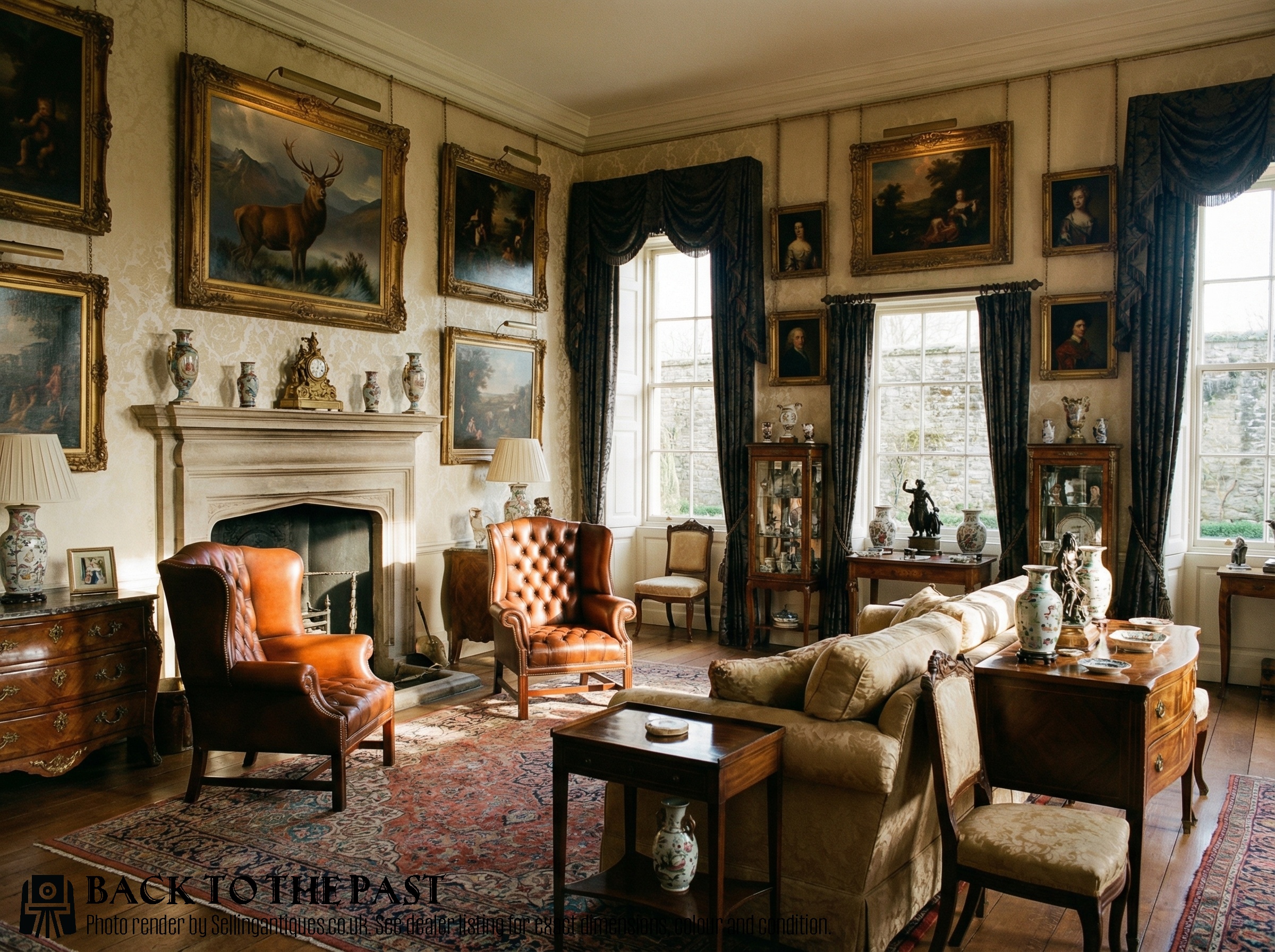
An antique style wingback provides deep comfort and historic draught protection, anchoring a traditional room with substantial upholstery and scrolled wooden frames.
Antique Style Wingback
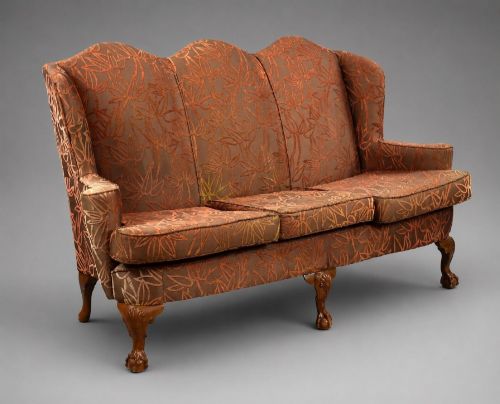
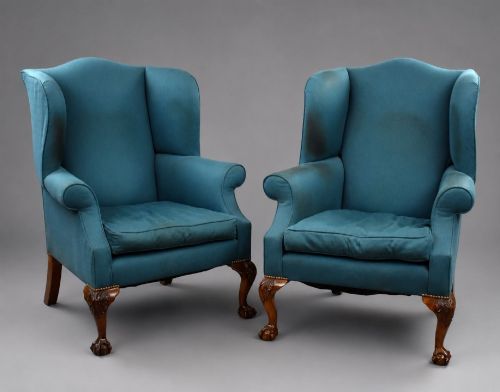
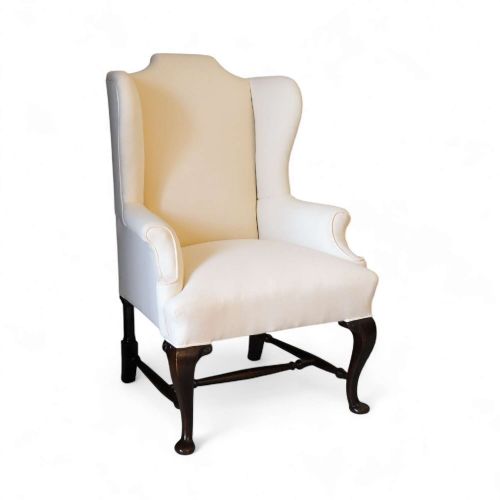
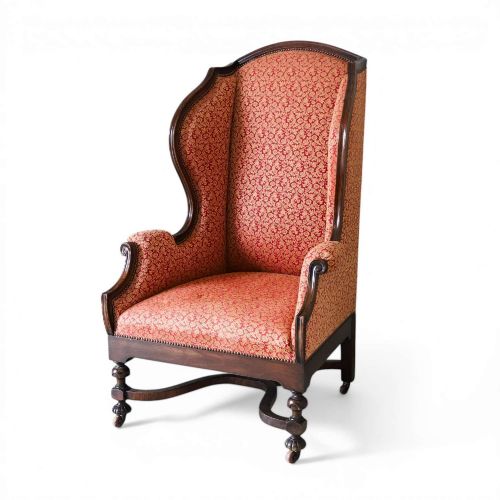
The antique style wingback category covers large upholstered seating designed to shield the occupant from draughts, appearing primarily as single armchairs alongside occasional multi-seat sofas and settees. Buyers examine forms ranging from eighteenth-century originals to later revivals executed in specific historical idioms.
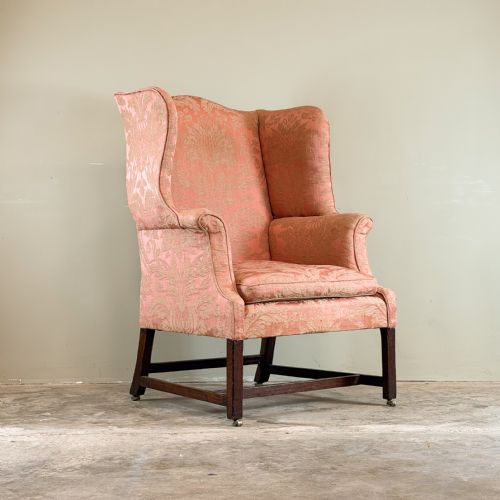
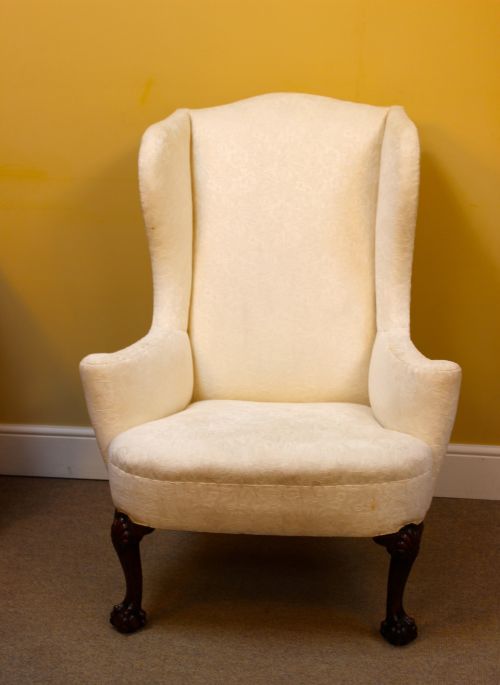
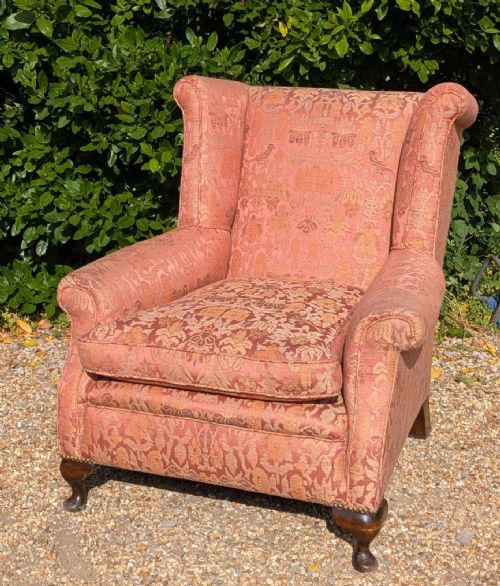
Most examples encountered here date from the nineteenth and early twentieth centuries, spanning Victorian, Edwardian, and revival periods. These pieces frequently adopt Georgian, Queen Anne, or George III styles, often retaining substantial proportions and high winged backs designed for domestic fireside use.
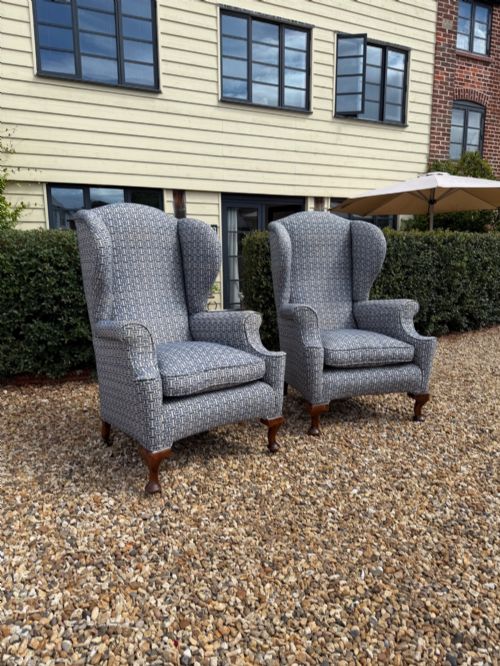
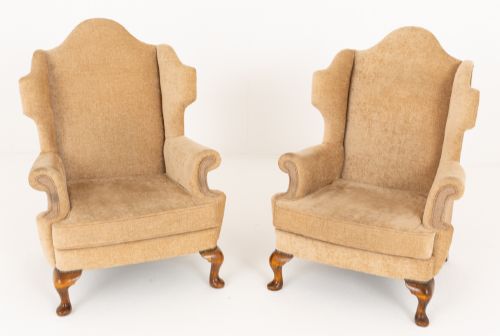
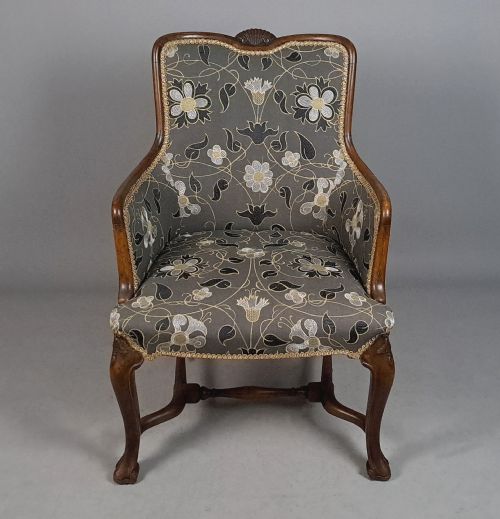
Makers and workshops adapted these traditional patterns across various eras, producing both single reading chairs and matched pairs. Variations appear in the scroll of the arms, the height of the back, and the shaping of the underlying wooden frame.
Materials and Construction
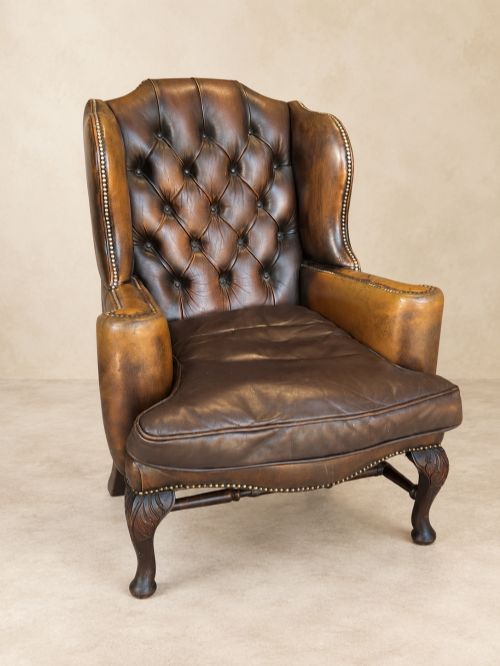
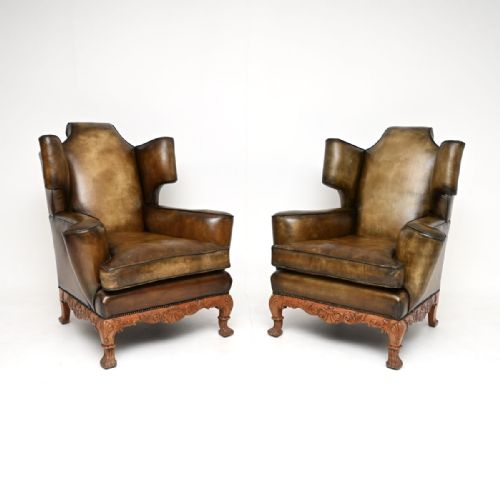
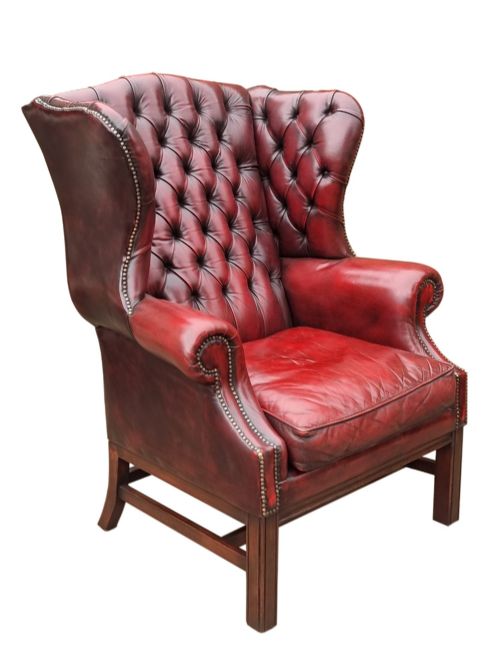
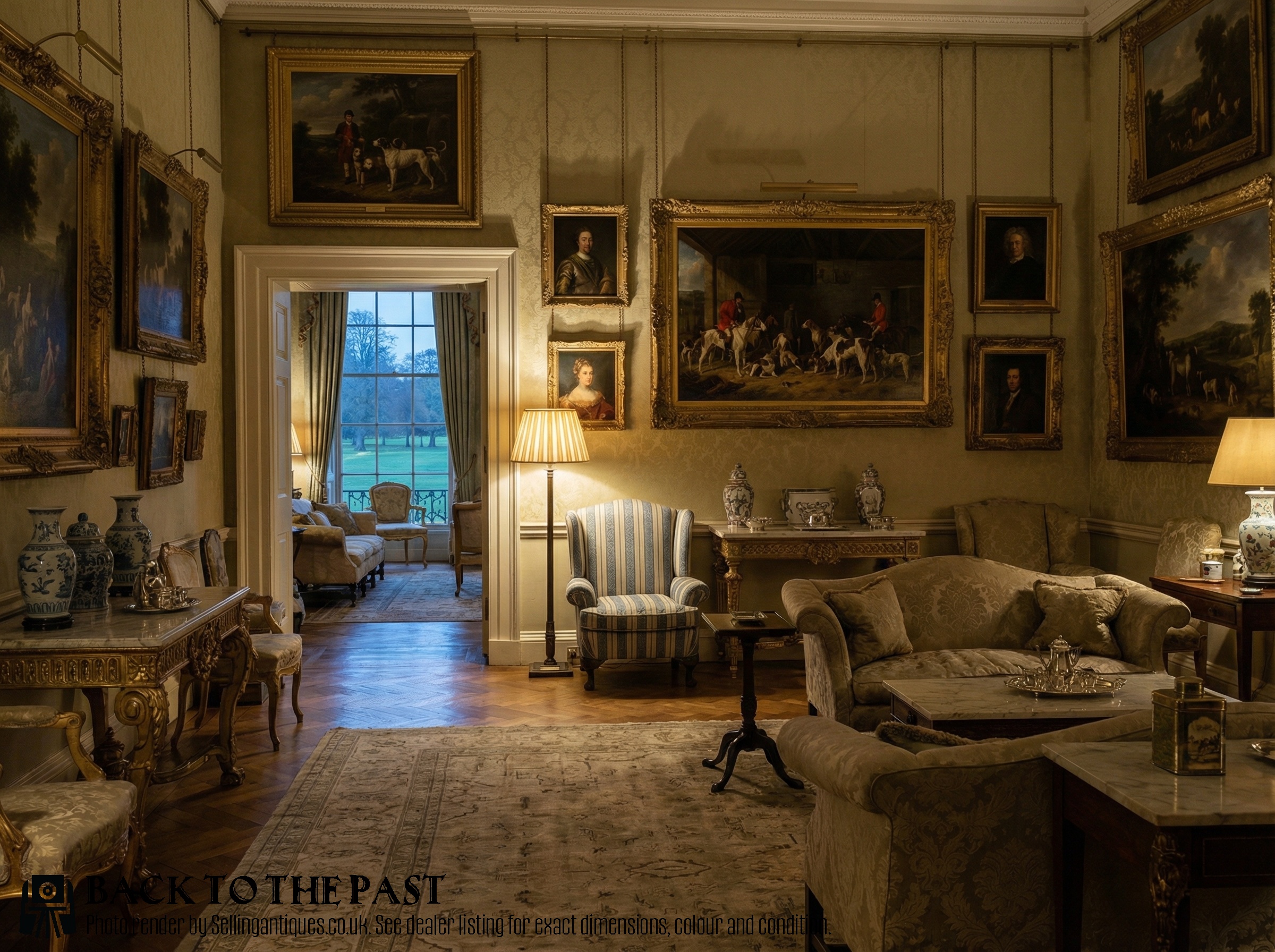
Upholstery historically involves textile, fabric, or velvet, alongside traditional leather coverings which frequently define the character of library and club seating. Internal padding utilises traditional fillings like feathers, housed beneath calico or top covers.
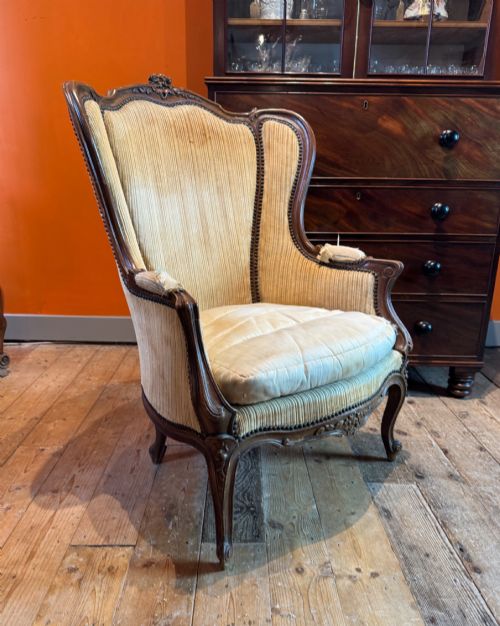
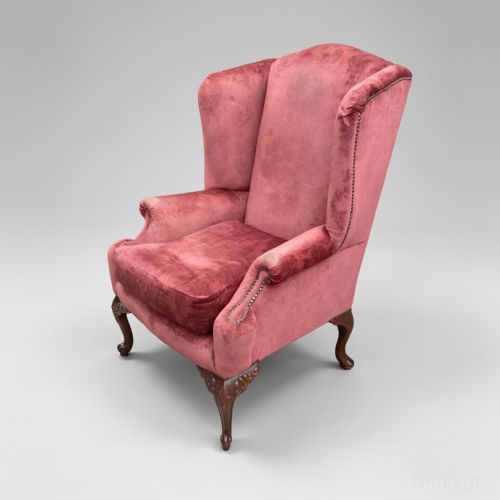
Listings feature walnut and mahogany frames alongside velvet and leather upholstery, spanning periods from the eighteenth century through the Edwardian era.
Judging the Standard
Quality rests in the integrity of the wooden frame and the precision of the carved details on the legs and arms. Solid timber construction with crisp carving distinguishes superior examples from plainer commercial production.
The standard of upholstery work and the choice of covering material dictate the visual impact of the piece. Traditional stuffing methods and high-grade leather or heavy textile finishes separate better examples from routine workshop output.
Sopwith
The Antique Style Wingback Glossary
- Wingback
- An armchair featuring protective side panels attached to the arms and rising to frame the head. This form developed to shield sitters from cold draughts near open fireplaces.
- Bergère
- An enclosed armchair with upholstered sides and a wooden frame. These French-influenced seats often incorporate exposed polished wood around the arms and back.
- Cabriole leg
- A furniture leg that curves outward in a convex swell and tapers inward to a concave foot. This shape derives from animal limbs and frequently terminates in pad or claw-and-ball feet.
- Chesterfield
- A deep-buttoned sofa or armchair characterised by arms and back of the same height. These pieces are frequently upholstered in dark leather.
- Calico stage
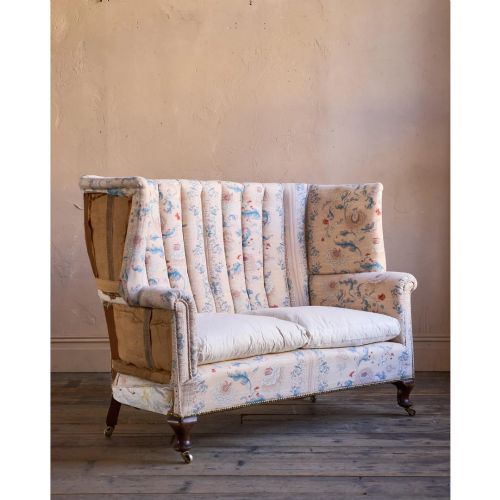
- An intermediate state of upholstery where the internal stuffing is secured in plain cotton before the final decorative fabric is applied. This allows a buyer to select their own top cover.
Antique Style Wingback: Frequently Asked Questions
What is an antique style wingback?
An antique style wingback is a large fireside armchair featuring protective side panels designed to block draughts. These seats include historical examples and later revivals from the nineteenth and twentieth centuries.
They serve as focal points in studies, libraries, and living rooms, offering deep seating and traditional aesthetic weight.
What materials are used for upholstery?
Traditional upholstery utilises durable leather, velvet, heavy textiles, and woven fabrics. Internal padding historically relies on materials such as feathers and hair stuffed over webbing or springs.
Many historic frames are found stripped back or newly upholstered in plain calico, allowing buyers to apply their own decorative top fabric.
Are these chairs comfortable for daily use?
These seating pieces offer generous proportions and supportive high backs designed for reading and relaxing. Their deep squabs and angled wings provide an enclosed, comfortable seating experience.
Modern buyers often place them by fireplaces or in reading corners where their substantial size and ergonomic support can be fully appreciated.