

Blue White Transferware Ceramics
Blue white transferware ceramics bring together crisp cobalt scenes and sturdy domestic forms, offering a durable domestic history for the table.
Blue White Transferware Ceramics
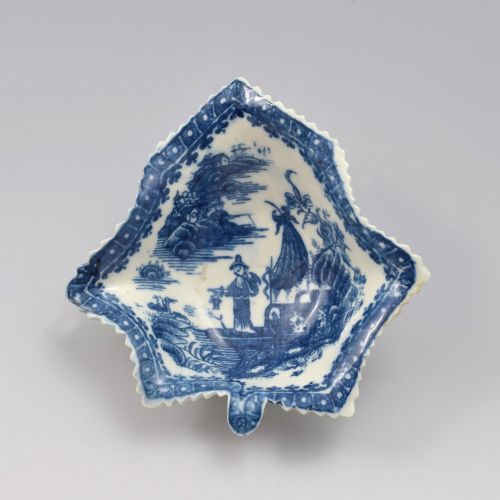
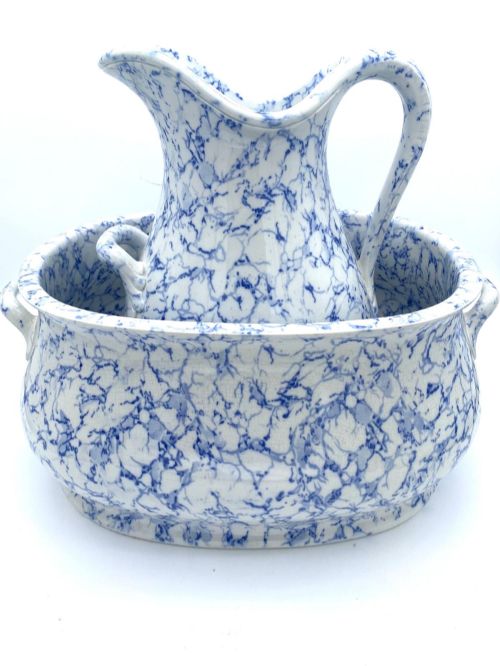
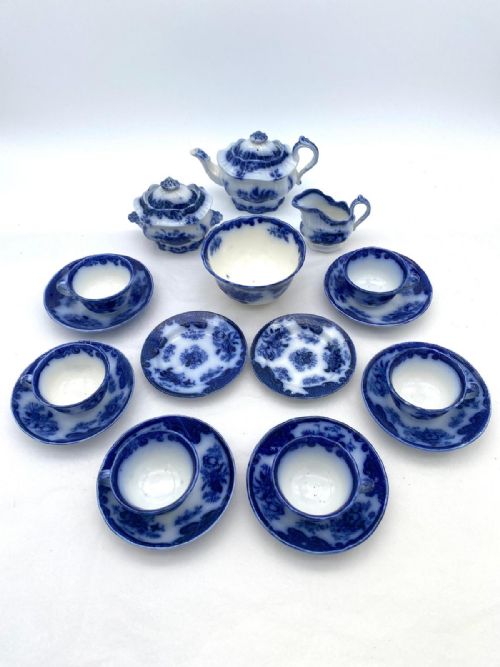
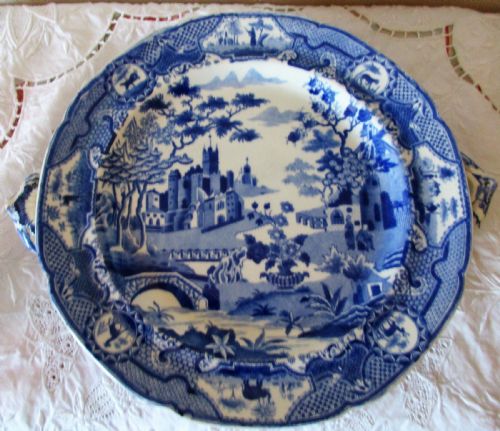
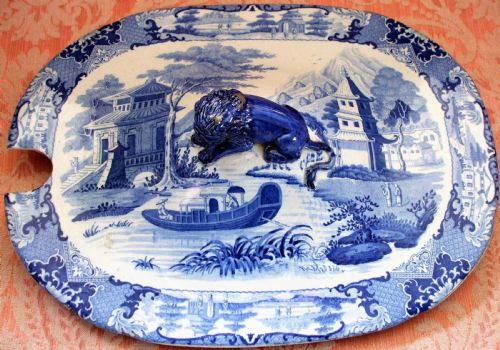
Blue white transferware ceramics encompass a wide array of domestic and decorative objects produced primarily across the eighteenth and nineteenth centuries. Buyers searching this phrase encounter everything from expansive serving platters and vegetable tureens to delicate tea services, pickle dishes, and large footbaths.
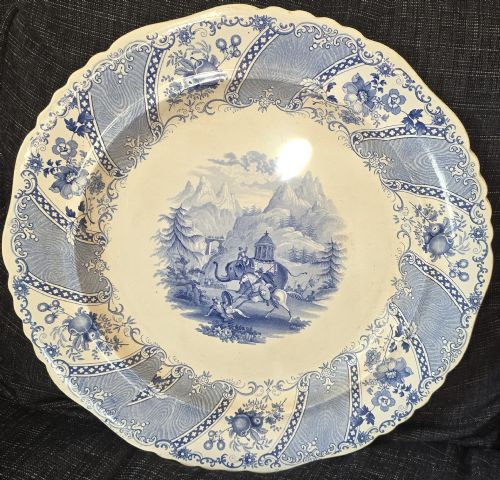
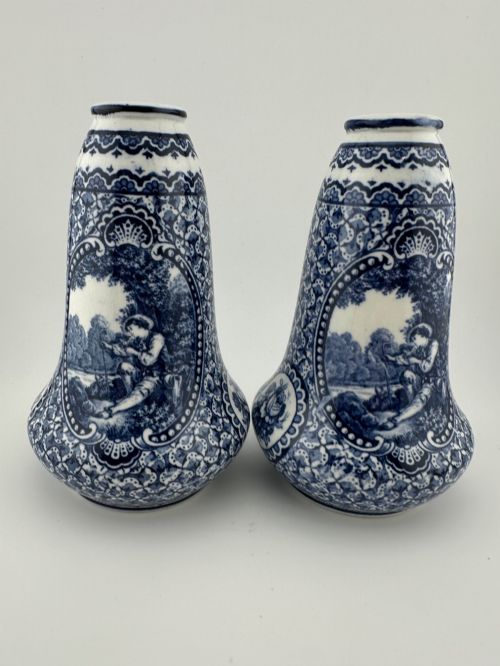
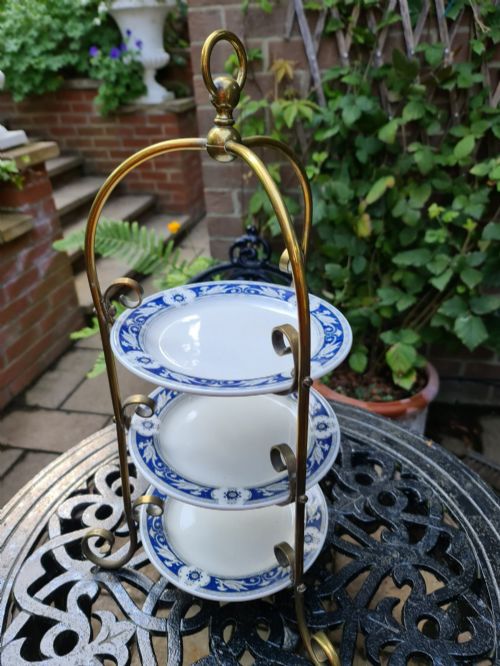
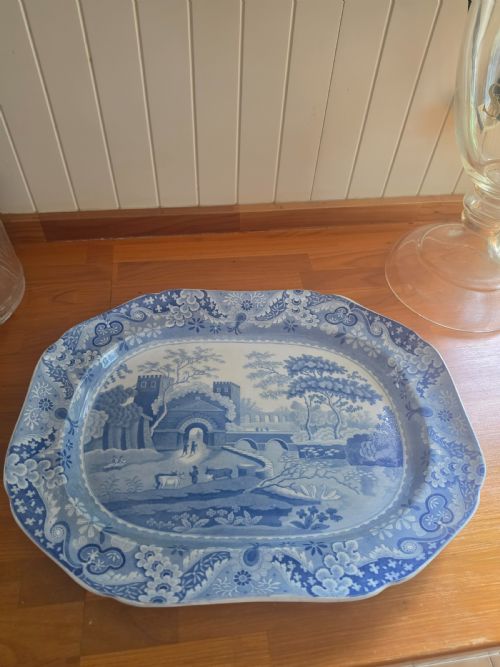
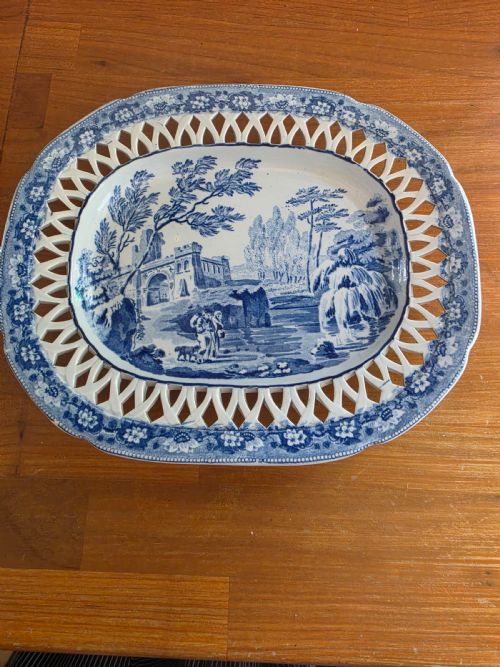
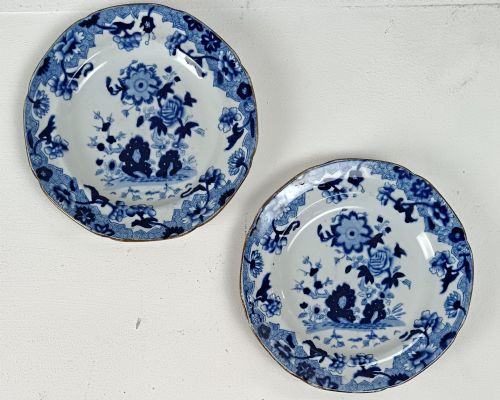
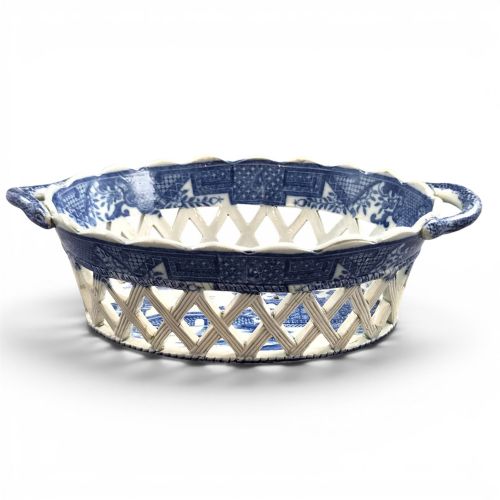
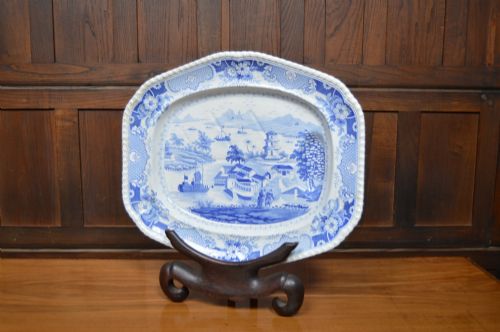
The pieces appearing on this page span Georgian, Regency, and Victorian periods, with earthenware and porcelain forming the majority of the domestic inventory. Common utilitarian and display forms include meat plates, chestnut baskets, jugs, bowls, and charger plates decorated with scenic and architectural views.
Makers ranged from major Staffordshire potteries to porcelain works, employing copperplate printing to transfer detailed cobalt designs onto a white ground. Most examples originate from English factories operating during the height of the industrial ceramic expansion.
Materials and production methods
Potters utilised earthenware, pearlware, ironstone, and porcelain as bodies for these ceramics, applying a fluid glaze over the fired transfer print. The design was first engraved on a copper plate, inked with cobalt blue, and transferred onto tissue paper before being pressed onto the damp clay body.
Firing took place in kilns at high temperatures to fuse the cobalt pigment beneath or within the glaze, producing the characteristic deep blue coloration. Soft-paste and hard-paste porcelain pieces, such as those from early Worcester or Caughley, required different clay recipes and firing schedules compared to heavy ironstone meat plates and footbaths.
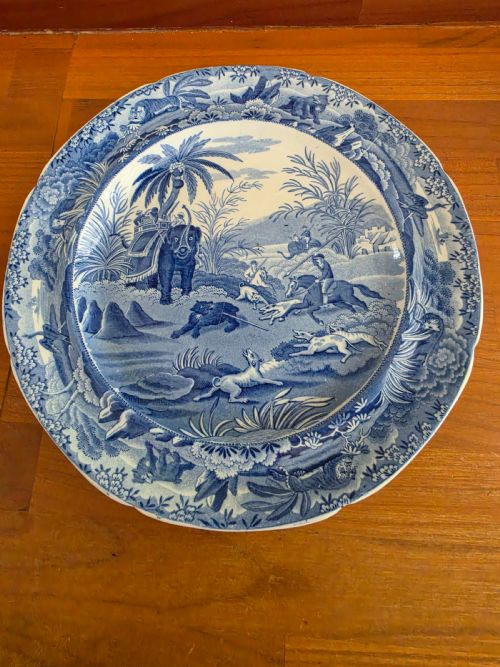
At least one nineteenth-century plate commemorates the dramatic historical event known as the death of the bear.
Judging quality in transferware
Quality rests upon the clarity of the transfer print, the crispness of the engraved lines, and the richness of the cobalt blue pigment against the white background. Superior pieces display registered prints without excessive blurring, smudging, or overlapping at the seams.
The refinement of the ceramic body itself also dictates grade, separating heavy commercial ironstone intended for robust daily use from thin, translucent pearlware and delicate porcelain. Intricate factory modelling, such as pierced reticulated borders on chestnut baskets or moulded leaf shapes, marks higher tiers of production.
Caughley·Minton·Spode·Davenport·John Rogers and Son·J. and R. Clews·J. and R. Riley·Stubbs·Mintons·Robert Hamilton·James Wallace and Co·Ridgway·Doulton Burslem
The Blue White Transferware Ceramics Glossary
- Transferware
- Pottery or porcelain decorated by printing an engraved design from a copper plate onto paper, which is then stamped onto the ceramic body before glazing. This mechanical process allowed for complex pictorial scenes to be replicated consistently.
- Pearlware
- A fine-grained earthenware developed by Josiah Wedgwood in the late eighteenth century, featuring a bluish-white glaze that pooled in recesses to mimic Chinese export porcelain.
- Flow Blue
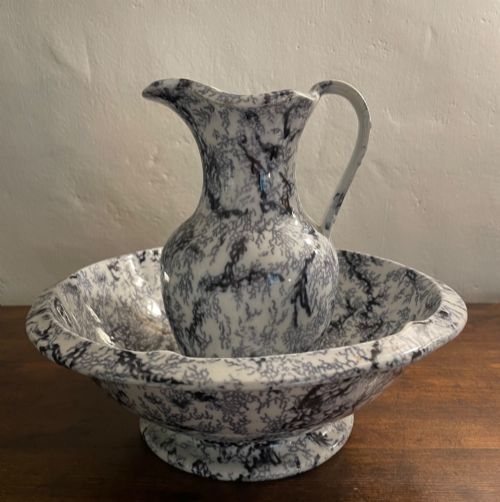
- A style of Staffordshire pottery produced in the Victorian era where the cobalt blue pigment was intentionally allowed to blur or bleed into the surrounding white glaze during the firing process.
- Ironstone
- A heavy, durable type of earthenware patented in the early nineteenth century, designed to resist chipping and serve as a robust alternative to true porcelain.
- Reticulated
- Having an openwork or net-like pattern formed by piercing the clay body prior to firing, frequently seen on baskets and serving dishes.
- Tureen
- A deep, covered serving vessel designed for holding soup, sauce, or vegetables at the dining table, often accompanied by a matching platter or ladle.
Blue White Transferware Ceramics: Frequently Asked Questions
How were transferware platters used?
Large platters and meat plates served substantial joints of meat at the dining table, often featuring channels or wells to catch juices.
They formed part of large matching dinner services used during formal Georgian and Victorian domestic dining.
How do I care for antique transferware?
Wash these ceramics gently by hand in warm water using mild soap, avoiding modern dishwashers that can craze the glaze.
Display them securely away from heavy foot traffic or direct heat sources to preserve the ceramic body and glaze.
How can I tell earthenware from porcelain?
Earthenware is opaque, porous, and heavier in the hand, whereas true porcelain is vitrified, harder, and often translucent when held to light.
Early pearlware and ironstone sit between these categories as refined earthenware bodies developed for greater durability.