


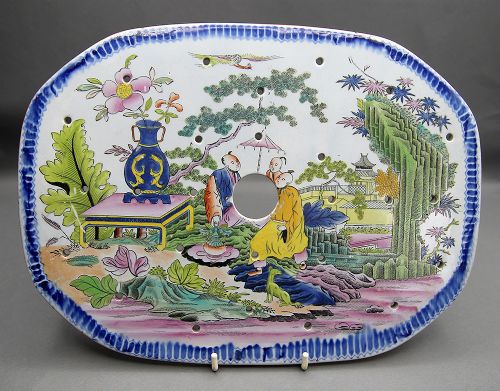


Blue White Ironstone Platter
These heavy blue white ironstone platter examples offer sturdy service and bold transfer-printed decoration for the dining table.
Blue White Ironstone Platter
A blue white ironstone platter serves as a heavy, durable serving dish designed for meat, poultry, and game during large Victorian and Regency dinners. These pieces provide a dependable surface for joint carving and family dining.
Most examples found here date from the nineteenth century, including pieces from the Georgian, Regency, and Victorian eras. Collectors frequently encounter large serving platters, meat dishes, and specialist items such as well and tree platters or matching drainers.
The aesthetic leans heavily toward orientalist and scenic decoration, with patterns like Chinoiserie, Penang, and Italianate landscapes dominating the selection. These motifs give the heavy ceramic a decorative character that suits both traditional and modern sideboards.
How They Were Made
Potters constructed these heavy vessels using ironstone and earthenware, creating a dense ceramic body capable of withstanding daily kitchen use. Glazed ceramic surfaces provided a durable, wipe-clean finish that protected the absorbent clay underneath.
Makers applied intricate designs using transfer-printing techniques in shades of blue, often supplemented by hand-painted enamel details or touches of gold leaf. Drainers and specialised dishes required precise piercing and moulding before firing.
Some nineteenth-century meat platters include intricate well and tree channels so your Sunday roast could weep into a tidy ceramic puddle.
What Varies in Quality
Quality rests upon the clarity of the blue transfer print and the crispness of the moulded ceramic details, such as well-and-tree channels or pierced drainers. Earlier Regency and Georgian pieces often display sharper definition in their transfer patterns.
The presence of specialised forms, such as matching drainers or uncommon named patterns like Elkington or Minton, elevates the status of a platter. Overall condition of the glaze and the retention of any enamel or gold leaf accents also influence desirability.
John Ridgway·Mason's Ironstone China·Minton
The Blue White Ironstone Platter Glossary
- Ironstone
- A heavy, durable type of earthenware patented in the nineteenth century to rival Chinese porcelain. It resists chipping and staining much better than standard pottery.
- Transfer-printing
- A method of applying detailed designs to ceramics using an engraved copper plate and tissue paper. This technique allowed potteries to produce complex patterns in blue with remarkable consistency.
- Well and Tree
- A specialised meat platter featuring a sloping channel and a central well to catch juices from carved joints. This design kept the meat elevated during serving.
- Drainer
- A perforated ceramic insert that fits inside a platter to keep food separate from accumulated liquids. These pieces are often found alongside large meat dishes.
- Chinoiserie
- A European decorative style reflecting imaginative interpretations of Chinese art and landscapes. It appears frequently on nineteenth-century blue and white ceramics.
Blue White Ironstone Platter: Frequently Asked Questions
How do I date an ironstone platter?
Dating relies on maker marks, ceramic weight, and the style of the transfer-printed pattern. Earlier pieces from the Regency and Georgian periods often feature distinct registry marks or specific impressed factory stamps.
Examining the depth of the glaze and the colour tone of the blue transfer print also helps distinguish nineteenth-century examples from later reproductions.
What was a well and tree platter used for?
These platters were designed for serving large roasted meats, game, or poultry at the dining table. The system of channels directed juices into a central well for easy gravy collection.
This kept the meat dry and made carving cleaner during formal Victorian and Regency meals.
Can I use these antique platters for serving food?
Most buyers use these durable ceramic pieces for serving dry foods or display purposes due to their age. The dense ironstone body is robust, but historic glazes can sometimes show crazing from modern dishwashing.
Hand washing remains the safest method to preserve the transfer-printed blue decoration and any enamel details.
What is the difference between ironstone and earthenware?
Ironstone is a specific, heavily vitrified type of earthenware containing slag or feldspar, which makes it much denser and harder. This composition allowed nineteenth-century potteries to create large, robust serving platters that resisted heavy kitchen wear.
Standard earthenware tends to be more porous and less durable against chipping.