


Blue White French Faience
Blue white french faience brings tin-glazed earthenware into the room with painted cobalt motifs on domestic and decorative vessels.
Blue White French Faience
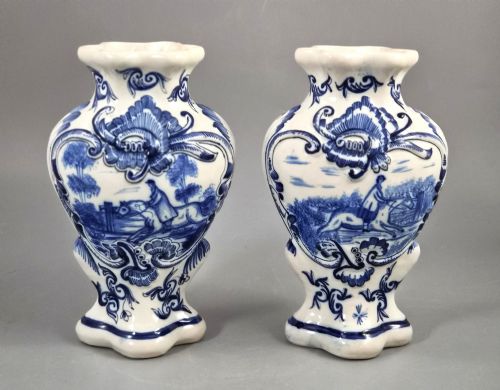
When you search for blue white french faience, you encounter tin-glazed earthenware vessels shaped as vases, sauceboats, pin trays, and urns. These pieces span the eighteenth century through the early twentieth century, reflecting provincial production centres and regional potteries.
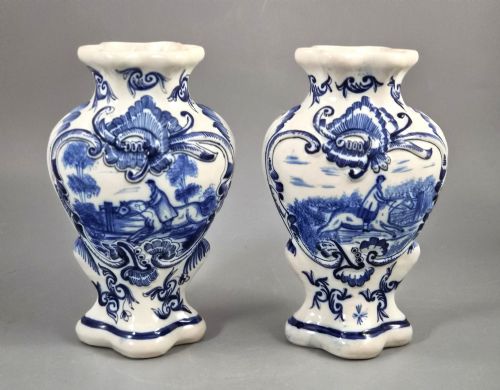
The nineteenth century provides the majority of items met on this page, including pairs of Desvres vases and Quimper tableware. Pieces often display French provincial styles alongside Renaissance revival forms and Dutch influences.
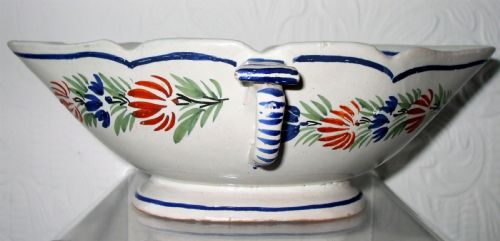
Forms range from utilitarian double sauceboats and inkwells to large decorative urns and pot a orange jars. Collectors select these objects for their hand-painted cobalt decoration on white tin-glazed surfaces.
Materials and construction
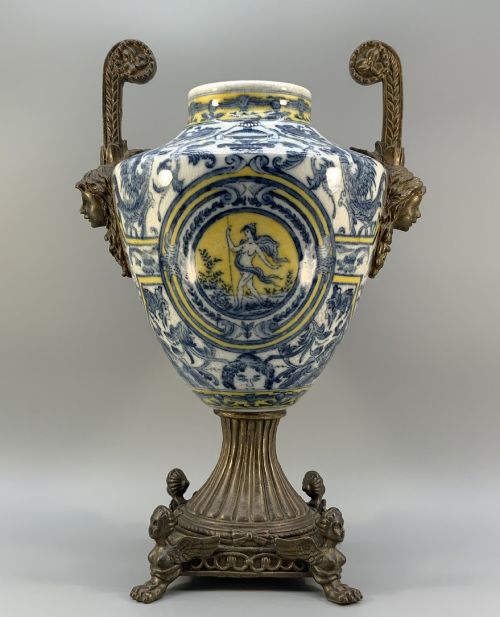
Potters shaped these objects from earthenware bodies before applying tin glaze to create a smooth, opaque white ground for painting. Cobalt pigment was then brushed onto the surface, sometimes accompanied by bronze mounts on specific revival vases.
Hand painting defines the decoration across dishes, bowls, and vases, recording individual brushwork from workshops in centres such as Desvres, Quimper, Nevers, and Gien. Firing techniques fixed the tin glaze and blue pigments to produce the characteristic glossy finish.
Historical makers occasionally included puzzle jugs designed to spill on the unwary drinker unless they covered hidden holes in the handle.
Assessing quality and execution
Quality rests in the crispness of the hand-painted cobalt detail and the evenness of the white tin glaze across the earthenware body. Superior examples demonstrate controlled brushwork on forms like large urns or portrait dishes rather than hurried application.
The integration of secondary elements, such as cast bronze mounts on Renaissance revival pieces, distinguishes standard regional production from more ambitious decorative commissions. Preserved glaze integrity across intricate mouldings also separates better survivals from heavily worn items.
Fourmaintraux-Courquin·HB Quimper·HR Quimper·Gien
The Blue White French Faience Glossary
- Faience
- Tin-glazed earthenware produced in France and parts of Europe. It provides an opaque white surface for painted decoration.
- Tin glaze
- A ceramic glaze made white and opaque with tin oxide. This coating accepts metal oxide pigments before firing.
- Sauceboat
- A vessel with one or two spouts designed for serving sauces at table. Examples often feature twin handles and decorated stands.
- Vide-poche
- A small tray or dish used for emptying pockets of coins and keys. These items appear in nineteenth-century French pottery forms.
- Pot a orange
- A specialised ceramic jar traditionally made for growing or housing orange trees. These large containers display historical regional designs.
Blue White French Faience: Frequently Asked Questions
Are these pieces safe for food use?
Older tin glazes can contain lead or other materials that leach when exposed to acidic foods. It is safer to treat sauceboats and bowls as decorative objects.
Display them on tables or shelves rather than serving meals from them.
How can I tell Quimper pottery apart?
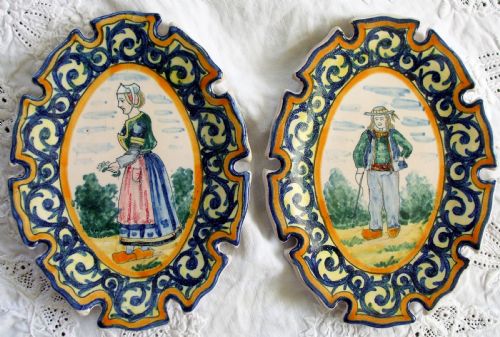
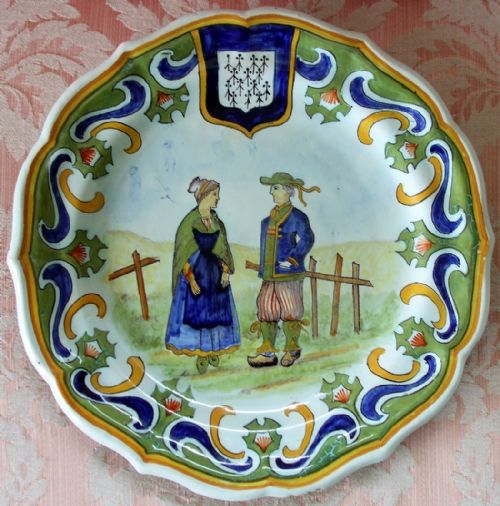
Quimper items typically feature distinct regional figures in traditional Breton costume painted in blue and other colours. Look for HB or HR factory ciphers marked on the base.
Stylised floral borders often frame the central hand-painted characters.
What is a vide-poche used for?
A vide-poche translates from French as empty pocket, serving as a small catch-all dish for small everyday items. Nineteenth-century examples sat in hallways or studies.
They offer a practical way to display small antique ceramics on a desk.