




French Ceramic Serving Dish
A French ceramic serving dish brings continental table traditions into a room, offering both practical utility and hand-painted artistry.
French Ceramic Serving Dish
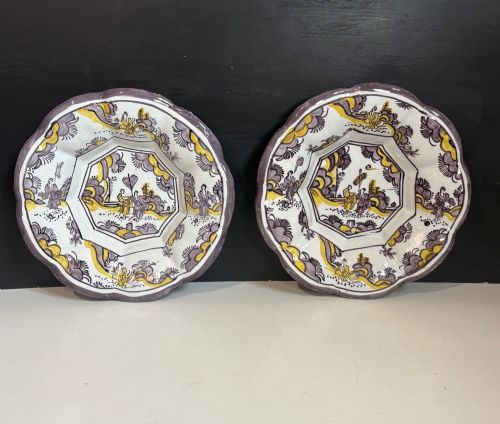
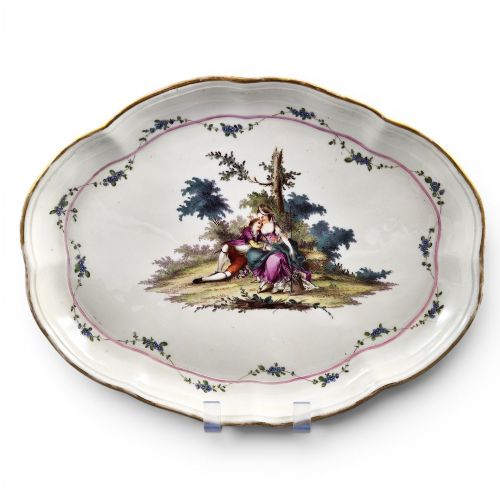
When searching for a French ceramic serving dish, collectors encounter pieces ranging from 18th Century tin-glazed earthenwares to 19th Century porcelain tureens and trays. These items span diverse regional aesthetics, including Quimper faience and Marseille porcelain.
Regional styles such as French Provincial and French Country sit alongside more ornate Rococo Revival and Japonisme interpretations. This mix reflects both everyday provincial dining and grander continental table settings.
Materials and construction
Potters shaped these serving vessels using traditional ceramic and earthenware bodies, often applying tin glazes to create a smooth, opaque white surface for hand-painted decoration. Porcelain pieces utilised finer mineral pastes fired at higher temperatures to achieve a more delicate structure.
Decoration relied heavily on manual brushwork, sometimes enhanced with gilding or specific regional motifs associated with makers like Gien and Quimper. Tin glaze techniques dominated the earlier periods, while later 19th Century workshops produced elaborate polychrome scenes and transfer-printed or hand-painted details.
Listings feature periods spanning from the 18th Century up to 1880, utilising materials such as porcelain, earthenware, tin glaze, and enamel.
Assessing quality and execution
The distinction between standard provincial pieces and finer workshop output lies in the crispness of the hand-painted details and the control of the glaze firing. Superior examples display refined brushwork, balanced composition in pictorial scenes, and well-preserved gilt accents.
Subtleties in the ceramic body and the uniformity of the tin glaze also mark the hierarchy of execution. Pieces attributed to established Paris makers or specific Quimper periods exhibit a sharper definition in moulded forms and greater care in finishing.
Joseph Gaspard Robert·Samson·Gien·Louis Pierre Malpass
The French Ceramic Serving Dish Glossary
- Tin Glaze
- A ceramic glaze made opaque by the addition of tin oxide. This coating provides a smooth white ground suitable for painting directly onto the unfired surface.
- Sauceboat
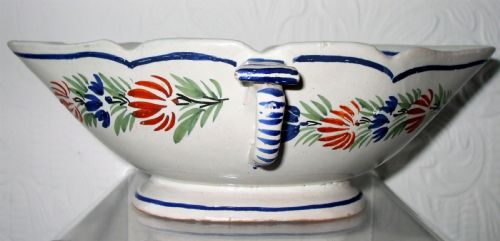
- A vessel designed for serving gravies or sauces, often featuring a fitted base and one or two pouring spouts. Examples in this inventory include double sauceboat configurations.
- Tureen
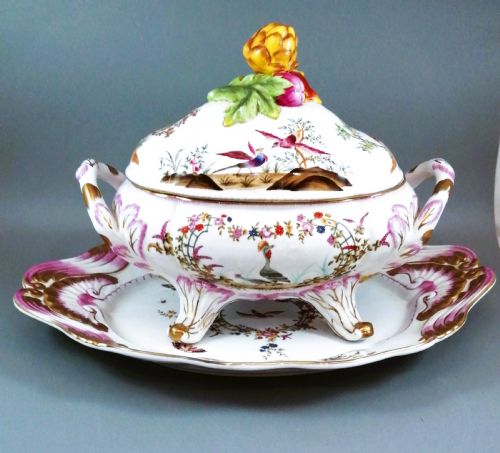
- A large, deep serving bowl with a lid, used traditionally for soups or stews. These are frequently accompanied by a matching ceramic stand.
- Japonisme
- A 19th Century stylistic influence derived from Japanese art and aesthetics. It appears in European ceramics through asymmetrical compositions and distinct decorative motifs.
French Ceramic Serving Dish: Frequently Asked Questions
What is a French ceramic serving dish used for?
These vessels served functional roles at the dining table for presenting soups, sauces, or large portions of food. Over time, many transitioned into decorative display items.
Today, buyers utilise them for table service during special gatherings or as standalone decorative bowls and trays within a room.
How do I date an 18th century piece?
Dating relies on identifying characteristic tin glaze formulas, early regional painting styles, and specific historical attributions. 18th Century examples often show heavier earthenware bodies and hand-painted tin-glazed decoration.
Comparing the glaze shrinkage, palette, and form against documented museum or archival pieces helps confirm the era.
What is Quimper faience?
Quimper faience originates from the town of Quimper in Brittany, France, known for its distinctive hand-painted folk art motifs. These pieces frequently feature traditional regional figures and floral patterns.
Markings such as specific factory ciphers help collectors identify the period and workshop origin of individual Quimper items.
How should I display a tureen?
Tureens work well as centrepieces on large dining tables, sideboards, or open shelving where their three-dimensional form remains visible. Keeping the lid and stand together preserves the intended aesthetic balance.
Placing them away from high-traffic edges ensures the safety of handles, lids, and delicate painted surfaces.