
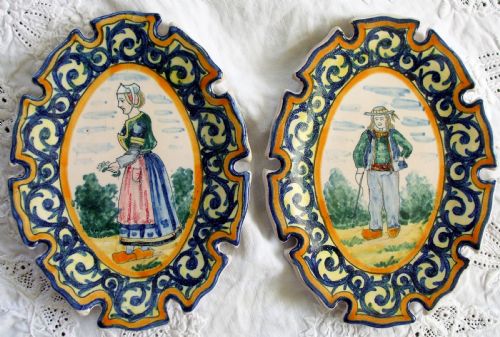
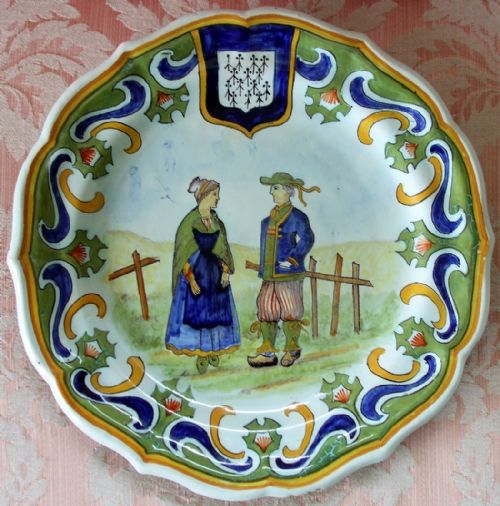


Breton Faience Pottery
Breton faience pottery brings colourful French Provincial charm to a table, offering hand-painted regional scenes that collectors prize for their rustic folk art appeal.
Breton Faience Pottery
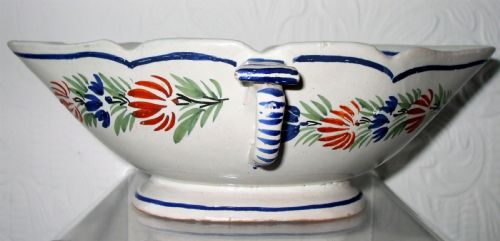
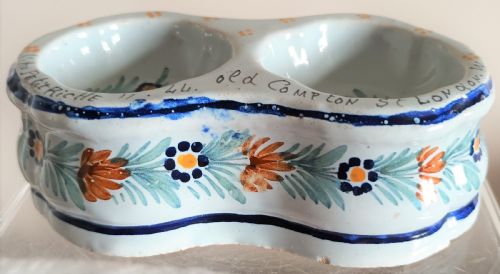
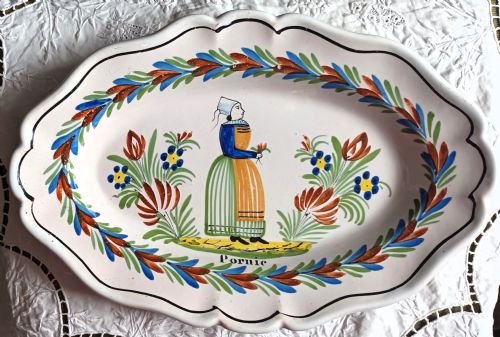
Breton faience pottery encompasses decorative ceramics and serving pieces originating from France, spanning styles from French Country to French Provincial. When exploring breton faience pottery, the pieces most commonly met on this page take the form of sauceboats, decorative dishes, salt cellars, platters, and pin trays.
The objects date across the nineteenth century, nineteen ten, and nineteen twenty, reflecting the enduring output of French faience workshops. Examples include Quimper double sauceboats and pin trays alongside Desvres dishes.
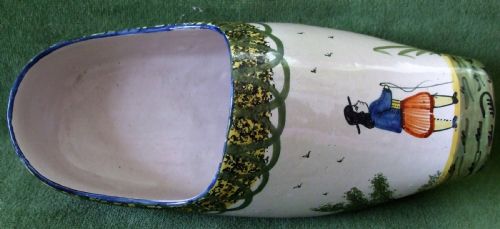
Forms range from utilitarian vessels like double table salts and sauceboats to novelty items like sabot shoes and decorative plates. Each piece displays regional French character through distinctive hand-painted motifs.
How they were made
Makers formed these items using ceramic, earthenware, and tin-glazed earthenware bodies. The clay was shaped into domestic and decorative forms before receiving its characteristic surface treatment.
Potters applied a tin glaze or glaze over the earthenware to create a smooth opaque white or cream ground. Artisans then painted regional scenes and motifs directly onto this prepared surface before firing.
Potters shaped humble wooden shoes into charming ceramic sabots so you can track French footwear across the mantelpiece.
What varies in quality
The crispness of the hand-painted regional decoration dictates much of the visual appeal, separating hastily produced wares from carefully executed examples. Finer specimens display precise brushwork in the depiction of traditional figures and floral borders.
The smoothness and consistency of the tin glaze across complex three-dimensional forms, such as sabots and double sauceboats, marks a higher standard of manufacture. Well-potted earthenware bodies with minimal warping show greater technical mastery in the kiln.
HB Quimper·HR Quimper·Desvres
The Breton Faience Pottery Glossary
- Faience
- Tin-glazed earthenware decorated with painted designs and fired over an opaque white glaze. This technique forms the basis of traditional French regional pottery.
- Tin Glaze
- An enamel glaze containing tin oxide that fires to an opaque white surface. It provides the ideal absorbent background for hand-painted ceramic decoration.
- Earthenware
- Porous pottery fired at lower temperatures than stoneware or porcelain. It requires a glaze like tin glaze to render the vessel impermeable to liquids.
- Sabot
- A traditional wooden clog represented in ceramic form as a decorative shoe or trinket dish. These novelty pieces are a speciality of French regional potteries.
- Sauceboat
- A vessel with one or two lips designed for serving gravies or sauces at the table. Double sauceboats feature two pouring spouts and twin compartments.
Breton Faience Pottery: Frequently Asked Questions
What is breton faience pottery?
Breton faience pottery consists of tin-glazed earthenware and ceramic pieces created in the Brittany and wider regional areas of France. These items include serving dishes, pin trays, and decorative plates featuring traditional folk painting.
The aesthetic draws heavily on French Provincial and French Country styles, capturing rural life and local costume. Most examples seen here date from the nineteenth century up to nineteen twenty.
How were salt cellars and sauceboats used?
Double sauceboats served gravies and sauces at formal or family dining tables, utilising two spouts for easy passing. Double table salts held dry seasonings within reach of diners.
These functional table wares combined domestic utility with vibrant regional decoration. Their charming forms made them conversation pieces during meals.
How do I date breton faience pottery?
Dating relies on identifying factory marks, stylistic evolution, and the specific materials recorded in the piece descriptions. Nineteenth-century examples often display simpler folk motifs compared to later twentieth-century production.
Assessing the tin glaze texture and the style of the painted regional figures helps narrow down the period. Comparing known workshop marks like those from Quimper or Desvres provides further chronological clues.
How should I display pin trays and sabot shoes?
Pin trays and ceramic sabot shoes work well displayed on open dressers, mantelpieces, or within glass cabinets where their painted details remain visible. Their compact size allows them to sit comfortably on side tables or desks.
Keep these tin-glazed pieces away from damp environments and direct sunlight to protect the surface glaze. Soft dusting is sufficient for regular maintenance.