
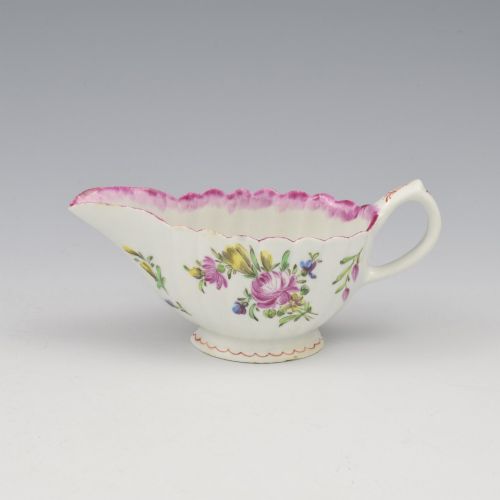
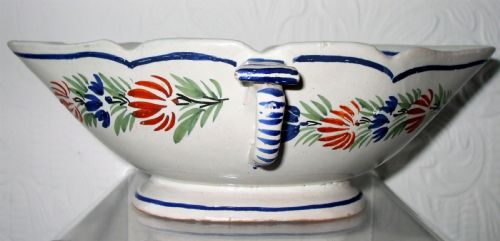


Hand Painted Ceramic Sauceboat
These hand painted ceramic sauceboat pieces are table vessels from past centuries, offering hand-painted decoration that brings historical charm to modern dining.
Hand Painted Ceramic Sauceboat
When you search for hand painted ceramic sauceboat pieces, you encounter table vessels produced primarily during the eighteenth and nineteenth centuries. These items served dining tables for sauces and cream, taking forms such as sauceboats, cream boats, and double sauceboats.
The selections span various regional origins and stylistic influences, including Georgian British works, French Country faience, and Chinese export pieces. Most examples originate from the eighteenth century, featuring hand-painted botanical, figurative, or armorial motifs.
How they were made
Potters utilised soft-paste porcelain, standard porcelain, earthenware, and faience to shape these vessels. Workshops applied hand-painted enamel colours and cobalt glaze decoration directly onto the ceramic bodies before firing.
Makers employed specialised moulding techniques to create distinctive forms such as lettuce leaf shapes, fluted bodies, and lamprey handles. Chinese export pieces and European factories alike relied on skilled painters to apply detailed patterns by hand.
Listings feature eighteenth-century pieces utilising soft-paste porcelain, faience, and cobalt glaze across Georgian and Chinese Export styles.
What varies in quality
Quality in a hand painted ceramic sauceboat rests upon the crispness of the moulded form and the precision of the hand-painted brushwork. Pieces featuring complex multi-coloured enamels or intricate armorial designs demonstrate greater artistic ambition than simpler monochrome blue and white items.
The reputation of the producing factory, whether Bow, Worcester, Chelsea Derby, or Quimper, influences the standing of individual pieces. Survival of delicate handles, crisp spouts, and original glaze surfaces also distinguishes finer examples from heavily worn or compromised items.
Bow Porcelain·Chelsea Derby·Worcester Porcelain·Quimper French Faience
The Hand Painted Ceramic Sauceboat Glossary
- Soft-paste porcelain
- A type of artificial porcelain composed of clay and glass frit, fired at lower temperatures than hard-paste porcelain. It was widely utilised by eighteenth-century English factories like Bow and Worcester.
- Faience
- Tin-glazed earthenware produced across Europe, particularly associated with French regional wares. It provides an opaque white surface suitable for hand-painted decoration.
- Cobalt glaze
- A blue pigment applied under or over the glaze before firing, stable at high temperatures. It defines the palette of early blue and white tablewares.
- Armorial
- A decorative scheme featuring a family coat of arms or heraldic crest. These bespoke patterns were frequently ordered on Chinese export porcelain for European patrons.
- Famille Rose
- A palette of opaque pink and rose enamel colours introduced to Chinese ceramics during the Qing dynasty. It appears on export pieces destined for Western dining tables.
Hand Painted Ceramic Sauceboat: Frequently Asked Questions
What were sauceboats used for?
These vessels held drawn butter, gravies, and sauces to accompany formal dining table courses.
They allowed diners or servants to pour liquids cleanly over food using integrated spouts and handles.
How do I date a sauceboat?
Examine the paste material, potting style, and characteristic underglaze blue or enamel painting techniques. Eighteenth-century pieces often show distinct factory body formulas and specific hand-painted motifs.
Comparing handle shapes, such as lamprey or scroll designs, against known factory periods helps narrow the production era.
Are these pieces safe for dining?
Many collectors prefer to display these antique ceramics rather than use them with modern acidic foods.
Enamels and soft-paste bodies from the seventeen-hundreds can be sensitive to modern detergents and heavy daily use.
How do I display a sauceboat?
Place them on sideboards, open shelving, or within glass cabinets where the side profiles and painted interiors remain visible.
Pairing matching pairs or grouping different regional forms creates an effective display of historic tableware.