
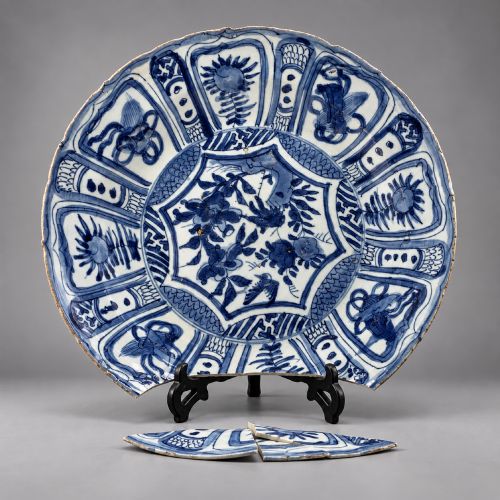



Blue White Arita Dish
A blue white arita dish brings centuries of Japanese kiln tradition to a room, offering collectors striking hand painted porcelain forms.
Blue White Arita Dish
A blue white arita dish encompasses decorative plates, bowls, and large chargers originating from Japanese kilns across multiple periods. Buyers browsing this page will frequently encounter nineteenth-century pieces alongside older examples dating back to the seventeenth and eighteenth centuries.
The selection ranges from simple shallow dishes with cranes or cicadas to elaborate Japanese Imari chargers and octagonal plates. Forms vary from straightforward circular bowls to unusual shaped plates and large display platters.
Materials and production methods
Potters built each blue white arita dish using fine porcelain shaped by hand and painted with cobalt underglaze pigment. Artisans applied cobalt glaze beneath a clear surface layer before firing the pieces at high temperatures in traditional kilns.
Selected examples integrate enamel work or gold leaf details atop the blue and white designs. This combination of cobalt pigment and porcelain created durable decorative items suitable for display.
Listings on this site span porcelain pieces from the seventeenth-century Edo period through to the early twentieth century.
Judging the work
The standard of a blue white arita dish rests upon the clarity of the cobalt pigment and the precision of the hand painted brushwork. Pieces featuring intricate koi carp, scrolling foliage, or specific pictorial subjects like sail designs demonstrate superior artistic execution.
Early periods such as the seventeenth century bring historical significance, while later nineteenth-century output shows distinct decorative variations. The crispness of the glaze and the balance of the overall form distinguish finer chargers and plates from standard domestic ware.
Fuku Mark
The Blue White Arita Dish Glossary
- Arita
- A town in Japan historically recognised for its porcelain production. Kilns in this region produced vessels for domestic use and international export.
- Imari
- A style of Japanese porcelain named after the port from which the wares were shipped. These items often incorporate distinct blue and white patterns alongside other colours.
- Cobalt Underglaze
- A blue pigment applied to pottery before the application of a transparent glaze and subsequent firing. This technique protects the painted decoration beneath a glossy surface.
- Meiji Period
- A span of Japanese history lasting from eighteen sixty-eight to nineteen twelve. Pieces from this era often display refined hand painted details.
- Charger
- A large decorative plate utilised for presentation or centrepiece display rather than daily dining. These substantial pieces showcase expansive painted compositions.
Blue White Arita Dish: Frequently Asked Questions
How do I date a blue white arita dish?
Dating relies on examining the porcelain body, the style of the cobalt blue pigment, and recorded period characteristics such as seventeenth-century forms or Meiji era brushwork.
Changes in potting techniques and rim shapes also provide clues to the approximate decade of manufacture.
Were these dishes used for dining?
Larger examples function primarily as chargers and display plates intended for visual appreciation rather than regular table service.
Smaller bowls and shallow dishes saw varied domestic use in Japanese households and international trade.
How should I display a charger?
Chargers require sturdy plate stands or secure wall mountings due to their considerable diameter and porcelain weight.
Placement away from direct foot traffic ensures the hand painted surfaces remain safe from accidental knocks.
What does the fuku mark mean?
The fuku mark translates to happiness or good fortune and appears on select nineteenth-century Japanese ceramics.
Potters used this auspicious symbol as an expression of quality rather than a specific maker signature.