



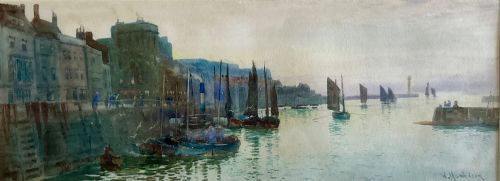
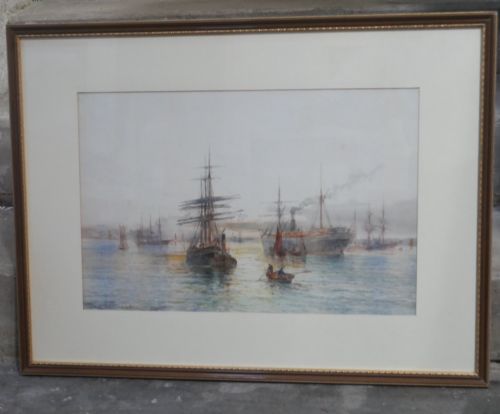
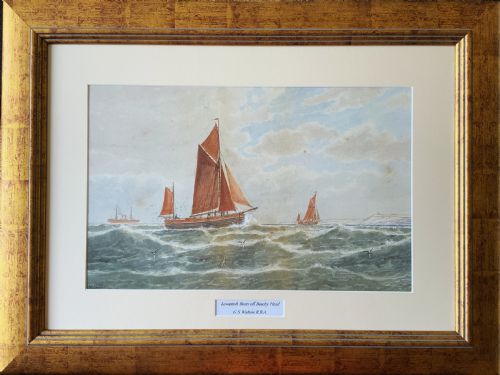
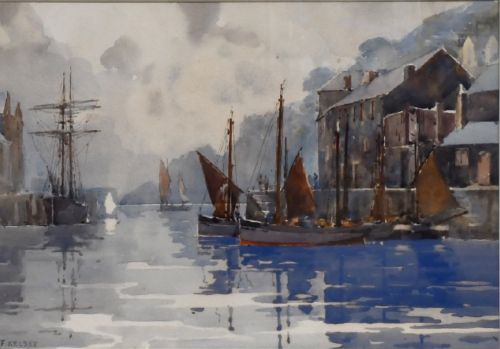
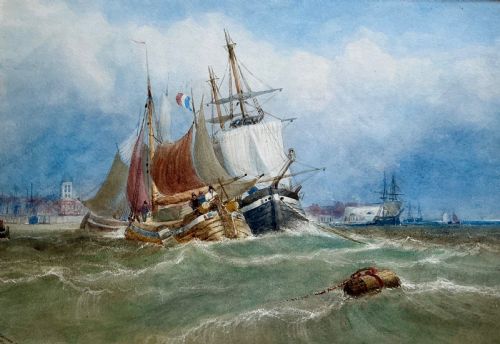
Blue Watercolour Seascape Painting
A blue watercolour seascape painting captures the movement of coastal tides and vessels through delicate pigment applied directly to paper.
Blue Watercolour Seascape Painting
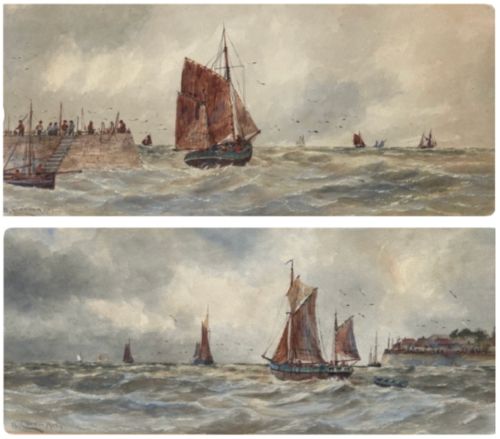
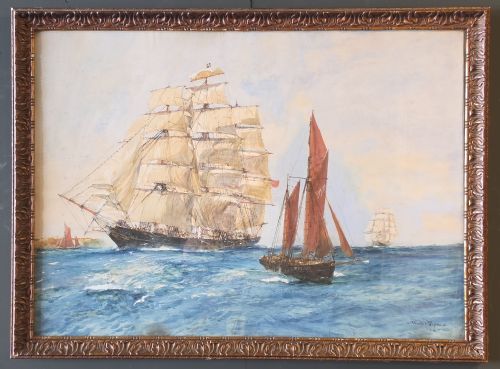
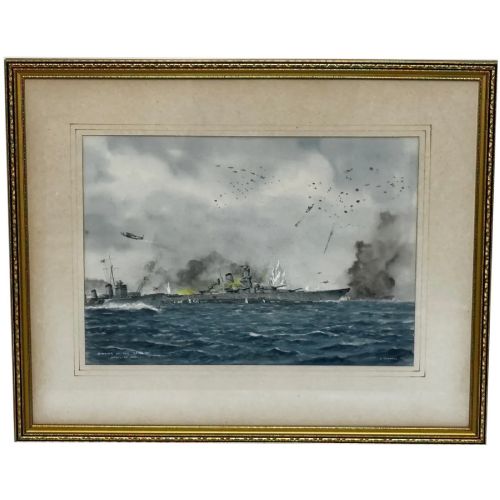
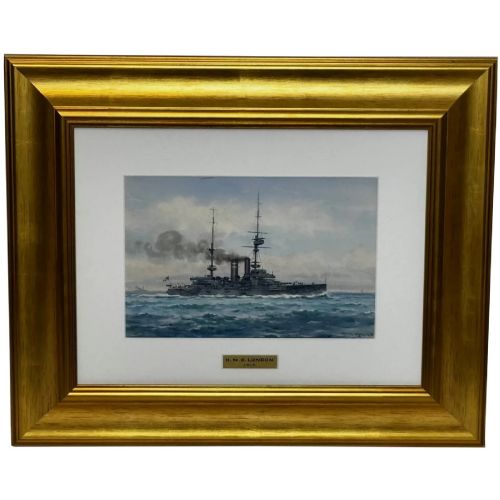
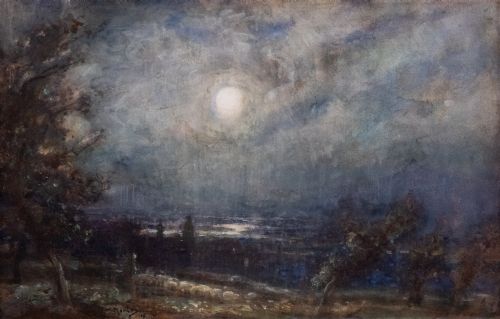
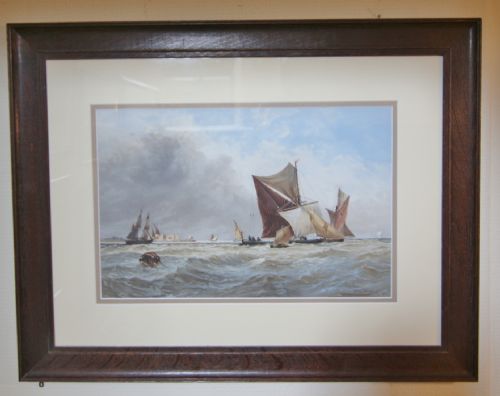
A blue watercolour seascape painting encompasses works on paper depicting marine views, coastal harbours, and naval shipping. These pieces range from Victorian portrayals of fishing boats to mid-twentieth-century naval vessels.
The selections on this page concentrate heavily on nineteenth-century and early twentieth-century British coastal scenes, frequently framed behind glass in wood or gilt wood moulding.
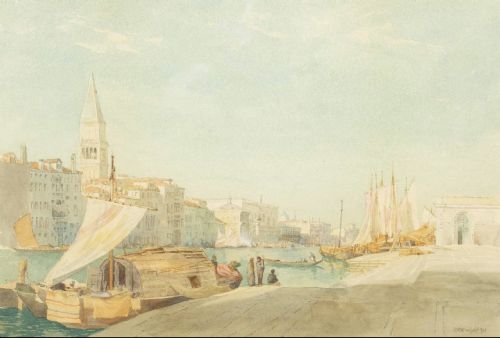
Buyers encounter subjects spanning Yorkshire fishing villages, Venetian canals, and turbulent open waters executed by named artists and regional schools.
How They Were Made
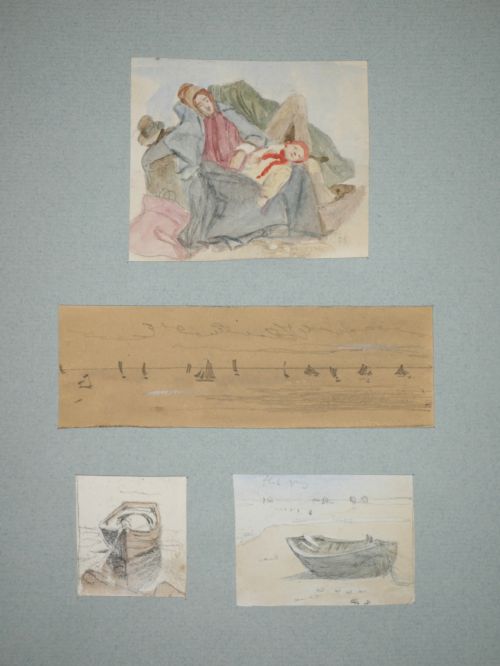
Artists applied watercolour pigment suspended in water onto heavy paper sheets, often using ink for preliminary sketching or defining details. Washes of blue pigment built up the sea and sky, while lighter areas relied on the untouched white of the paper.
Finished works received protection from moisture and dust beneath glass, secured inside wooden or gilt wood frames that frequently date from the period of execution.
Several artists braved stormy British coastal weather with sketchbooks in hand, capturing salt spray and rolling waves directly from life.
What Varies in Quality
Technical control of the pigment and water defines the success of a blue watercolour seascape painting, distinguishing rapid atmospheric sketches from laboured compositions. The handling of light on water and the convincing perspective of shipping vessels demonstrate the painter's ability.
Condition plays a part, as exposure to light causes watercolour pigment to fade, altering the balance of blue tones across the sky and sea.
James Orrock·William Cannon·Charles Edward Dixon·Eric Tufnell·William Banks Fortescue·Frank Watson Wood·Thomas William Morley·Richard Henry Wright·Thomas Bush Hardy·William Matthison·George Stanfield Walters·Frank Kelsey·Henry Barlow Carter·William Frederick Settle·Lionel Horsnell·Paul Delvaux·Charles William Adderton·Vincenzo D Esposito·William Lee Hankey·Sir Thomas Newenham Dean·Ernest Dade·Robert Leslie Howey·John McDougal·Frank H Mason·Sir William Russell Flint
The Blue Watercolour Seascape Painting Glossary
- Watercolour
- A paint consisting of pigment suspended in a water-soluble vehicle, traditionally applied to paper. It allows for translucent washes that let the reflective surface of the paper shine through.
- Seascape
- A work of art depicting the sea, coastal views, or marine shipping. These subjects gained immense popularity during the Victorian period.
- Gilt wood
- Wood coated with a thin layer of gold leaf or gold-coloured pigment. Such frames were standard for finishing fine art paintings of the nineteenth and early twentieth centuries.
- Works on paper
- A classification encompassing drawings, watercolours, and prints created on paper sheets rather than canvas or panel. They require careful framing behind glass for preservation.
Blue Watercolour Seascape Painting: Frequently Asked Questions
How should I hang a watercolour painting?
Watercolours are sensitive to strong sunlight and humidity. Position them on interior walls away from direct sunlight to prevent the blue pigments from fading.
Ensure the frame is sealed properly and that the paper does not touch the glass directly, which can cause condensation damage.
What subjects appear in these marine watercolours?
The works depict a wide variety of maritime activity, including local fishing boats returning to harbour, large naval warships, and racing yachts.
Locations range from British coastal spots like St Ives and Whitby to international scenes in Venice and the French Riviera.
How do I date a nineteenth-century watercolour?
Dating relies heavily on artist signatures, exhibition labels on the reverse of the frame, and stylistic clues within the clothing or shipping vessels depicted.
Framing materials and backing papers also provide helpful physical evidence regarding the age of the piece.
Why are watercolours framed under glass?
Paper and water-soluble pigments lack the protective surface layer found on oil paintings on canvas. Glass shields the delicate paint surface from dust, smoke, and moisture in the room.
This barrier is essential for the long-term preservation of works on paper.