

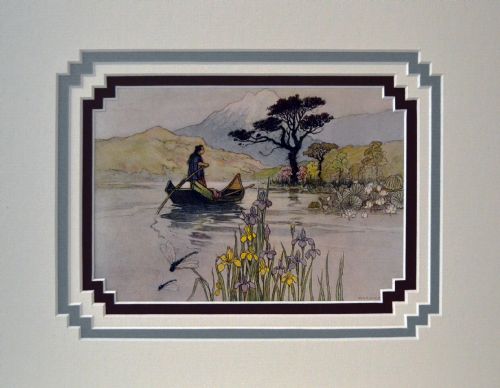


Blue Watercolour Print
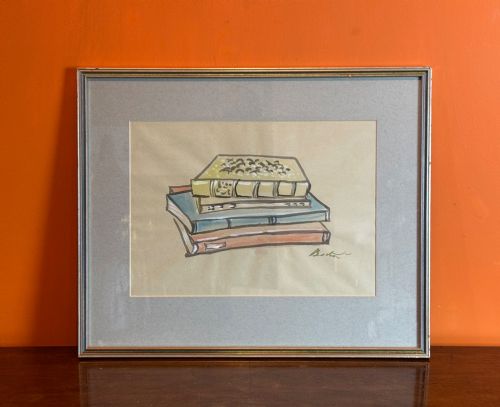
A blue watercolour print captures maritime scenes, landscapes, and studies of flora through delicate pigment on paper.
Blue Watercolour Print
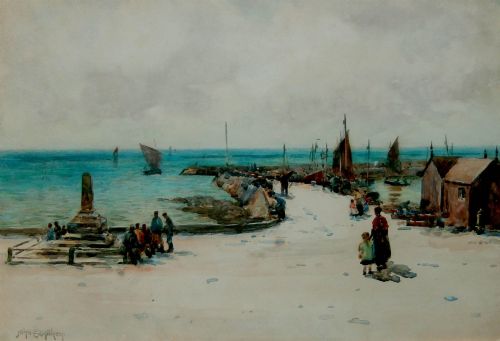
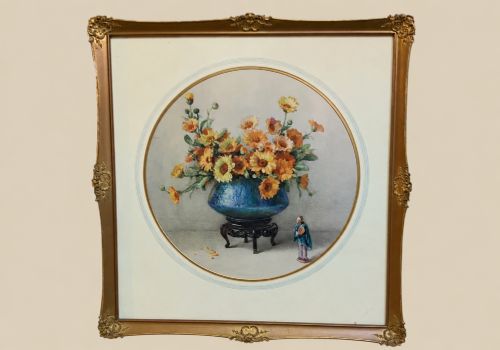
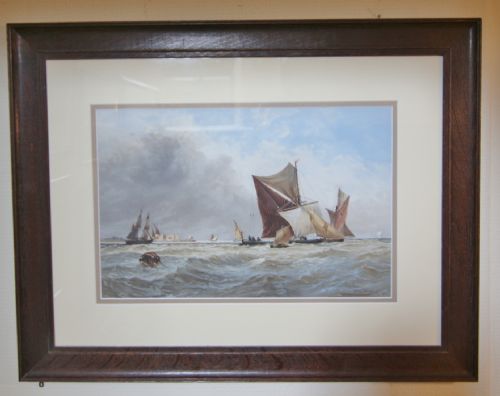
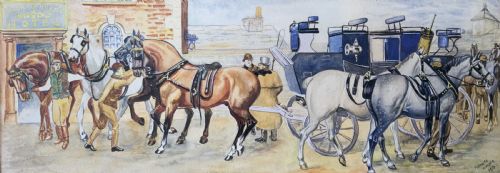
A blue watercolour print brings together original hand-painted works and framed prints spanning the nineteenth and twentieth centuries. The selection encompasses maritime subjects, coastal views, architectural studies, and botanical compositions.
Pieces range from Victorian seascapes and Edwardian illustrations to mid-century modernist sketches. Collectors encounter both intimate bird studies and larger landscape paintings set within period wood and gilt frames.
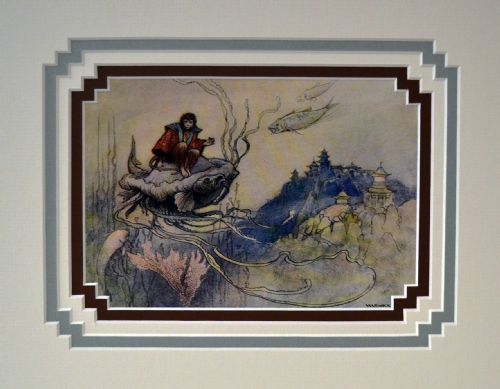
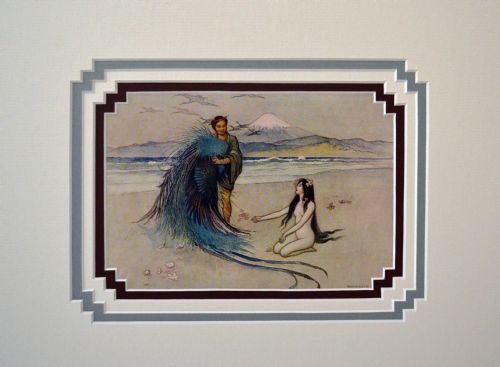
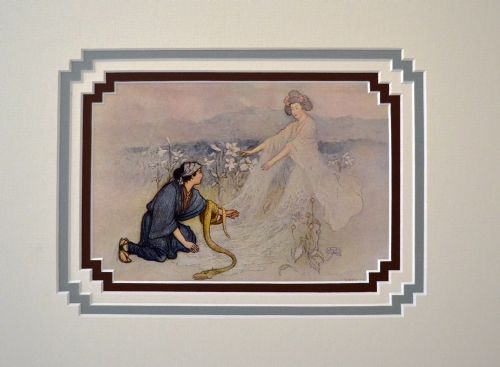
The objects originate from British and international hands, recording scenes from the Thames Valley, Venice, and Japanese fairy tales. Paper supports carry ink, watercolour pigment, and occasionally lithographic detail under glass.
Materials and Technique
Works are executed on paper supports using watercolour pigment and ink, sometimes augmented with lithography or woodblock printing. Pigments are applied by hand or reproduced as early edition prints.
Framing utilises wood and gilt surrounds, protecting the fragile paper underneath glass. Mounts and frames frequently reflect the Victorian or Edwardian period of the artwork they enclose.
Several birds gaze out permanently from their Edwardian paper perches, entirely unbothered by the passing centuries.
Distinctions in Quality
The standard of a piece rests upon the surety of the hand and the preservation of the pigment against fading on the paper. Strong draughtsmanship in the ink or brushwork distinguishes accomplished maritime and landscape studies from simpler decorative items.
The integrity of the original frame and mount contributes significantly to the character of the piece. Period wood and gilt surrounds that complement the age of the watercolour maintain the historical context of the artwork.
Alfred Young Nutt·John E Aitken·Warwick Goble·George F Pennington·James William Booth·Edith E Caswall·Frank Wood·Arthur Wardle·William Powell Frith·WF Mitchell·Henry Wimbush·Kees van Dongen·Amy Reeve Fowkes·Lois Wilton
The Blue Watercolour Print Glossary
- Watercolour
- A paint consisting of a pigment suspended in a water-based solution, applied to paper to create translucent washes.
- Lithograph
- A print produced by a printing process on a flat surface, sometimes hand-finished with watercolour pigment.
- Gilt
- A gold leaf or gold-coloured application used to finish wood frames, adding reflective warmth to the border.
- Woodblock
- A relief printing technique where an image is carved into wood, inked, and transferred to paper.
Blue Watercolour Print: Frequently Asked Questions
How do I care for a watercolour painting?
Keep the artwork away from direct sunlight to prevent the watercolour pigments from fading on the paper.
Ensure the room maintains a stable humidity level to protect both the paper support and the wood frame.
Are these works original paintings or prints?
The selection includes both unique hand-painted watercolours and early edition prints on paper.
Individual listings specify whether the piece is an original brush painting or an illustrative print.
How do I identify a Victorian frame?
Victorian frames often utilise heavy timber construction, sometimes finished with gilt ornamentation tailored to the artwork.
Construction methods and corner joints typically show the hand-tooling characteristic of nineteenth-century framing workshops.
What subjects are most common?
Maritime scenes, coastal views with fishing boats, and botanical studies of birds and flowers appear frequently.
Architectural landmarks and landscape views from the nineteenth and twentieth centuries also populate the selection.