
Golden Age Illustration
Golden age illustration works bring the refined graphic artistry of the Edwardian era into domestic spaces through delicate printed plates.
Golden Age Illustration
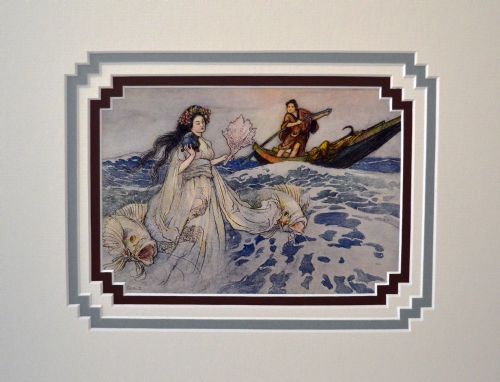
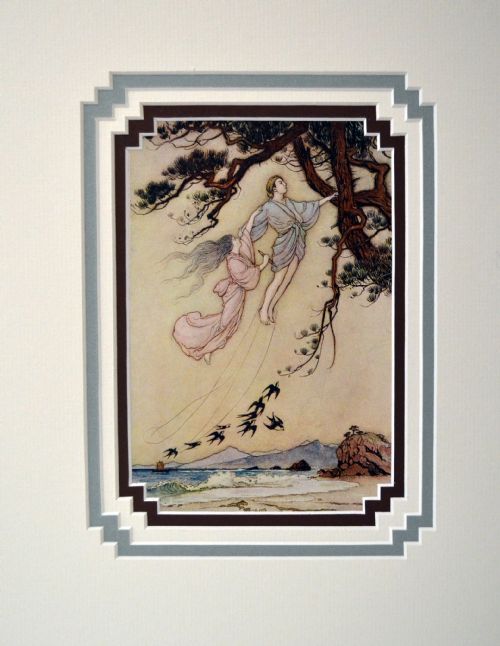
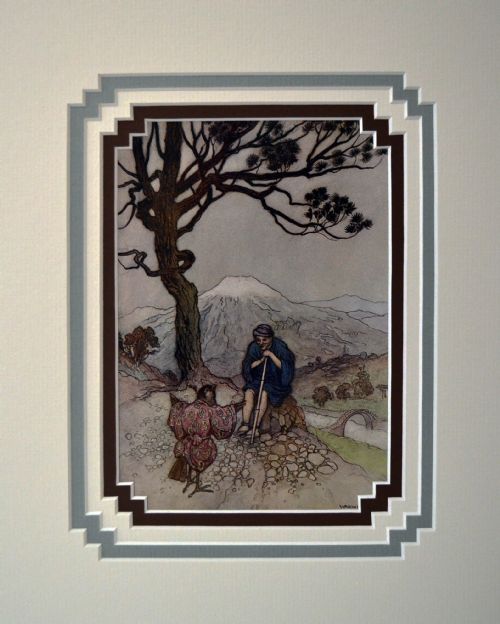
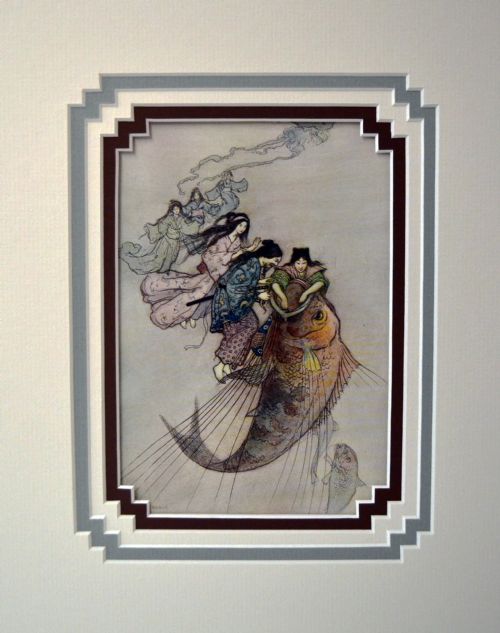
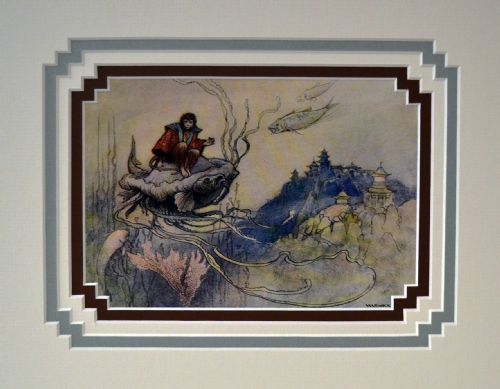
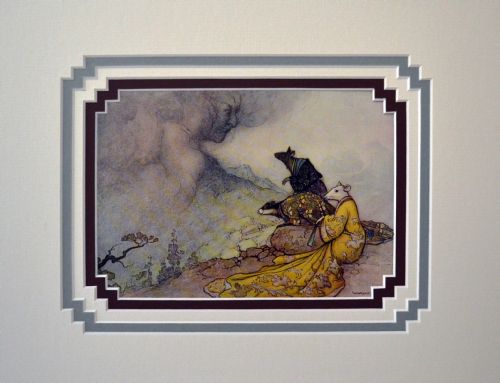
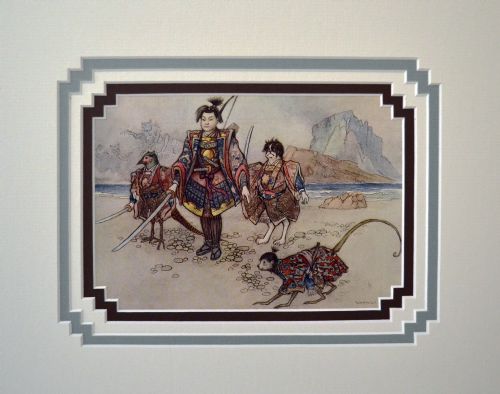
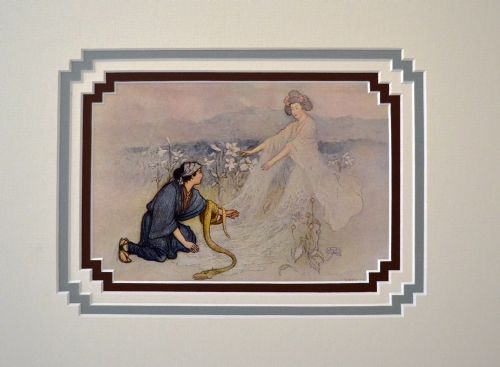
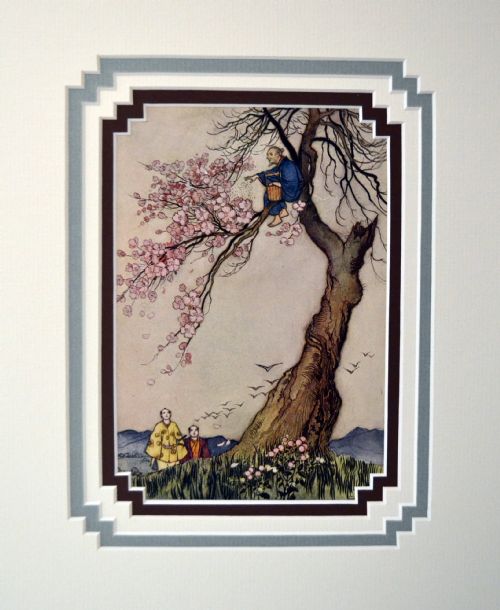
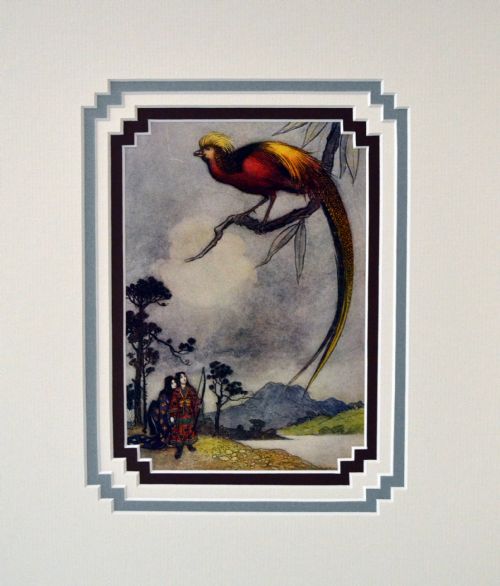
When you search for golden age illustration, you encounter printed plates originating from the Edwardian period. The specific pieces available here comprise first edition prints from Japanese Fairy Tales, representing a distinct subset of early twentieth century book illustration.
These works typically take the form of antique prints presented as framed art or individual graphic sheets. They capture a moment when colour printing techniques allowed illustrators to reach a broad audience with highly detailed narrative scenes.
Collectors encounter these images as paper prints protected by card mountboard and glass within wooden frames. The visual language draws heavily on Edwardian art nouveau aesthetics, blending traditional fairy tale motifs with stylised graphic lines.
How they were made
The foundation of these works is quality paper or lightweight card designed to accept fine ink application. Printers utilised advanced photo-mechanical and colour lithographic processes during the nineteen-tens to reproduce delicate watercolour and ink artwork with remarkable fidelity.
Finished plates were frequently mounted onto heavier card or mount board to provide structural support before framing. Wood frames paired with glass protected the fragile paper surfaces from atmospheric moisture and handling damage.
Early twentieth-century fairies apparently spent a surprising amount of time posing delicately among Japanese cherry blossoms.
What varies in quality
The primary distinction in quality lies in the preservation of the original ink density and paper integrity over time. Edwardian paper stocks react differently to light exposure, meaning some examples retain vibrant pigment saturation while others exhibit subtle fading.
Framing standards also separate ordinary examples from superior ones, particularly the choice of acid-free mountboard that prevents chemical discolouration of the paper. The crispness of the impression during the initial printing run governs the overall visual sharpness of the details.
Warwick Goble
The Golden Age Illustration Glossary
- First edition
- The initial printing of a publication produced from the original setting of type or plates. These impressions hold particular interest for collectors seeking proximity to the artist's initial vision.
- Mountboard
- Heavyweight paperboard used to frame and support artwork, keeping the paper surface separated from the glass. Quality mounting materials prevent long-term chemical damage to antique paper.
- Edwardian
- The stylistic and historical period spanning the reign of King Edward VII, noted in illustration for its elegance and transition into art nouveau forms. Pieces from this era often display refined decorative borders.
- Art Nouveau
- An international style of art and architecture characterised by intricate linear designs and flowing motifs inspired by natural forms. This aesthetic heavily influenced book illustration of the period.
Golden Age Illustration: Frequently Asked Questions
What is golden age illustration?
Golden age illustration refers to the prolific era of book and magazine illustration that flourished from the late Victorian period through the start of the First World War. This period produced exquisitely detailed plates designed to accompany classic literature and fairy tales.
The works available demonstrate the sophisticated colour printing methods perfected during the nineteen-tens, allowing artists to reach new audiences through illustrated volumes.
How should I display these prints?
These delicate paper items require protection from direct sunlight to prevent the inks from fading over time. Keeping them behind glass in a stable environment safeguards the paper fibres.
Ensure that any framing uses conservation-grade mountboard to prevent acid transfer and discolouration around the edges of the printed sheet.
How do I identify Edwardian prints?
Edwardian prints often feature distinct typographic styles, delicate border designs, and a characteristic aesthetic that bridges traditional realism and art nouveau ornamentation. The paper stock used in the nineteen-tens also has a specific weight and texture distinct from later reproductions.
Examining the printing dot pattern under magnification can help distinguish original period impressions from modern photographic copies.
Were these published in books originally?
Many fine illustrations from this era were originally commissioned as plates bound into special gift books and fairy tale collections. Publishers employed high-quality paper and tipped-in mounting techniques to present the artwork as standalone visual pieces.
Over time, individual plates frequently became separated from their original volumes to be framed and displayed independently.