
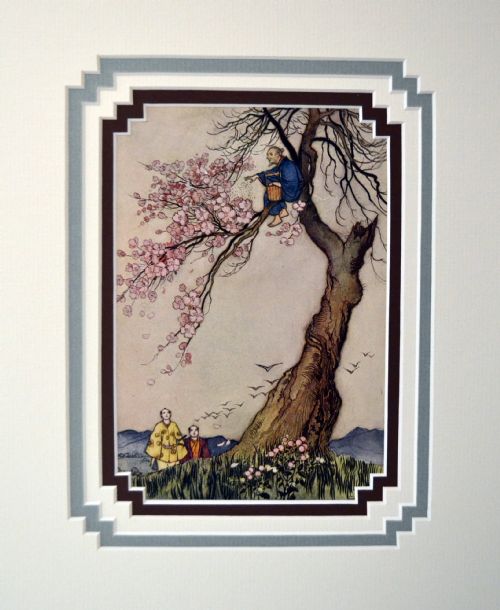
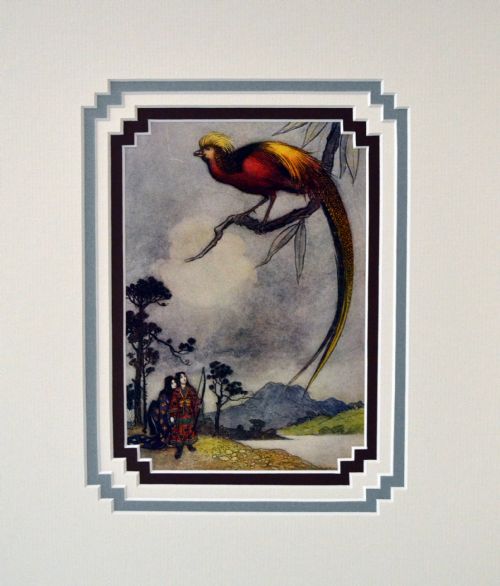

Edwardian Book Plate
An edwardian book plate brings illustrative charm to a wall, capturing the Golden Age of storytelling through period printwork.
Edwardian Book Plate
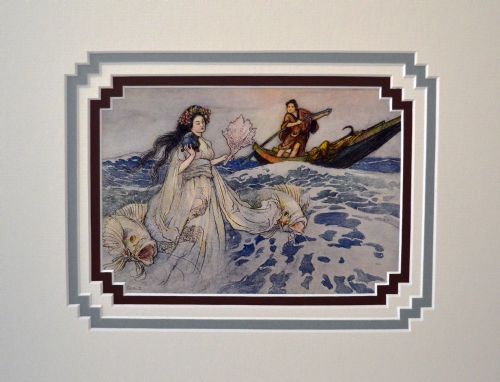
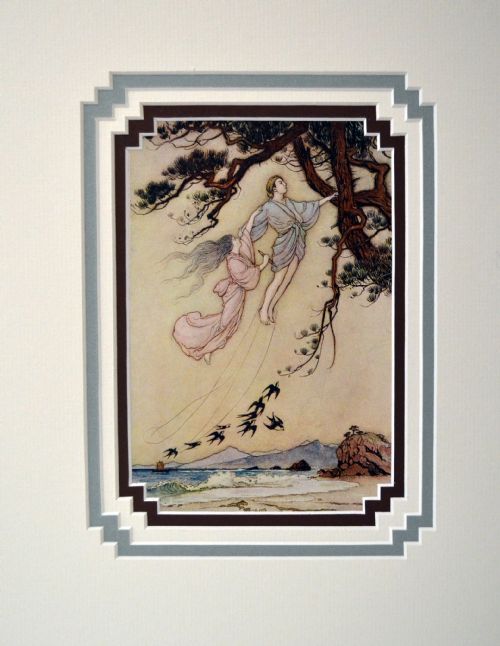
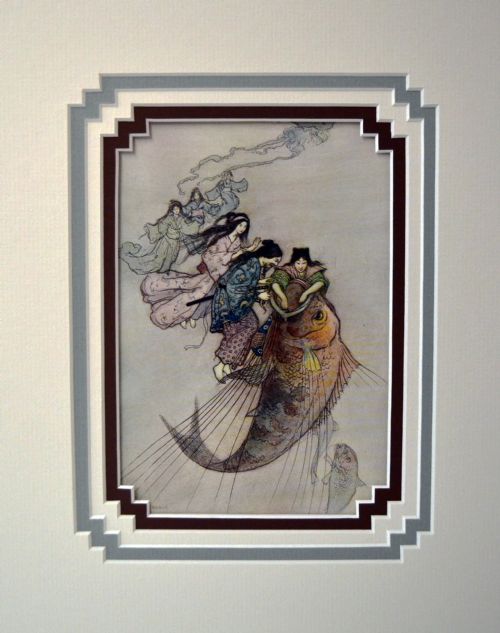
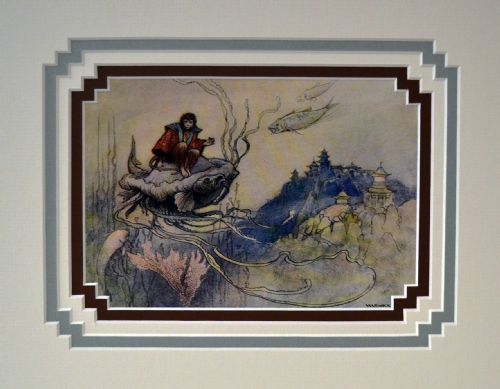
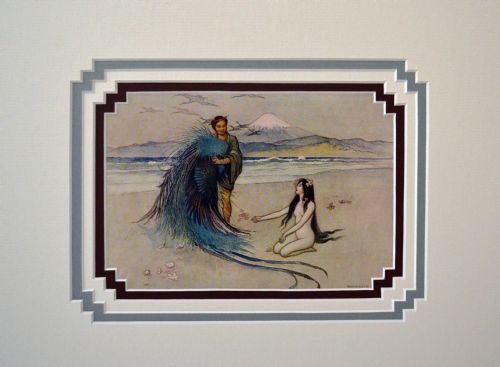
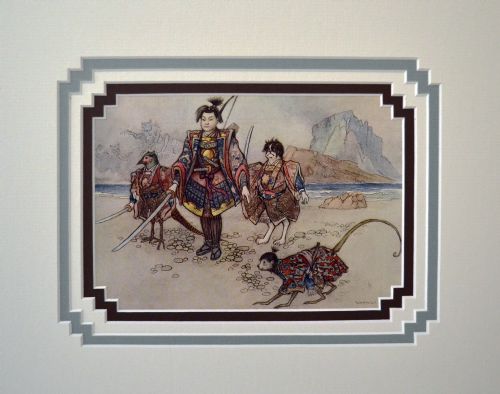
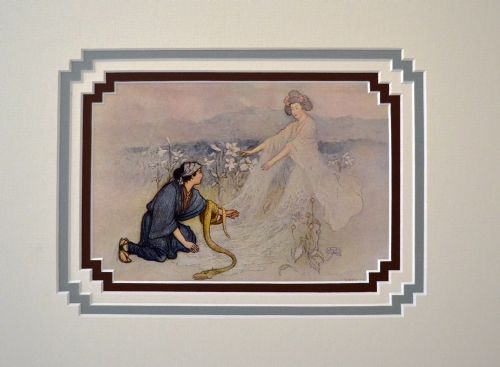
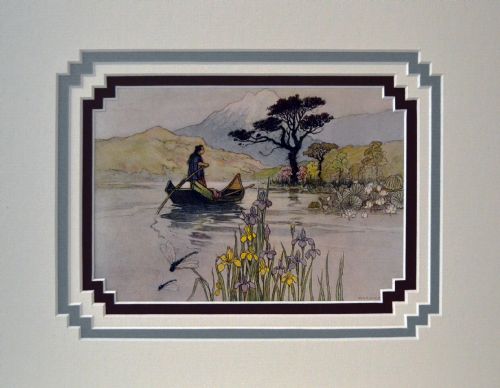
When searching for an edwardian book plate, collectors encounter antique prints and illustrations originating from the year 1910. These pieces often draw from Edwardian illustration, Art Nouveau, and Japonisme styles, reflecting the visual culture of the period.
The selections available here lean heavily into narrative artwork, notably featuring first edition prints from series such as Japanese Fairy Tales. Framed prints and wall art dominate the physical forms, presenting book illustrations as standalone decorative objects.
How they were made
Production relies on traditional paper and ink techniques suited to early twentieth-century publishing, capturing fine illustrative lines. Printers used paper and card substrates to carry these detailed graphic works.
Framing and presentation incorporate wood, glass, mount board, and mountboard to protect the delicate paper components. These materials work together to preserve the integrity of the antique prints for display.
This site's listings for this phrase focus exclusively on paper and ink works from 1910, spanning decorative framing materials like wood and glass.
What varies in quality
The standard of an edwardian book plate depends upon the clarity of the ink impression against the paper ground. Stronger examples retain the distinct tonal depth intended by the original illustrator.
Framing choices and mounting materials also influence the presentation standard. Archival mount board and well-fitted wood frames distinguish a more careful conservation approach.
Warwick Goble
The Edwardian Book Plate Glossary
- Edwardian
- Dating from the reign of King Edward VII, defining the aesthetic of the early twentieth century. This period saw a flourishing of illustrative arts and delicate graphic design.
- Art Nouveau
- A decorative style characterised by flowing, organic lines and natural motifs. It heavily influenced book design and illustration during the era.
- Japonisme
- The influence of Japanese art on Western aesthetics, visible in composition and subject matter. Many book plates of the period adopted these distinct compositional traits.
- Mountboard
- Heavy paperboard used for framing works on paper to separate the surface from the glass. Quality mounting protects the print from condensation and direct contact.
Edwardian Book Plate: Frequently Asked Questions
What is an edwardian book plate?
An edwardian book plate is an illustration originally published within a volume during the early twentieth century. These printed plates are frequently removed and framed as independent pieces of wall art.
They capture specific artistic movements such as Art Nouveau and Golden Age illustration, reflecting the publishing standards of 1910.
How were these prints used?
Originally, these plates served as interior illustrations accompanying text in first edition books and fairy tale collections. They visualised specific narratives for readers of the period.
Today, they function primarily as framed prints and decorative wall art rather than functioning book components.
How do I live with these prints?
Protecting paper items from direct sunlight is essential to prevent the ink and paper from fading over time. Standard room conditions with stable humidity suit framed paper works best.
Displaying them behind glass in appropriate wooden frames keeps the delicate paper surfaces safe from environmental dust and handling.
How do I identify the period?
Identifying the period involves looking at the printing techniques, paper stock characteristics, and stylistic markers such as Edwardian typography or illustration conventions. The year 1910 frequently anchors these specific stylistic outputs.
Cross-referencing the illustrative style with known first editions helps confirm the exact era of production.