


Blue Transferware Wall Plate
These blue transferware wall plate examples bring printed scenes of nineteenth-century life and landscapes straight to your interior.
Blue Transferware Wall Plate
A blue transferware wall plate displays printed ceramic decoration transferred from a copperplate onto earthenware, pearlware, or ironstone. These pieces range from large chargers to dessert plates, often featuring pictorial patterns from British makers.
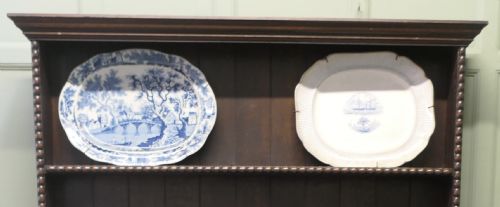
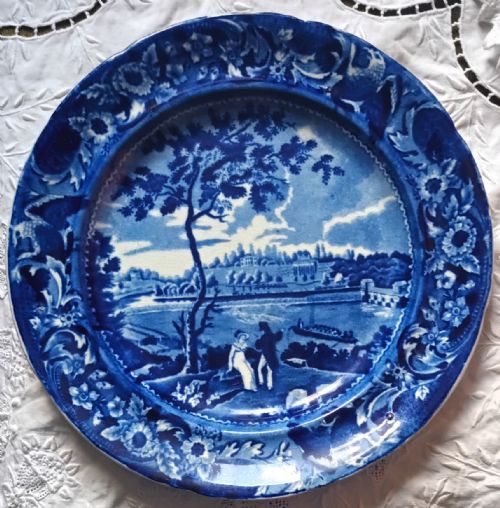
The selections here span the Georgian and Victorian eras, including standard plates alongside large chargers and platters. Collectors frequently encounter familiar narrative scenes such as the Willow pattern or topographical views like Fair Mount near Philadelphia.
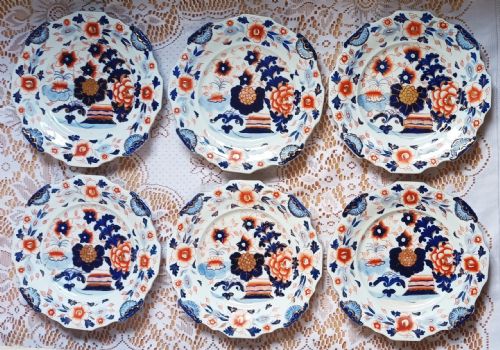
Most items originate from nineteenth-century English potteries operating during distinct stylistic periods. Pieces vary from single cabinet plates to large matched sets suitable for display.
How they were made
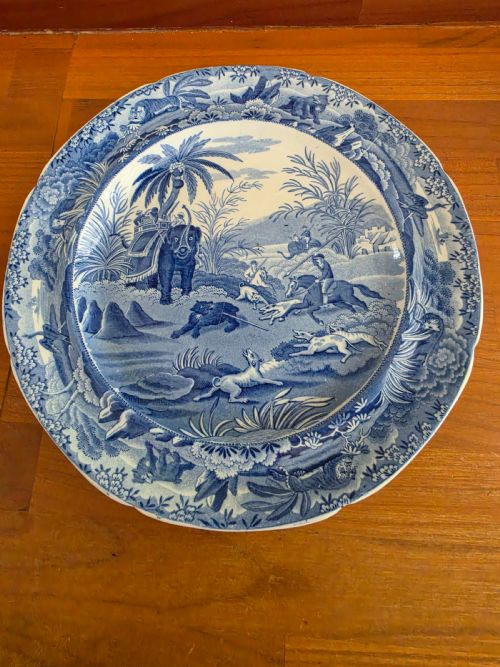
Potters applied cobalt blue designs from engraved copperplates onto tissue paper, which was then rubbed onto the ceramic surface before glazing. This transfer method allowed intricate scenes like Chinoiserie landscapes and architectural views to be reproduced consistently.
Bodies are primarily earthenware, pearlware, or ironstone, fired at high temperatures to ensure durability. Many examples feature a glossy ceramic glaze, and occasional touches of gilt highlight the printed borders.
One nineteenth-century plate records the sudden demise of a bear, immortalising an unexpected wildlife encounter in cobalt blue.
What varies in quality
The crispness of the cobalt blue print defines the visual appeal, as worn copperplates produce blurred outlines. Finer examples maintain sharp details across complex architectural or figurative compositions.
Body material also dictates standard, ranging from early pearlware to heavier ironstone china. Potter mark clarity and overall glaze preservation further distinguish standard production from superior pieces.
Spode·Stubbs·John Ridgway·Caughley·Minton·Pettys and Co Leeds·William Adams·John Davenport
The Blue Transferware Wall Plate Glossary
- Transferware
- Pottery decorated by printing a design from an engraved copper plate onto paper and transferring it to the unglazed or bisque ceramic body. This technique revolutionised mass production of patterned ceramics.
- Pearlware
- An refined earthenware developed by Josiah Wedgwood in the late eighteenth century featuring a bluish glaze that pooled in recesses to mask the cream-coloured body beneath. It provides an early base for blue and white printing.
- Ironstone
- A dense, durable type of heavy earthenware patented in the nineteenth century to imitate porcelain. It resists chipping and forms the sturdy body of many large chargers.
- Charger
- A large decorative plate or platter traditionally used for ceremonial dining or wall display. These oversized pieces showcase expansive printed transfer scenes.
- Chinoiserie
- A European artistic style reflecting Chinese motifs and imaginary oriental landscapes. It appears frequently on early nineteenth-century plates alongside British topographical views.
Blue Transferware Wall Plate: Frequently Asked Questions
How do I hang a heavy charger safely?
Large chargers require robust wire spring hangers that distribute weight evenly across the rim. Ensure the wall fixing securely anchors into brick or a stud.
Avoid using adhesive disc hangers on antique earthenware, as the weight can cause failures over time.
Can I use these plates for serving food?
Many nineteenth-century ceramic plates were designed for dining, but antique glazes can contain historical materials or develop hairline cracks. Gentle hand washing preserves the surface decoration.
Modern daily use is generally discouraged to protect the transfer print and glaze integrity.
How do I identify a transfer print from hand painting?
Transfer-printed patterns show fine stippling or continuous dot patterns under magnification, representing the engraved copperplate lines. Hand-painted lines vary in thickness and lack mechanical uniformity.
Close inspection with a loupe reveals the fine ink matrix beneath the glaze.