

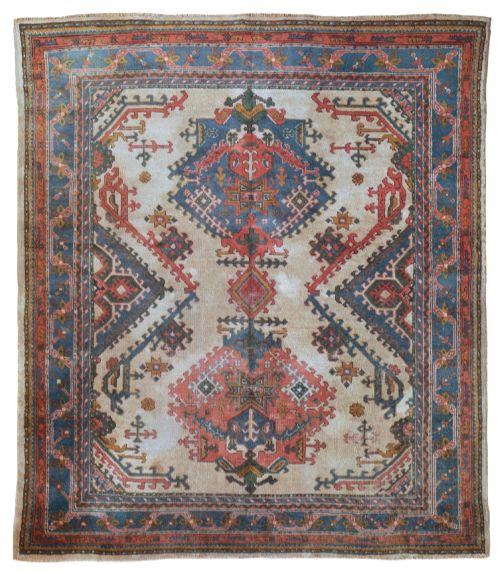



Blue Terracotta Oushak Rug
A blue terracotta oushak rug brings warmth and grounded pattern to a floor through softened hues and generous scale.
Blue Terracotta Oushak Rug
When you search for a blue terracotta oushak rug, you encounter hand-knotted floor coverings hailing from Anatolian traditions. These pieces predominantly manifest as large carpets, expansive runners, and room-sized area rugs designed for substantial living spaces.
The selections on this page span the late nineteenth century through to the early decades of the twentieth century. You will frequently find oversized formats and matching pairs of runners among the available forms.
Origins trace directly to Turkish weaving workshops, carrying stylistic lineages described as Ottoman or Anatolian. These rugs anchor a room with muted palettes and historic geometry rather than rigid symmetry.
Materials and construction
Weavers constructed these carpets using traditional hand-knotting techniques on sturdy foundations. The materials recorded in the evidence consist of wool, cotton, and occasional angora wool for added softness.
The combination of natural animal fibres and sturdy cotton warp and weft threads allowed these large formats to endure heavy foot traffic. Artisans sourced local fleeces and dyed the yarn to achieve the terracotta and blue tones seen today.
Blue Terracotta Oushak Rug Retail Price Guide 2026
Typical asking prices for blue terracotta oushak rug among the pieces listed under this phrase on Sellingantiques today, from the lower quarter to the upper quarter. They describe what is for sale here now, not the wider market.
Maples once retailed a very large old Oushak carpet measuring over four metres across, proving department stores knew a grand floor covering when they saw one.
Distinctions in quality
Quality in these carpets rests upon the fineness of the knotting and the integrity of the wool. Finer fibre selection, such as angora wool, yields a softer pile and greater nuance in how the dye sits within the weave.
Proportion and scale also determine distinction, particularly in oversized formats and matching pairs of runners. The balance between the structural foundation and the retained pile depth dictates the overall longevity of the piece.
The Blue Terracotta Oushak Rug Glossary
- Oushak
- A traditional style of rug originating from the town of Usak in western Turkey. These pieces are known for their looser knots and softer vegetable dye palettes.
- Angora wool
- A specialised fibre derived from angora goats or rabbits, used in certain rugs for a softer handle and distinct lustre. It provides a more pliable pile than standard sheep wool.
- Runner
- A long, narrow carpet format designed primarily for hallways, staircases, or gallery spaces. Pairs of these narrow rugs occasionally appear together from the same period.
- Warp
- The vertical threads stretched upon a loom that form the structural foundation of the rug. The knots are tied around these stationary threads.
- Weft
- The horizontal threads passed back and forth across the warp to secure the rows of knots in place. This grid gives the textile its structural stability.
Blue Terracotta Oushak Rug: Frequently Asked Questions
How do I clean an antique oushak rug?
Professional specialist cleaning is essential for antique wool carpets to protect the natural fibres and dyes. Domestic washing methods can introduce excess moisture and detergents that damage the historic foundation.
Regular gentle vacuuming without a rotating brush helps remove surface dust between professional maintenance visits. Keeping the rug out of harsh direct sunlight preserves the terracotta and blue tones over time.
Where should I place a large oushak carpet?
Large formats and oversized runners suit principal reception rooms, long hallways, or dining spaces with substantial floor areas. Their generous dimensions allow furniture to sit comfortably either fully upon the field or with front legs resting on the border.
Placing a suitable underlay beneath the carpet prevents slipping and reduces friction between the cotton foundation and hard flooring. This simple step extends the active life of the textile.
What defines the Oushak style?
Oushak carpets typically feature large-scale floral motifs, geometric medallions, and open fields with subdued secondary patterns. The design language leans towards relaxed symmetry rather than rigid, intricate drafting.
This aesthetic blends well with both traditional period interiors and modern minimalist spaces. The faded terracotta and blue colourways derive from age and traditional dye compositions.
How do I date an antique rug?
Dating relies on stylistic markers, material analysis, and structural evidence within the weave and knot count. Pieces from the late nineteenth and early twentieth centuries exhibit specific wear patterns and dye characteristics typical of their era of production.
Comparing the wool quality and structural format against documented examples helps narrow down the decade of manufacture. Experts examine both the face and the reverse to read these material clues.