


Blue Spirit Bottles
Blue spirit bottles are striking vessels for holding liquor, prized by collectors for their rich colour and domestic history.
Blue Spirit Bottles
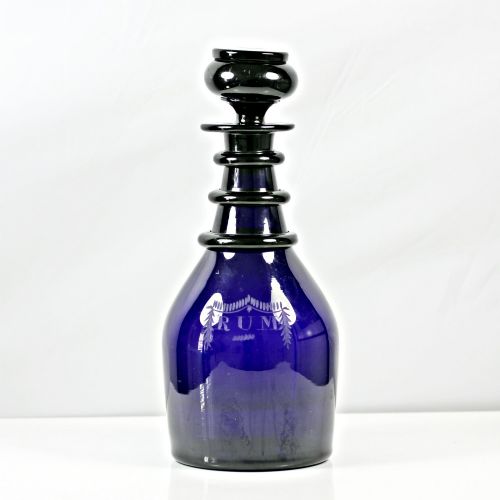
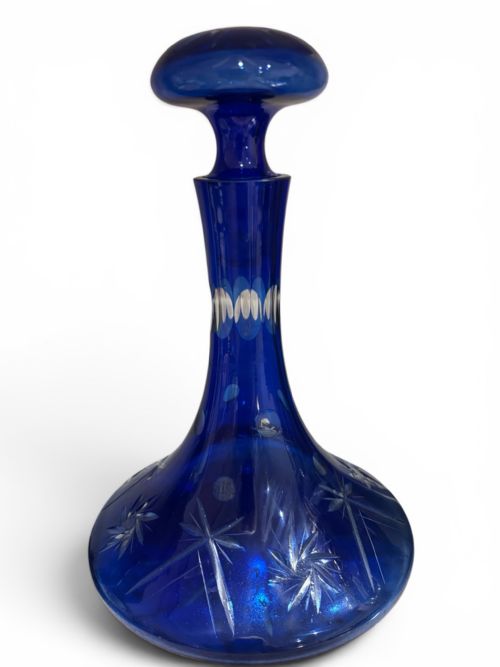
When you search for blue spirit bottles, you encounter a range of serving vessels and decanters made primarily during the 19th century, alongside Georgian and Victorian examples. These pieces typically take forms such as mell decanters, three-ring rum decanters, and flagons designed for spirits like whiskey and wine.
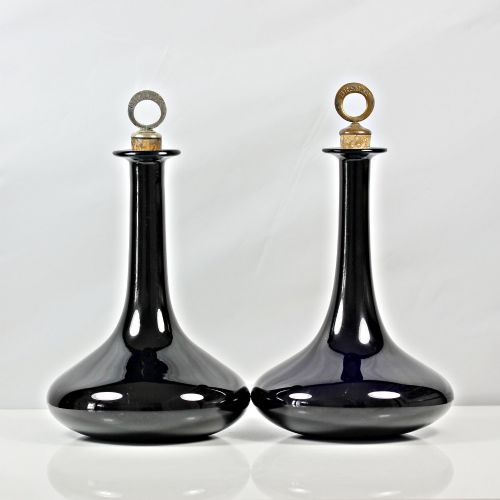
The assortment on this page also includes related items such as silver-mounted bottles, hand-painted glass pieces, and decanter labels that accompany the primary vessels. The majority originate from British and European traditions, utilising rich cobalt and Bristol blue glass to store and serve drinks at the table.
How they were made
Makers produced these vessels using hand-blown glass techniques, shaping deep cobalt and Bristol blue glass into robust forms suited for frequent handling. Artisans added functional details like multiple neck rings to ensure a secure grip when pouring spirits.
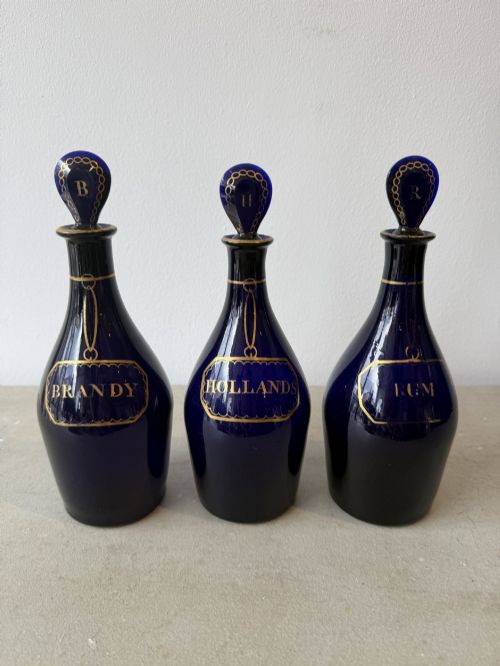
Many examples incorporate applied metal elements, including silver mounts, cork stoppers, and silver plate, alongside delicate gold leaf and hand-painted enamel decoration. These secondary materials enhanced the utility and appearance of the glass bodies.
Listings for blue spirit bottles span the 17th century to the mid-20th century, encompassing Victorian, Georgian, and Art Deco styles.
What varies in quality
The distinction between standard vessels and superior examples rests on the depth of colour in the glass and the crispness of any hand-painted or gilt decoration. Pieces featuring integrated metalwork, such as hallmarked silver necks or matching stoppers, demonstrate higher craftsmanship.
Form and proportion dictate the desirability of each piece, with well-balanced mell shapes and distinct ring decanters standing apart from simpler bottles. The presence of period mounts and authentic cork closures further elevates the standing of an individual piece.
The Blue Spirit Bottles Glossary
- Bristol blue glass
- A deep, vibrant shade of cobalt glass historically produced in Bristol during the 18th and 19th centuries. This distinct hue became synonymous with high-quality decanters and serving bottles of the period.
- Mell decanter
- A decanter characterised by a mallet-like body with sloping shoulders and a relatively flat base. This traditional silhouette allowed the vessel to remain stable on dining tables and sideboard trays.
- Ring decanter
- A bottle featuring raised glass rings encircling the neck to prevent slipping from wet hands. These rings are characteristic of 19th-century rum and spirit decanters.
- Decanter label
- A small tag, often made of silver or enamel, hung around the neck of a bottle to identify the contents. They served a practical purpose in Georgian and Victorian dining rooms.
Blue Spirit Bottles: Frequently Asked Questions
What spirits went into these bottles?
These vessels held strong potable spirits such as rum, whiskey, and wine for dining room service.
Owners kept them filled on sideboards or cellarets ready to pour after meals.
How do I date a blue bottle?
Dating relies on observing the manufacturing marks, shape, and accompanying mounts such as silver necks.
Georgian and Victorian examples exhibit distinct glass-blowing traits and silhouette proportions specific to their decade.
Can I still use them today?
Many of these bottles remain entirely functional for serving spirits at the modern table.
Careful hand washing preserves the historic glass and any delicate hand-painted decoration.
Why are some mounted in silver?
Silversmiths added mounts to reinforce vulnerable rims and provide secure attachment points for stoppers.
These metal additions often carry hallmarks that help date the complete piece.