
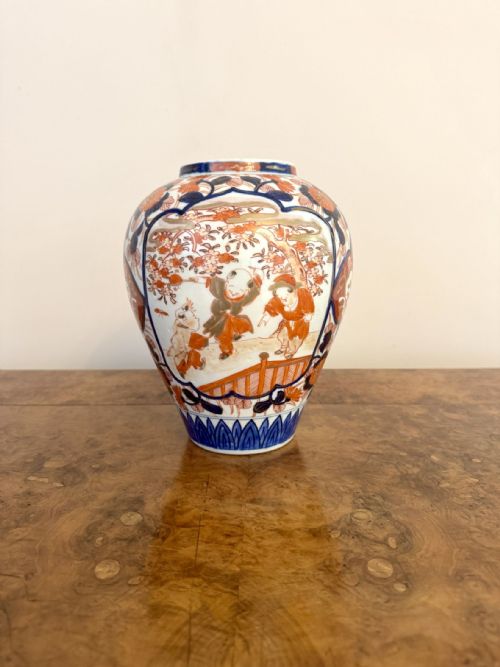
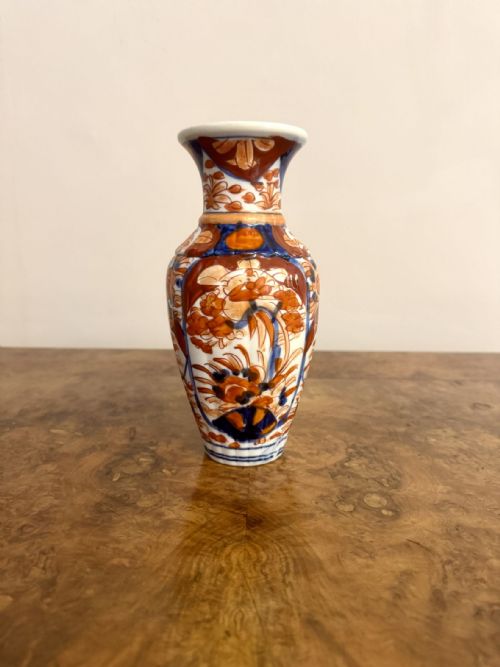
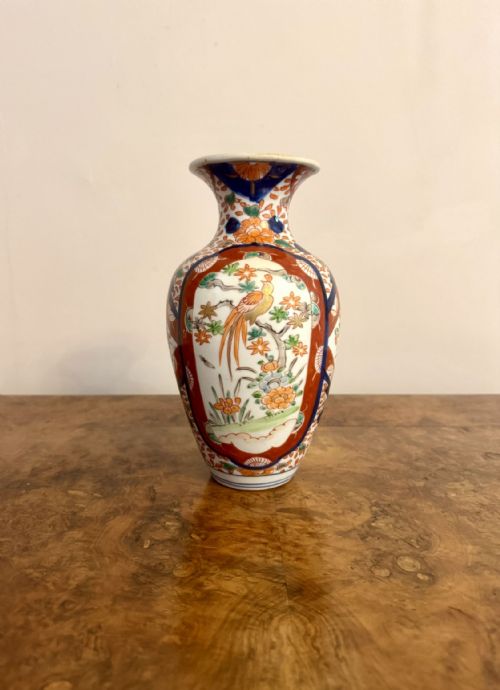
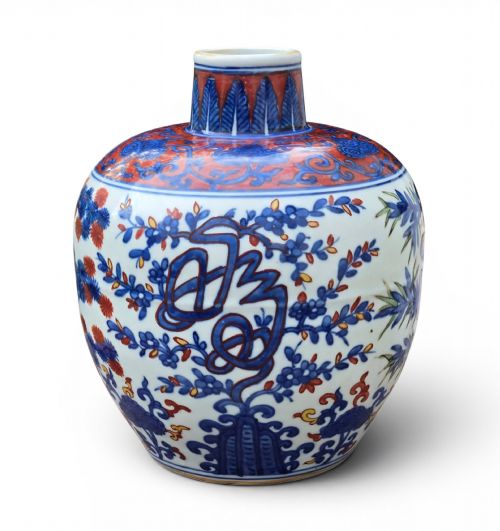


Blue Red Ceramic Jar
A blue red ceramic jar brings together rich cobalt tones and striking iron-red pigments across centuries of Asian and European craft.
Blue Red Ceramic Jar
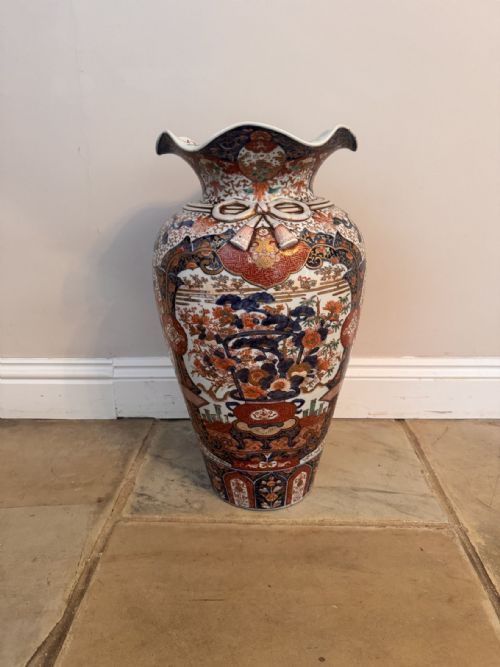
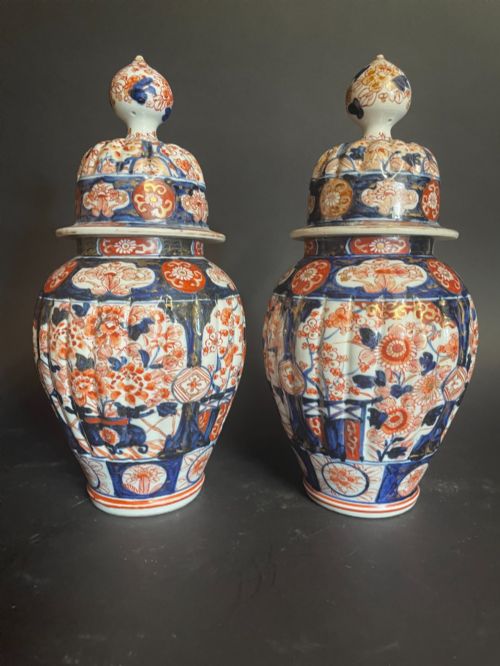
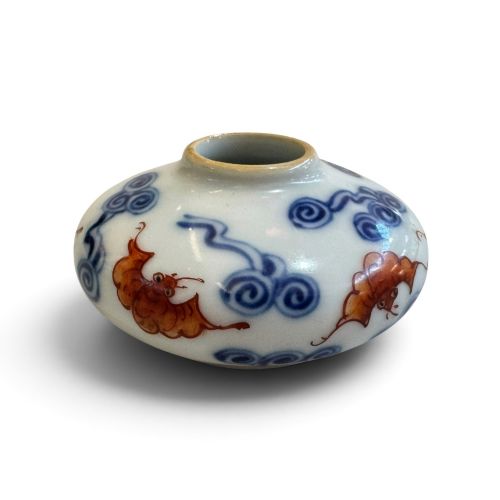
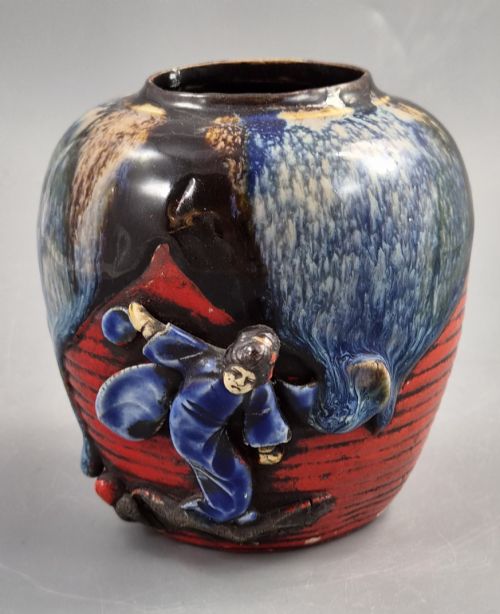
When you search for a blue red ceramic jar, you encounter a selection spanning 18th century examples to the Edwardian era, predominantly showcasing Japanese Imari porcelain alongside Chinese and ironstone variations. These vessels take forms such as lidded ginger jars, floor-standing vases, and scholars objects decorated in characteristic cobalt and red palettes.
The assortment on this page relies heavily on Japanese production from the Meiji and Edo periods, featuring Arita wares and Imari style pieces designed for display. Collectors frequently find pairs and garnitures alongside single covered vessels, utilising shapes from hexagonal profiles to double gourds.
How they were made
Potters shaped porcelain and earthenware bodies before applying underglaze blue and iron-red enamel pigments, often integrating gilt, gold leaf, and glaze to enrich the surface. Artisans utilised high-temperature kilns to fuse the cobalt underglaze before fixing subsequent enamel colours and gilding in secondary firings.
Techniques range from traditional Chinese underglaze painting to Japanese Imari traditions and European ironstone manufacturing, combining moulded and thrown pottery bases with detailed hand-painted motifs.
Listings feature porcelain and earthenware materials spanning the 18th, 19th, and early 20th centuries.
What varies in quality
The division between standard production and the finest pieces rests upon the precision of the hand-painted brushwork and the complexity of the cobalt and iron-red integration. Superior examples exhibit crisp underglaze definition, balanced palettes, and intact gilding that remains vibrant across the contoured body of the jar.
Proportion and form define the upper tier of the range, where heavy potting, well-fitted original covers, and sophisticated panel layouts demonstrate the skill of the potter and decorator.
The Blue Red Ceramic Jar Glossary
- Imari
- A style of Japanese export porcelain originating from Arita, traditionally decorated in cobalt blue, iron-red, and gilt. This aesthetic gained immense popularity in Europe during the Edo and Meiji periods.
- Ginger jar
- A ceramic vessel with a wide body, rounded shoulders, and a fitted lid, originally used in China for storing spices. These containers became staple decorative items in Western interiors.
- Underglaze
- A method of decorating pottery where pigments are applied to the unfired or biscuit body before the transparent glaze is added. This technique protects the painted design beneath a glassy layer.
- Ironstone
- A type of durable earthenware patented in the 19th century to imitate porcelain. It provides a sturdy body suitable for rich enamel decoration.
- Gilding
- The application of gold leaf or powdered gold to the surface of ceramics. This finish highlights rims, panels, and motifs.
Blue Red Ceramic Jar: Frequently Asked Questions
What is an Imari jar?
An Imari jar is a piece of Japanese export porcelain decorated in a distinct palette of underglaze blue, iron-red, and gold. These vessels were produced in the Arita region for both domestic use and export.
They typically feature intricate floral and geometric panels that showcase the high skill of Meiji and Edo period artisans.
How were lidded jars used?
Lidded jars originally served practical storage functions for spices, ginger, and dry goods in Asian households. Over time, European collectors repurposed them purely as decorative garnitures.
Pairs and sets were placed on mantelpieces or cabinets to add colour and symmetry to formal rooms.
How do I date a ceramic jar?
Dating relies on examining the clay body, glaze characteristics, and the style of the painted motifs. Edo and Qing pieces display different potting traits compared to later 19th century or Edwardian interpretations.
Reference marks and manufacturing techniques help narrow the period of creation.
What is underglaze red?
Underglaze red is a copper-derived pigment applied beneath the transparent glaze before firing. Achieving a successful red tone requires precise kiln temperature control.
This technique appears on early Chinese wares and adds depth when paired with traditional cobalt blue.