



Imari Lidded Bowl
An imari lidded bowl brings deep cobalt blue and rust-red ironstone or porcelain into a room, offering both decorative presence and practical lidded storage.
Imari Lidded Bowl
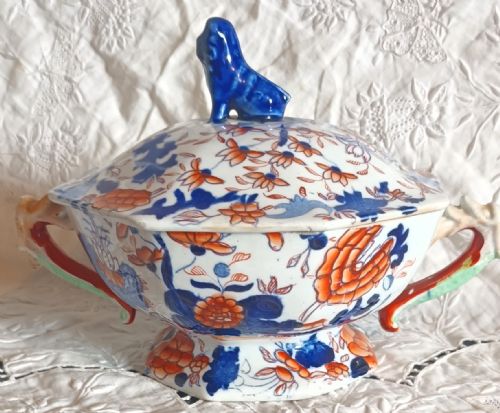
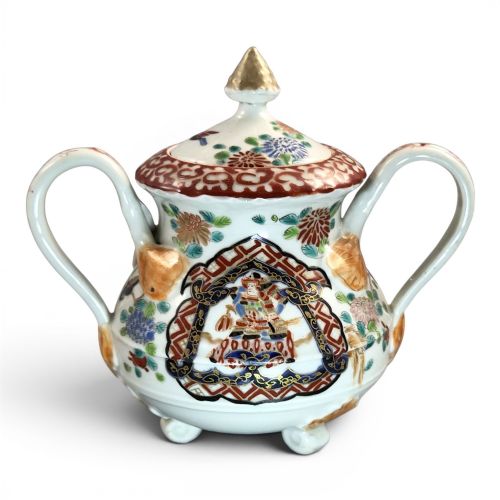
When you search for an imari lidded bowl, you encounter a mix of English ironstone tureens, Japanese porcelain sugar bowls, and lidded jars spanning the nineteenth century and the early twentieth century. The domestic English pieces often take the form of heavy ironstone tureens and vegetable dishes decorated with Chinoiserie or Imari patterns, while the imported examples include Japanese porcelain vessels featuring figures such as samurai.
Most items you meet on this page hail from the nineteenth century, including Georgian and Victorian eras, alongside productions from makers like Mason's and Royal Crown Derby. You also find Italian porcelain broth cups and lidded jars that adopt the distinct palette, showing how widely the style travelled across European and Asian workshops.
The forms vary considerably from large covered tureens designed for the dining table to smaller potpourri vases and sugar bowls meant for the drawing room. These vessels rely on lidded configurations to keep their contents secure, whether utilised for serving broth or simply standing as decorative ornaments.
How they were made
Potters built these vessels using porcelain, ironstone ceramic, and earthenware bodies, which were shaped into tureens, jars, and bowls before receiving their primary glaze. The sturdy ironstone examples provide heavy, robust walls suited to utilitarian dining service, whereas the porcelain bodies offer thinner, more translucent walls for decorative pieces.
Decoration relied upon hand-applied enamel colours, often framed with gold leaf highlights to accentuate the traditional cobalt blue and iron-red palette. This pigment application required careful firing to fuse the enamel and gilding securely to the glazed ceramic surface.
Imari Lidded Bowl Retail Price Guide 2026
Typical asking prices for imari lidded bowl among the pieces listed under this phrase on Sellingantiques today, from the lower quarter to the upper quarter. They describe what is for sale here now, not the wider market.
What varies in quality
The distinction between standard domestic wares and exceptional pieces rests upon the crispness of the enamel work and the precision of the gilding applied over the glaze. Superior examples display meticulously painted motifs with well-preserved gold leaf that has retained its brilliance across the centuries.
Weight and structural balance also separate the sturdier ironstone tureens from lighter earthenware items, where a dense ceramic body provides a more substantial feel in the hand. Furthermore, the clarity of the underlying porcelain or ironstone paste influences the overall refinement of the finished vessel.
Mason's·Royal Crown Derby·Richard Ginori·Coalbrookdale
The Imari Lidded Bowl Glossary
- Ironstone
- A patented ceramic body developed in England to imitate Chinese porcelain while offering greater durability for everyday tableware. It provides a heavy, opaque base that holds transfer-printed and hand-painted enamels securely.
- Imari
- A decorative style originating in Japan and later imitated in Europe, characterised by a palette of cobalt blue, iron-red, and gold leaf. These pieces typically feature intricate floral, geometric, or figurative motifs.
- Tureen
- A large, deep serving bowl equipped with a matching cover, traditionally used at the dining table for soups, sauces, or vegetables. They frequently feature handles on either side and a finial on the lid.
- Chinoiserie
- European artistic interpretations of Chinese and East Asian decorative motifs, popular across Georgian and Victorian ceramics. This style often incorporates imagined landscapes, figures, and architectural elements.
- Porcelain
- A fine, vitrified ceramic material made from kaolin, fired at high temperatures to produce a white, non-porous body. Unlike heavier earthenware, it can achieve thin, resonant walls.
Imari Lidded Bowl: Frequently Asked Questions
What were imari lidded bowl pieces used for originally?
Many of these covered vessels served practical dining functions, holding soups, vegetables, broth, or sugar on the table. Others functioned as lidded jars or potpourri containers meant to scent and decorate domestic interiors.
Over time, their decorative qualities became as important as their utility, leading many households to display them on sideboards or mantelpieces rather than keeping them in the pantry.
How do I date an imari lidded bowl?
Dating relies on examining the ceramic body, maker's marks, and stylistic indicators such as the Georgian, Victorian, or Meiji periods recorded in the evidence. Heavy ironstone bodies with Chinoiserie patterns often point to early nineteenth-century English production.
Porcelain pieces with specific studio marks, such as those from the Fukagawa workshop, help narrow the timeline to the latter half of the nineteenth century. Comparing the enamel colours and gilding style against known periods provides further chronological context.
Are these vessels made of porcelain or ironstone?
The evidence shows both materials represented across the inventory, with English pieces frequently utilising patented ironstone ceramic and Japanese or European items utilising porcelain or earthenware. Ironstone provides a heavier, more utilitarian weight suited for large tureens.
Porcelain offers a finer, lighter body often chosen for delicate sugar bowls and decorative jars. Each material responds differently to the enamels and gold leaf applied across the surface.
How do I care for an antique lidded bowl?
These ceramic and porcelain items require gentle hand washing in lukewarm water with mild soap, avoiding abrasive scrubbers that can damage the enamel or wear away gold leaf. Because many pieces date from the nineteenth century, their glazes may possess fine age-related crazing that absorbs liquids.
Storing them securely with the lid resting properly on the base prevents edge chipping. Keeping them away from direct sunlight also helps preserve the vibrancy of the hand-painted iron-red and cobalt pigments.