


Blue Porcelain Lustre Bowl
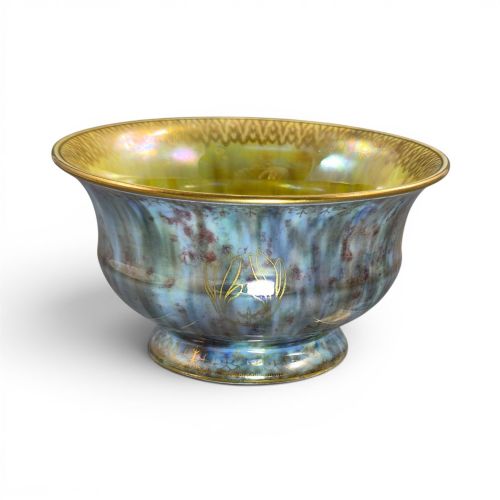
A blue porcelain lustre bowl carries iridescent metallic sheens and rich transfer or hand-painted motifs across porcelain, earthenware and bone china surfaces.
Blue Porcelain Lustre Bowl
When you search for a blue porcelain lustre bowl, you are looking at decorative and footed bowls alongside miniature cups produced from the nineteenth century into the Edwardian era and the 1910s and 1920s.
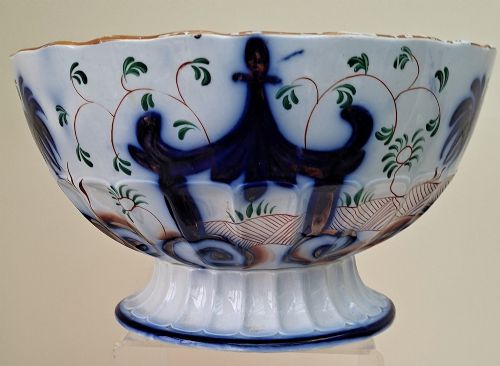
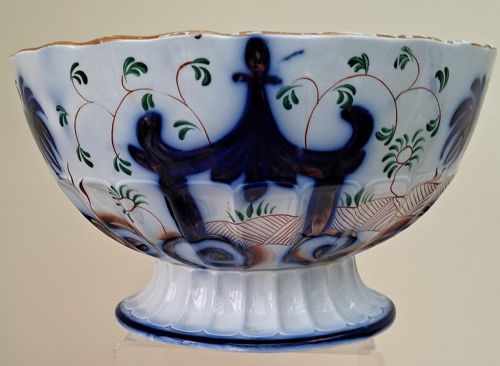
The pieces on this page span Victorian, Edwardian, Art Nouveau and Art Deco styles, incorporating traditional patterns like Gaudy Welsh alongside intricate fantasy designs.
Octagonal and footed forms appear frequently alongside miniature vessels, showing how makers varied their geometric and rounded profiles during the early twentieth century.
Materials and production methods
Potters shaped porcelain, earthenware and bone china bodies before applying specialist glaze layers that reacted in the kiln to produce an iridescent finish.
Makers combined lustre glaze with gold leaf, gilt and enamel details, building up colourful surface designs that caught the light from different angles.
Listings feature items from the nineteenth century, Edwardian era, 1910 and 1920, utilising porcelain, bone china, earthenware, glaze, gold leaf, gilt and enamel.
Assessing quality in lustre bowls
The distinction between standard production pieces and finer examples rests on the complexity of the painted motifs, such as detailed dragons, butterflies or fairy scenes.
Precision in the application of gold leaf and enamelwork separates basic vessels from richly decorated octagonal bowls and cabinet pieces.
Daisy Makeig Jones·James Hodgkiss·Wedgwood
The Blue Porcelain Lustre Bowl Glossary
- Lustre glaze
- A type of ceramic glaze containing metallic oxides that produce an iridescent, reflective sheen upon firing. This technique creates the signature rainbow effect seen on many early twentieth-century decorative pieces.
- Bone china
- A soft-paste porcelain incorporating animal bone ash, resulting in a strong, translucent body. It allows for thinner vessel walls while maintaining durability.
- Gilt
- A thin layer of gold applied to the surface of ceramics for decorative embellishment. It frequently highlights rims, handles and intricate pattern borders.
- Earthenware
- Porous pottery fired at lower temperatures than porcelain and bone china. It forms the heavier substrate for certain traditional regional patterns.
Blue Porcelain Lustre Bowl: Frequently Asked Questions
Are these bowls safe for food?
Most antique lustre vessels are intended for display rather than culinary use. The metallic glazes and enamel details can wear down with regular handling.
Keep these decorative bowls for ornamental placement around the home to preserve their colourful surfaces over time.
What periods do these bowls come from?
The pieces span from the nineteenth century through the Edwardian period up to the 1910s and 1920s. Victorian examples often feature traditional patterns like Gaudy Welsh.
Twentieth-century items include Art Nouveau and Art Deco designs produced by major potteries during the interwar years.
Why do the colours change in the light?
The iridescent effect results from metallic oxides applied within the glaze during firing. This chemical reaction creates a shifting sheen that reflects different hues depending on the angle.
Different kiln conditions and mineral combinations produce everything from mottled orange tones to deep blue finishes.